

You will find plenty of spurious claims around the Internet about super plants that naturally repel wasps. Unfortunately, most if not all of the claims that you will find are not backed up by scientific data. While mint, and other plants used in concentrated essential oil form will often help in deterring wasps from certain areas, the plants themselves contain the repellant in much, much lower quantities and so rarely make any real or appreciable difference to how many wasps you see.
A study from the Journal of Pest Management Science, for example, found that peppermint essential oil was one of those tested that showed that it repelled yellow-jackets and paper wasps. (But I can tell you from my own experience that the peppermint planted prolifically in my forest garden does not deter the ones that come to feast on fallen fruit.)
Other plants such as wormwood, thyme, geraniums and marigolds are also often said to repel them. But I have seen many solitary and common species around these plants and so, personally, do not believe that they are particularly effective for repelling them while in growth. But give it a go if you wish.
The good news is that you do not need such plants. Wasps can be a pest when they bother you during a picnic or when you are spending time outdoors. But it is important to remember that wasps are wonderful. I want to convince you that they are something you want to encourage, and not repel, in your garden.
Why Wasps Are Wonderful in a Garden
Though they are not commonly lauded as pollinators, a number of wasp species do perform pollination roles in a garden. What is more, wasps can also be beneficial because some are predatory insects, that help to keep down the populations of other insect pests.
Leave wasps to do their efficient pollination job and keep down pest numbers in your garden, and you should usually find that you can co-exist with them happily a lot of the time. As long as there is plenty of food available for them around your garden, they should not bother humans in the vicinity too much.
There are two types of wasp common in the UK. Solitary wasps are the first type. They live and work alone, and rarely bother humans. Social wasps live in large colonies. Solitary wasps primarily hunt other insects and it is the social wasps, like the Vespula vulgaris (common wasp), which are likely to be considered a pest. But even the common wasp can be a great benefit in your garden.
When They Are a Problem
When wasps create nests too close to human habitation or inside a home or other structure on your property, they can occasionally pose a problem. In these cases, where a nest must be removed, it is best to get in professionals to safely remove (and if necessary destroy) the nest.
But you can reduce the chances of a wasp problem occurring in your garden – not by planting specific plants but by taking a few simple measures to make it less appealing for them to nest and swarm where you do not want them.
Steps to Keep Them Away
For example, you might have a problem with wasps around your compost heap or composting system. Cover the compost and all food it contains. Place a lid or cover over the materials as they decompose. And make sure kitchen scraps are always covered with carbon rich compostable materials.
Collect up fallen fruits and other food sources. And place these into a composting system. But only if the wasps become too much of a problem when these are just left on the ground.
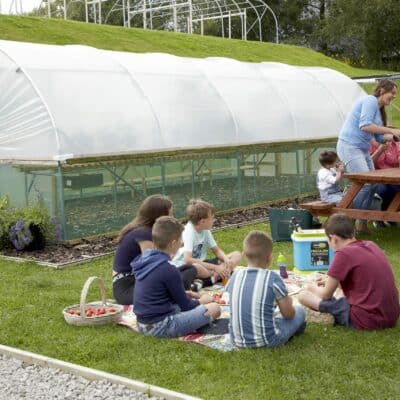
Make sure you clear up well after a barbecue or picnic. So no foods are left around to attract wasps to those areas.
Attract wasps with planting or traps if necessary to parts of your garden away from certain areas. This should help keep them away from the areas you want to sit in. Or where you want to dine outside. But will mean that they are still present to aid in pest control and pollination in your garden.
Remember, wasps can be wonderful additions to your garden. So it is always a bad idea to try to repel them or eliminate them altogether.
Do you welcome wasps in your garden? Or do you see them as a problem. Share your thoughts and suggestions in the comments below.