


Yes, no-dig gardening does work in a polytunnel, and in many cases it works better than traditional digging. After over ten years as a polytunnel gardener, I have found that using a no dig polytunnel approach improves soil structure, reduces weeds, holds moisture better, and dramatically cuts down physical work over time. Once established, beds become easier to manage season after season.
Working inside a protected space like a polytunnel means soil biology stays active longer, making a no dig polytunnel system especially reliable and productive.
Key Takeaways
-
- No-dig polytunnel beds improve soil health without cultivation
- Weeds reduce significantly after the first season
- Crops establish faster and usually need less watering
- Works in both new and previously cultivated spaces
Saves time and physical effort long-term
What Is No-Dig Gardening?
No-dig gardening means growing crops without turning or disturbing the soil. Instead of digging, organic matter is added on top and soil life naturally incorporates it below.
Traditional methods often involve digging, double digging, or rotavating. A no dig polytunnel avoids this entirely. The soil remains structured and stable, allowing organisms to do the work instead of tools.
In protected environments, this matters even more. A no dig polytunnel keeps soil covered from heavy rain impact and temperature swings, helping soil organisms thrive year-round.
No-dig means feeding the soil from the top — not turning it upside down.
Why Is No-Dig Gardening Best for a Polytunnel?
A no dig polytunnel offers ideal conditions for this method:
- Rain doesn’t compact soil
- Moisture levels stay more consistent
- Organic matter breaks down steadily
- Soil life remains active through colder months
- No need to manoeuvre heavy machinery in confined spaces
Because soil is protected, a no dig polytunnel system often stabilises faster than outdoor beds.
How Does No-Dig Gardening Work?
No-dig gardening works by supporting natural soil processes rather than replacing them with mechanical cultivation. When organic matter is added to the surface, soil organisms gradually break it down and distribute nutrients through the soil profile.
In a protected environment, this process happens more consistently because temperature and moisture fluctuate less. Over time, soil becomes more structured, holds nutrients more effectively, and supports stronger root development. Instead of needing repeated cultivation, the soil in a no dig polytunnel becomes easier to plant into and manage with each passing season.
What Happens Beneath the Soil Surface
Healthy soil is a complex, living ecosystem rather than just something that holds plant roots in place. Inside a no dig polytunnel, natural biological processes are allowed to function with minimal disruption, which helps nutrients move through the soil in a steady and balanced way.
Earthworms are one of the most visible contributors. They feed on surface organic matter like compost and pull it down into deeper soil layers. As they move, they create channels that improve aeration and water movement. Their castings are rich in plant-available nutrients, helping build fertility gradually rather than in sudden bursts.
Fungi are equally important, especially mycorrhizal fungi. These form microscopic thread-like networks that connect with plant roots. Through these networks, nutrients such as phosphorus can be transported to plants in exchange for sugars produced during photosynthesis. In a no dig polytunnel, these fungal networks remain largely intact, allowing plants to access nutrients and water more efficiently.
Bacteria also play a vital role. They break down organic matter into simpler compounds that plants can absorb through their roots. Some bacteria help convert nitrogen from organic material into forms plants can use, while others support disease suppression by competing with harmful microbes. Together, these organisms create a stable nutrient cycle that supports steady plant growth.
Over time, soil in a no dig polytunnel begins to structure itself. Organic matter binds soil particles together into crumb-like aggregates. These improve drainage, allow roots to grow more easily, and help soil hold moisture without becoming waterlogged.
Why Digging Disrupts Soil Life
Digging can temporarily make soil look loose and workable, but it can disrupt the systems that keep soil fertile long-term. Turning soil breaks apart fungal networks that may have taken months to develop. It also exposes soil organisms to light, air, and temperature changes that can reduce their populations.
Digging can also bring buried weed seeds to the surface where light triggers germination. This often leads to cycles of cultivation followed by new weed growth.
In addition, digging can speed up organic matter breakdown too quickly, creating short-term nutrient spikes followed by periods where nutrients are less available. By contrast, a no dig polytunnel encourages slower, more stable nutrient release that supports consistent plant growth.
Healthy soil contains vast communities of microorganisms that support plant growth naturally.
How to Start a No-Dig Garden in a Polytunnel
Starting a no dig system is small polytunnels is simpler than many people expect.
If you are starting protected growing for the first time, smaller structures can make learning easier and more manageable, tjhough even in larger polytunnels, adopting a no-dig approach can be simpler (and more affordable) than many imagine.
1. Choose a Method or Methods for Growing Area Creation
There is not just one way to create beds in a no dig polytunnel. The best method often depends on what is already in place.
Common starting situations include:
- Bare soil from a new build
- Previously cultivated growing beds
- Grass or weed-covered ground
If soil is already loose and relatively weed-free, you can often apply compost directly to the surface and begin planting. If grass or deep-rooted weeds are present, suppression layers are usually needed before adding organic matter.
Common no-dig raised bed approaches include:
Straw Bale Beds
Straw bales can act as both the growing medium and the raised bed structure. As they break down, they release nutrients and improve surrounding soil. In a no dig polytunnel, straw bales can also help retain warmth early in the season.
Hugelkultur Beds
This method uses buried woody material such as logs and branches under organic matter layers. As wood slowly decomposes, it stores moisture and releases nutrients. Hugelkultur can work well in a no dig polytunnel where long-term soil building is the goal.
Lasagna Beds (Layered Organic Beds)
Lasagna beds are built by layering carbon-rich and nitrogen-rich materials — for example cardboard, compost, manure, leaves, and green waste. This layered system mimics natural soil formation and works very well in a no dig polytunnel where decomposition happens steadily.
Each of these methods supports the same core idea – feeding soil life from above while avoiding disturbance below.
2. Layer Cardboard/ Organic Matter on the Soil Surface
If grass or weeds are present, start by laying plain cardboard directly onto the soil. This blocks light and suppresses unwanted growth while still allowing moisture and soil organisms to pass through.
On top of this, add organic matter such as:
- Garden compost
- Well-rotted manure
- Leaf mould
- Green waste compost
In a new no dig polytunnel, a starting organic layer of around 5–10cm is usually enough to begin building fertility. Soil organisms gradually pull this material into lower layers.
Note on Sourcing Organic Matter & Compost or Topsoil Sustainably:
Where possible, choose materials for your no dig polytunnel that are locally sourced and environmentally responsible.
Good practices include:
- Using homemade compost first
- Choosing locally produced composts where available
- Layering different types of organic matter available from your own garden
- Avoiding materials taken from sensitive natural environments
- Selecting peat-free composts
Building soil gradually using local organic resources is often the most sustainable and cost-effective way to establish a long-term growing system.
Using No-Dig on an Area That’s Already Cultivated
Many growers worry they’ve “ruined” soil through past digging. In reality, you can transition straight into a no dig polytunnel without resetting everything.
Just stop digging and start adding organic matter to the surface.
What to Expect
| Timeframe | Typical Change |
|---|---|
| First few months | Some weed growth continues |
| Mid first season | Soil structure starts improving |
| Year two onward | Weed pressure drops significantly |
An established growing space often adapts quickly to a no dig polytunnel system because organic matter is already present.
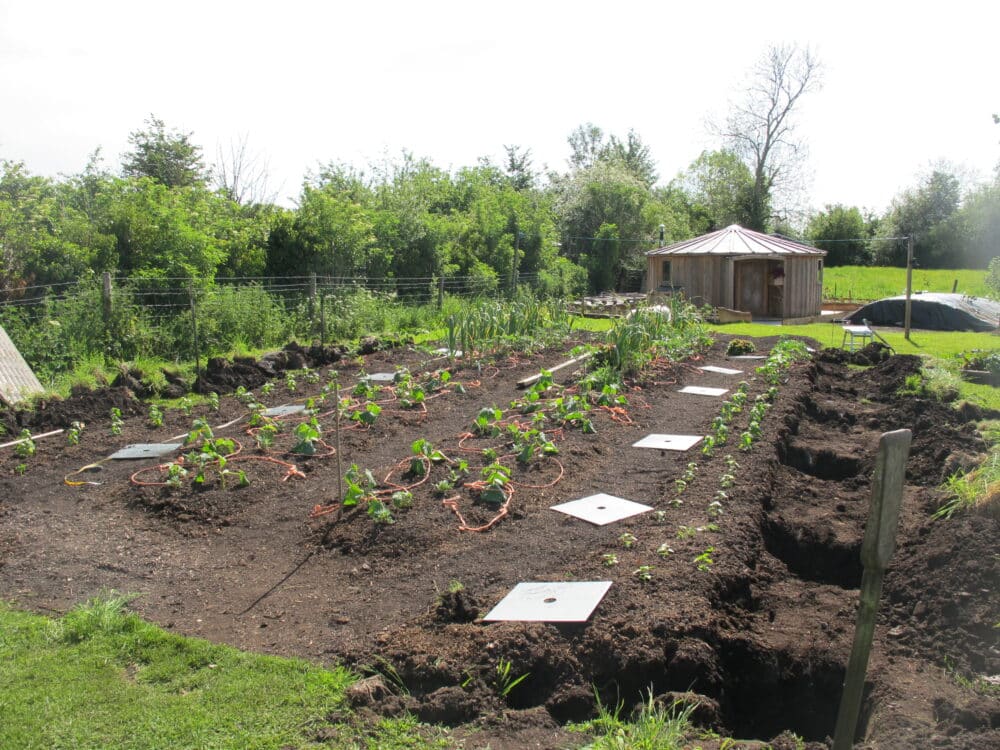
How to Plant Up No-Dig Beds
Planting into a no dig polytunnel feels intuitive once beds settle.
Direct Sowing
- Create shallow drills in the compost surface
- Water compost lightly before sowing
- Ideal for carrots, beetroot, salads, and spinach
Direct sowing in a no dig polytunnel often produces even germination because moisture is more stable.
Transplanting Seedlings
- Make small planting holes in compost
- Firm gently around roots
- Water in well
Transplants often establish quickly in a no dig polytunnel because soil structure supports root growth immediately.
Looking After No-Dig Beds in a Polytunnel
Maintenance in a no dig polytunnel becomes simpler each season.
Watering
No-dig beds typically hold water better.
- Water less often
- Water deeply rather than frequently
- Avoid constant damp compost under cover
Over time, a no dig polytunnel usually needs noticeably less watering than dug soil.
Weeding
Weeds normally reduce dramatically after year one in a no dig polytunnel.
- Remove early weeds by hand
- Avoid disturbing soil layers
Mulching
Add compost annually to maintain fertility in a no dig polytunnel.
Typical application:
- 3–5cm on established beds
- 5–10cm when starting new beds
Edges
Defined edges protect your no dig polytunnel beds from weed invasion.
- Use boards, paths, or edging materials
- Keep pathways clearly separate from beds
Compaction
Compaction is naturally reduced in a no dig polytunnel because soil isn’t repeatedly disturbed.
- Always use permanent paths
- Avoid stepping on growing beds
Harvesting from No-Dig Polytunnel Beds
Harvesting from a no dig polytunnel is often noticeably easier.
You may see:
- Cleaner root crops
- Less resistance when lifting vegetables
- Minimal soil disturbance
- Steadier harvest quality over time
In my experience, a mature no dig polytunnel feels easier to harvest from than freshly cultivated soil.
What Are the Benefits of No-Dig Gardening?
Benefits for Gardeners
A no dig polytunnel supports consistent results with less physical effort.
- Reduced strain on back and joints
- Less time spent preparing beds
- Fewer tools required
- Reliable growing conditions year after year
Soil Health Benefits
A no dig polytunnel builds soil naturally by:
- Increasing organic matter levels
- Improving soil structure
- Supporting beneficial soil organisms
- Improving aeration and drainage
Environmental Benefits
Using a no dig polytunnel can help reduce environmental impact by:
- Lowering soil carbon loss from cultivation
- Reducing fertiliser inputs
- Supporting soil biodiversity
Are There Any Disadvantages to No-Dig?
A no dig polytunnel isn’t completely maintenance-free.
Possible downsides include:
- Compost is needed upfront (though you may also be able to make your own and also use layers of organic matter sourced from your garden or from local, free sources.
- First season results require patience
- Slugs can appear if organic layers are too thick
- Initial setup costs offset by long-term savings
From experience, most challenges reduce as soil balance improves in a no dig polytunnel.
Is No-Dig Worth It in a Polytunnel?
From long-term practical growing, yes — a no dig polytunnel is absolutely worth it.
It suits beginners who want simple systems and experienced growers who want consistent results. Once soil life is established, management becomes simpler each year.
If you’re planning what to grow next in your no dig polytunnel, start here:
polytunnel crop growing guides
A no dig polytunnel combines soil-first gardening with the advantages of protected growing. By working with natural soil processes, you build resilient growing systems that improve over time instead of declining.
For growers who want productive soil, reduced labour, and more predictable harvests, a no dig polytunnel is one of the most practical long-term growing approaches available.
Sources
Royal Horticultural Society (2023) No-dig gardening. Available at: https://www.rhs.org.uk/soil-composts-mulches/no-dig-gardening [Accessed 17 Feb 2026]
Food and Agriculture Organization (2020) Soil biodiversity and sustainable agriculture. Available at: https://www.fao.org [Accessed 17 Feb 2026]