

Nitrogen fixing plants are plants that have a symbiotic relationship with bacteria living in their roots. These bacteria take nitrogen from the atmosphere and make it available in the soil in a form that plants can use. These plants (and the bacteria they host) play a vital role in the nitrogen cycle – one of the most important natural cycles on planet earth. Some of the nitrogen that is taken from the atmosphere is used by the plant, but some is also believed to be released to the surrounding soil, where it can be taken up by nearby plants.
Why Is Nitrogen Important?

Nitrogen is one of three key nutrients essential for plant growth. Along with phosphorus and potassium, it is a core plant nutrient. Nitrogen forms part of the chlorophyll molecule, which is, of course, crucial for photosynthesis. It is also the primary component of protoplasm, of which plant cells are made. Nitrogen boosts foliar growth, aids in the formation of healthy flower buds and helps set fruit. It also serves as a catalyst for plant use of various minerals. It really is hugely important.
Understanding The Nitrogen Cycle

Nitrogen is not in short supply on this planet. In fact, atmospheric nitrogen forms most of the earth’s atmosphere. But plants cannot directly uptake the nitrogen from the air. First, atmospheric nitrogen must be converted, through a range of processes, to nitrates, which can be taken up from the soil by the roots of plants. Understanding how these processes work can help organic gardeners to create systems which cater to the needs of growing plants.
The most important elements of the nitrogen cycles are the bacteria and fungi which give us a helping hand beneath the soil surface. While we may refer to several plants as ‘nitrogen fixers’ it is important to remember that it is not the plants themselves that transfer the atmospheric nitrogen to the soil. Rather, it is nitrogen-fixing bacteria living in the root nodules of those plants. Placing nitrogen-fixers into the soil will allow those nitrogen-fixing bacteria to do their jobs.
Another way in which polytunnel gardeners can help make sure that there is sufficient nitrogen in the soil is by adding good quantities of compost and organic matter. Anaerobic and aerobic bacteria and fungi will do their work as organic matter decomposes, creating ammonium which nitrifying bacteria can then convert to nitrites, and then nitrates, which can be up-taken by plants to complete the cycle.
In an organic garden, using nitrogen fixers and adding organic matter are important steps in maintaining fertility. These measures allow us to avoid the use of harmful synthetic nitrogen fertilisers.
Why We Should Avoid Synthetic Nitrogen Fertilizers
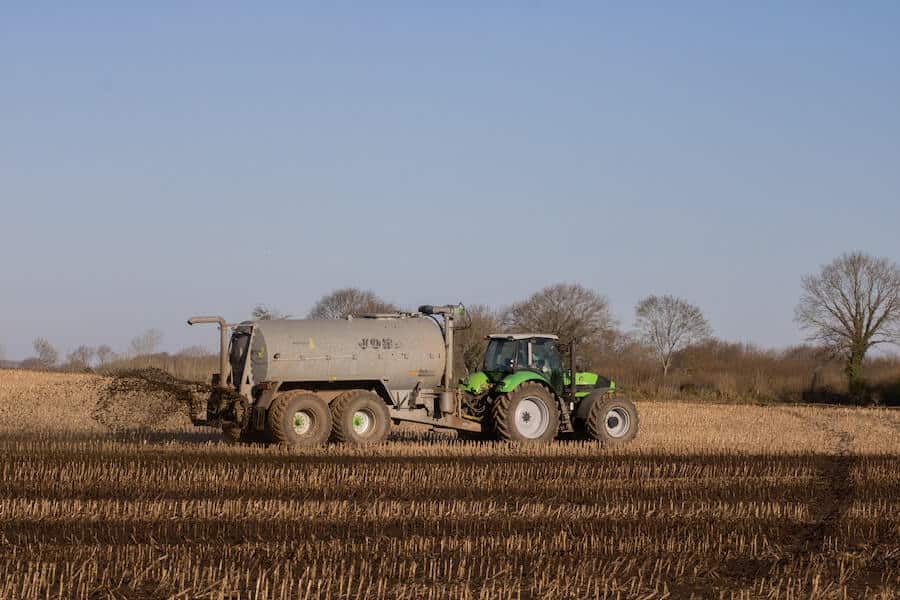
The first method for artificial nitrogen fixation and ammonia production, which is used for fertilization, first came to light in the early 20th century. This method, known as the Haber-Bosch Method, converts nitrogen in the atmosphere to ammonia, which is a compound made of nitrogen and hydrogen. It does so through a metal catalyst, which creates a reaction with hydrogen when put under high temperatures and pressures.
Almost 45% of the CO2 emissions from industry are the result of the manufacture of just four products – ammonia (predominantly used for fertilizers) is one of them. In non-organic growing systems, 75% of emissions are due to nitrogen fertilizers, feedstuff and fuels. So avoiding nitrogen fertilizers is one way to cut our carbon footprints.
What is more, excessive use of nitrogen fertilizers causes nitrate leaching that pollutes our waterways and seas. Increased nitrates in soil and water can cause a range of problems within ecosystems, creating ocean ‘dead zones’ and impacting the natural wildflowers and other plants upon which a range of wildlife depends.
Avoiding such fertilizers, therefore, is important for the protection of people and planet. Choosing and using nitrogen fixing plants is one important way to move towards breaking our reliance on these harmful products.
Using Nitrogen Fixing Plants in Your Polytunnel
Understanding the basics of nitrogen fixation, and identifying and using nitrogen fixing plants is important in any organic garden. There are a range of nitrogen fixing plants that could fit right in to your polytunnel garden. To help you explore your options, and take steps to ensure the long term fertility of your growing areas, let’s look at nitrogen fixing plants in a little more depth.
Nitrogen Fixing Vegetables : Legumes
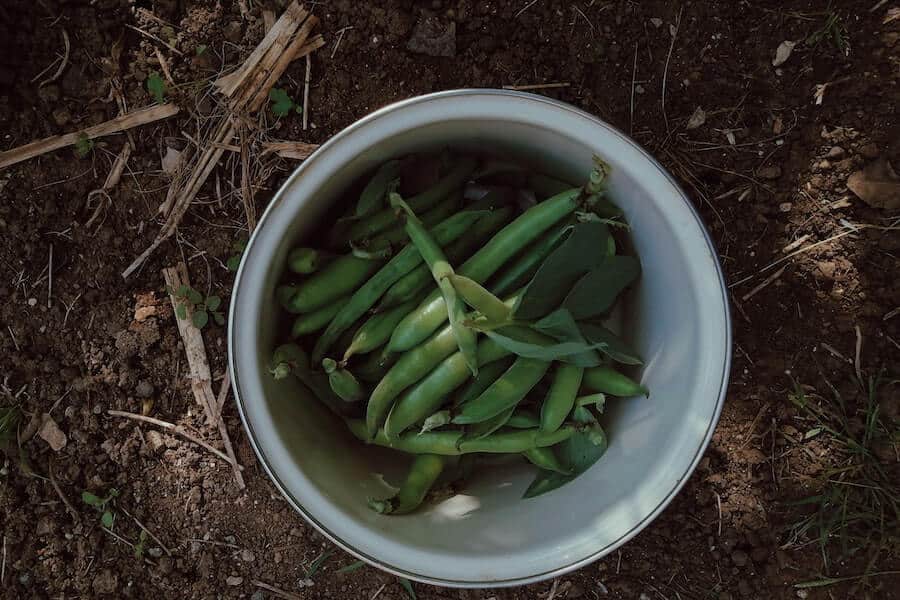
The most commonly used nitrogen fixing plants in a polytunnel setting are legumes. Legumes (members of the Fabaceae family) are the most important group of nitrogen fixing plants. They have rhizobia bacteria within nodules in their root systems.
Nitrogen fixing legumes commonly grown in UK polytunnels are:
- Broad beans
- Peas
- Green/ French beans
- Runner beans
But there are also a number of other plants within this family that could potentially find a place in your polytunnel, including:
- Other climbing beans
- Pigeon peas
- Soybeans
- Peanuts
These nitrogen fixing plants can be used as companion plants, and play an important role in crop rotation – adding nitrogen to the soil before the planting of following crops.
Nitrogen Fixing Flowers

There are also a number of nitrogen fixing flowers that you could consider incorporating into your polytunnel planting scheme.
One annual flower that could work well in a rotation with annual fruits and vegetables is the lupin (Lupinus angustifolius). This nitrogen fixing annual is great for free draining soil in a sunny spot. Not only is it a nitrogen fixer. It is also a great plant for attracting pollinators to your polytunnel. It is particularly loved by a range of bees. What is more, it is a great green manure plant, or companion crop. And can also produce an edible yield in its own right. These plants are sometimes cultivated for their edible seeds, which can be cooked like beans, or ground to make a flour.
There are also a number of perennial flowers that are nitrogen fixing plants. Some options that might work well in a polytunnel include:
- Clovers (in a perennial planting zone, or as a cover crop/ green manure.)
- Vetch (again, in perennial polycultures, or in rotation as a cover crop/ green manure.)
- Everlasting sweet pea. (An attractive climber that attracts pollinators and could be grown alongside other vining plants.)
Nitrogen Fixing Trees and Shrubs

Most polytunnel gardeners do not think to include nitrogen fixing trees and shrubs in their polytunnels, simply due to a lack of space. But in certain situations (for example, in a polytunnel where fruit bushes like currants and fruiting canes are grown) it could be a good idea to incorporate some larger nitrogen fixers.
Interesting fruiting nitrogen fixers that could be included alongside other more familiar fruits could include:
- Autumn Olive (Elaeagnus umbellata)
- Russian Olive (Elaeagnus angustifolia)
- Goumi (Elaeagnus multiflora)
Even a single specimen of one of the above could provide a source of vegetative material for composting and mulches to feed other plants in the system. And each of these can also fruit and provide an additional edible yield.
Another option that could potentially be considered for a polytunnel garden is a Siberian pea tree. A small Siberian pea tree will help with fertility, and also provide lentil-like seeds that taste a little like peas. A small specimen with a weeping form could work well inside a polytunnel.
And For Outside the Polytunnel:

It is also worthwhile considering that nitrogen fixing shrubs and trees grown outside but close to a polytunnel could provide a source of cuttings/ leaves. These can be used for compost. Or added as mulch within the polytunnel itself.
Some other nitrogen fixing plants and trees are:
- Laburnum
- Alder
- Sea buckthorn
- Acacia
- Ceanothus
- Gorse
- Broom
How To Add Nitrogen To Soil

I’ve touched on adding nitrogen to your soil in this article, but the benefits of doing so are unrivalled. Nitrogen-rich soil will ensure strong, healthy growth of all your plants; without nitrogen, plants aren’t able to make and develop their own cells! So, as well as adding nitrogen fixing plants to your garden, you should consider how to add nitrogen to soil in your garden. Here are some ways you can encourage nitrogen rich soil in your garden:
- Add composted manure on to your soil
- Try ‘chop-and-drop’ mulch
- Grow a green manure cover crop
- Mix coffee grounds into your soil
- Spread grass clippings like mulch
Nitrogen Fixing Plants For Your Garden
Incorporating some nitrogen fixing plants in your garden is an excellent idea. As you can see, there are a number of interesting options to choose from. Choose the right options for where you live, and you can continue to feed your garden and its soils. And it will continue to feed you over the years to come.
Share your own experiences of using nitrogen fixing plants in your polytunnel, or elsewhere in your garden, in the comments below.