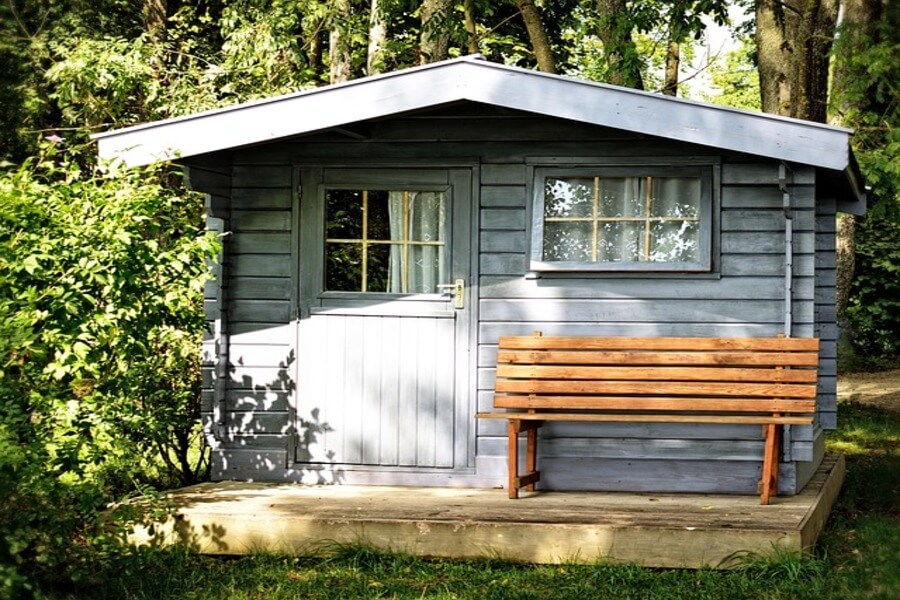
Many gardens have an old and dilapidated garden shed taking up space and not really fulfilling any functions. Sheds are often overlooked and neglected, but these can be very useful structures and it really is a shame not to make the most of them. Have you ever looked out into your garden and wondered how to make a shed look nice? That humble shed might be far more useful and appealing than you ever imagined. Here’s my advice on what to do with an old shed.
Make Do and Mend
When it comes to answering how to make a shed look nice, you may jump straight to simply buying a new one. After all, many of the sheds languishing in gardens across the British Isles have seen better days. Many may need some repair, or at least re-painting. Often, these neglected garden buildings are falling into disrepair and can even turn into something of an eyesore.
But just because a shed has seen better days, it is important to remember that this does not necessarily mean that it needs to be replaced altogether, or that it should be thrown on the rubbish heap of history.
Repair
You might well find that even the most dishevelled looking shed is actually relatively easily repaired and spruced up to make it pretty much as good as new.
An old garden shed can quite often be returned to working order and turned back into a feature that you enjoy having in your garden, and not one that you would rather ignore. So, if you’re looking for what to do with an old shed, scope it out and make any necessary repairs should be first on the list.
With an attitude of make do and mend, you can make the most of the structure as it stands, making alterations or additions, or simple DIY woodwork repairs as required.
If you want to be an eco-friendly and sustainable gardener, it is always important to make sure that in your eagerness to create a new organic garden, you do not throw the baby out with the bathwater, as it were.
It is important, before you begin any garden overhaul, to make sure that you recognise what you already have.
Don’t be too hasty to get rid of features that you are not entirely happy with, and make sure that you recognise the resources that you already have at your disposal to work with before you even think about buying anything new.
Reuse
Even if a shed does have to go, either because it is too far gone to salvage, or because it needs to make way for a new garden feature of a different kind, like a large summerhouse, or a polytunnel, for example, you might still use elements of its structure.
An old wooden shed might no longer be fit for purpose. But there may be certain elements from it that can be reused elsewhere in your garden.
For example, wood from an old garden shed no longer fit for purpose might be repurposed to become bed edging, or simple trellis or vertical garden structures… even small areas of wood decking or boardwalk.
Making do and mending means that we always try to find ways to make sure we do not throw anything away.
Consider The Shed’s Position
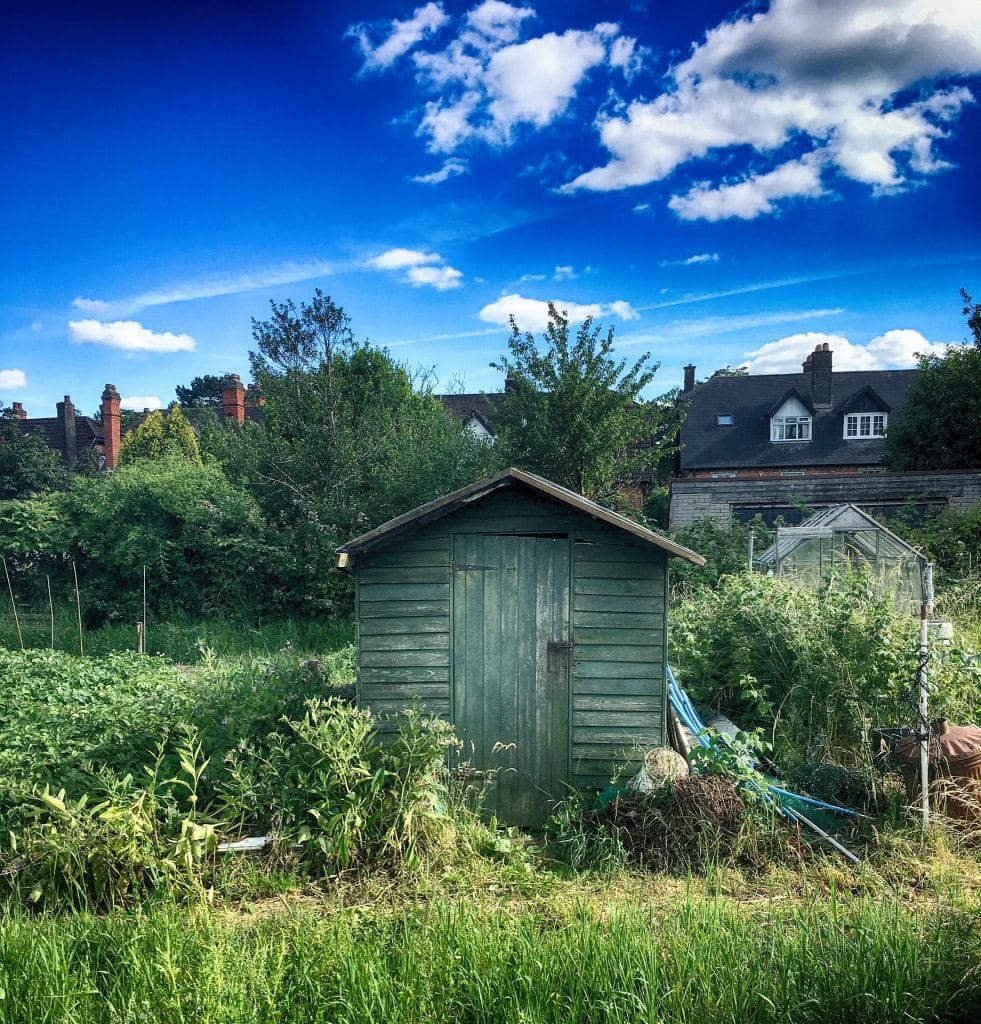
Unfortunately, many garden sheds were not originally positioned with any great thought, and this can potentially cause problems for a garden layout.
Sheds may sometimes have been positioned in such a way that they take up a sunny spot in a garden better used for planting. Sometimes, an ill-positioned shed may block light from a key area, or make a garden feel smaller and more hemmed in than it actually is.
Sheds may often be placed where they prevent us from accessing areas behind them, creating small awkward spaces that have become wasted space. This is a shame, especially in smaller gardens where space is typically at a premium.
A shed might also simply be visually unappealing in its current position – throwing off the symmetry in a garden, perhaps, if not centrally positioned at the end of the space.
While not always possible, it may sometimes be feasible to move an existing shed to a new location in your garden, rather than destroying it and creating or purchasing something new.
This is certainly something to think about before you make any rushed decisions about getting rid of an existing shed altogether.
Whether you move an existing shed to a new, better position, or create or buy something new, finding the right spot is absolutely crucial, and should be a key decision as you make your design.
Remember to think not only about how the space and the shed will look, but also about the overall layout and patterns of your garden. Look at patterns of sunlight and shade, wind and water and spend some time really thinking about how the shed will fit into the design as a whole.
Think about the downsides to positioning a shed in a particular location, and the benefits of doing so. What can the shed offer in a particular spot?
Every element that we include in our gardens should fulfil multiple functions, and a shed can be an example of that – doing many different things for us as long as we position it correctly and make the right design decisions.
Blend It Into the Surroundings
It can be important, whether dealing with an old shed or creating or placing a new one, to make sure that the shed really does feel like a part of the garden as a whole.
To feel like your garden has a holistic plan and to tie things together, it is a good idea to think about how you can blend any man-made structures into the surroundings.
Blending a garden shed into the surroundings means thinking carefully about the vegetation that surrounds it and also perhaps even finds its way onto the shed itself.
Lush planting around the base of a shed and behind it can help it seem to settle down and nestle into its surroundings. And when well chosen, the plants can benefit from having the structure there – providing a little extra heat or shelter, perhaps, or providing shade from hot sun in summer.
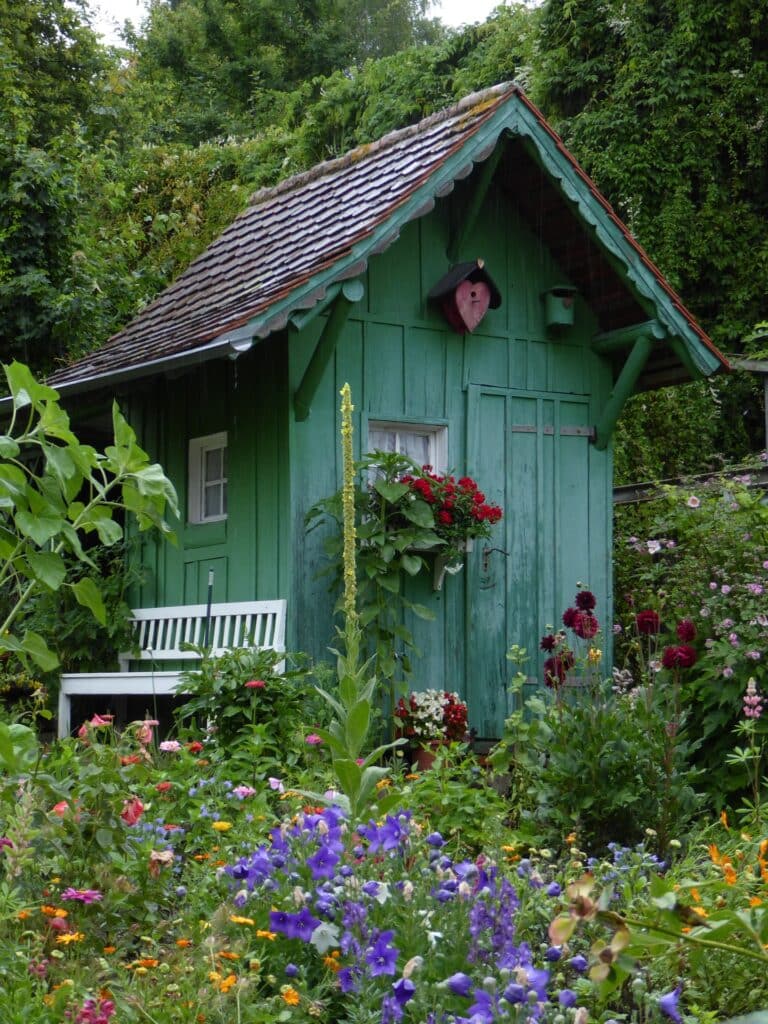
You might also consider cladding a shed in climbing plants, to really blur its boundaries and make it feel less angular and man-made. In certain cases, you might even have a shed sturdy enough to support a living roof. This is of course another great way to make sure that a shed fully feels part of the natural environment of your garden.
Make Full Use of the Structure
To make full use of any shed that you have in your garden, you need to think about how you can make use of the structure itself, and not just the space within it.
As mentioned above, one way to use the structure is to use it as support for climbing plants, or even as a structural support for the plants of a living roof.
But in addition to using a shed’s structure to grow plants, as plant support, you might also consider using the structure in other ways.
One key way to do so is to attach guttering and a water barrel or butt to collect rainwater from the roof of the structure. Collecting rainwater can allow you to direct it to where it is needed close by or simply use it directly to water your plants.
To give another example, you might use the structural framework of a shed to support garden artworks of various kinds, or other decorative features – like mirrors, for example, to make a space seem larger than it is.
You might also use the structure of a shed to hang wildlife friendly features like bird boxes, bee hotels etc… in the end, your shed might support a whole range of life, which has come to enjoy the other eco-friendly, wildlife-friendly features in your garden.
Make Full Use of the Inside
Of course, to make the most of a garden shed you also need to make sure that you make the most of the inside.
It is important to lay out the interior of a shed wisely, however small it may be. Make sure that you think carefully about storage, organization, access and multi-functionality so that your shed remains as useful as possible, whatever you use it for, throughout the year.
Remember, a garden shed can be for far more than just storage. It can be very useful for a gardener throughout the year, for plant propagation and a range of other garden jobs.
But it might also be used as a small sanctuary for rest and relaxation, a small escape from your daily life – a place to sit and read or just get lost in quiet contemplation. It might also be a place where a wide range of different hobbies might be enjoyed.
Once you see the potential in a garden shed, the only limit is your imagination. A shed can be and do fr more than you might imagine, and with the right approach, even a very small one can be a very useful element of your garden.
References:
https://www.gardenersworld.com/how-to/diy/10-ways-to-improve-your-shed/