

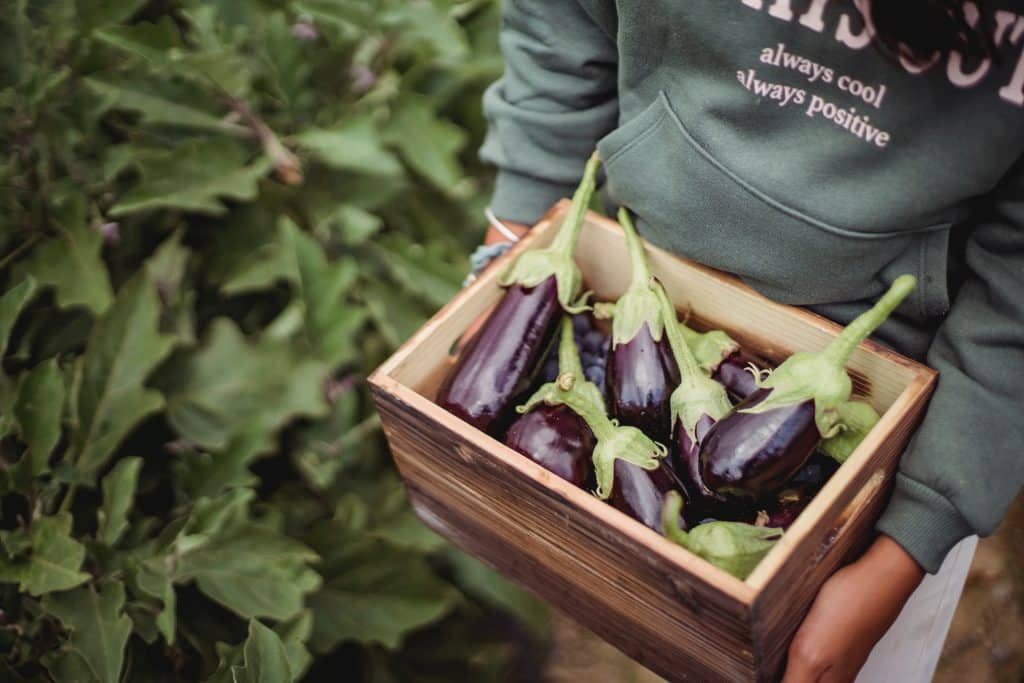
Aubergines are not the easiest of crops to grow. However, a polytunnel will make this task a little easier and increase the chances that you will be able to grow these plants successfully here in the UK. In this article, you will learn how to grow aubergines, from growing the right varieties, to their growing conditions, harvesting and pest problems.
Table of Contents
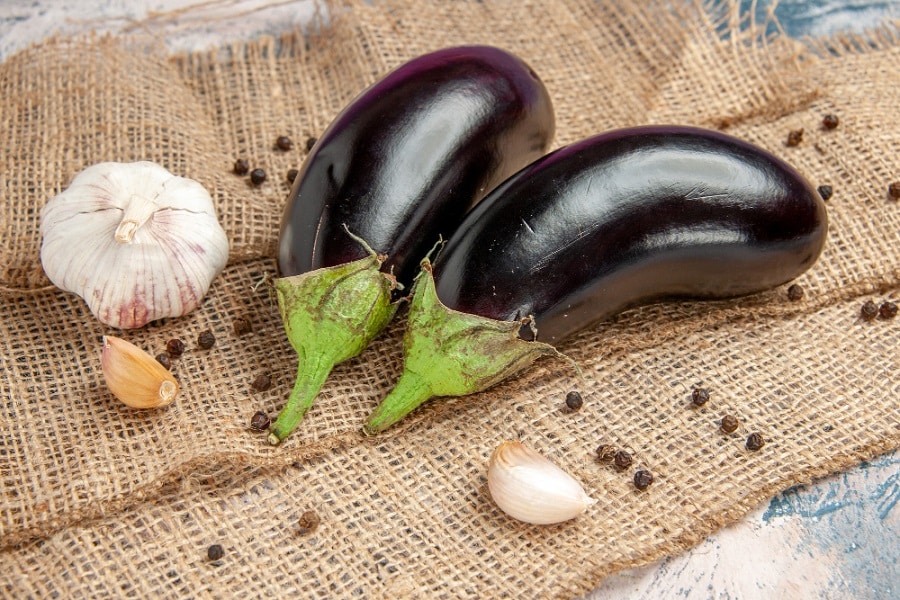
Getting started with growing aubergines
Aubergines come from the plant with the Latin name Solanum melongena. They are related to several other common crops often grown in UK polytunnel gardens, including tomatoes and peppers. They are related to potatoes too, though they need rather different conditions to grow well.
Like tomatoes and peppers, aubergines are summer crops that need plenty of sun and warmth to grow and ripen successfully. Since our summers can often leave much to be desired for warm season crops, a polytunnel or other undercover growing area will make things a whole lot easier.
A polytunnel can give aubergines the extra warmth and the humidity that they need to grow and set fruit successfully. They can be grown in the ground, in grow bags or in containers within the polytunnel.
If you are interested in growing aubergines at home, then here are some of the key pieces of information that will help you to achieve that goal:
- There are numerous varieties of Aubergine that you might grow. Note that some of these are far better suited to cultivation here in the British Isles than others.
- You should sow aubergines indoors between January and April for best results.
- Then transplant the young plants to your polytunnel or outside into your garden in May or June.
- Watering, mulching, feeding and pinching out are the main care tasks to consider.
- You can then expect to harvest ripe fruits in late July, August or September. In good conditions, the plants may produce up to 8 fruits, but there will often not be that many fruits here in the UK.
Now, let’s take a look at how to grow aubergines in a little more depth:
Choosing the right aubergine variety
First things first, if you have decided to grow aubergines at home then you will need to decide which variety or varieties to grow.
Not all aubergines will ripen successfully in the UK climate. To stand the bet chance of getting these fruits to ripen successfully, you should choose varieties with smaller fruits, which will mature in time within our shorter growing season.
Aubergine varieties to try
Aubergine varieties which are good for UK growing, and which have received an Award of Garden Merit and/or which are recommended by the RHS are:
- ‘Bonica’
- ‘Clara’
- ‘Galine’
- ‘Kaberi’
- ‘Moneymaker’
- ‘Fairy Tale’
- ‘Asian Bride’
- ‘Little Fingers’
- ‘Melanzana Violetta di Fierenze’
So these recommended varieties could be a good place to begin when selecting the right variety to grow in a UK garden.
Sowing aubergine plants
While aubergines can grow happily in a polytunnel, the seeds are best sown inside as they will need to be started early in the year.
Sowing Aubergines indoors
Seeds can be sown indoors between January and April, usually in either February or March – and require a high temperature for germination.
Either a warm location indoors or a heated propagator will be required as the temperature must be at least 21 degrees C. for the seeds to germinate. Seeds should germinate in 2-3 weeks.
Grow your aubergines in 9cm pots or similar initially and then when the roots fill those pots, transfer to larger containers.
Water sparingly but be sure to keep the soil moist during this time.
Transplanting young aubergine plants
If you are planting in a grow bag then you can place three aubergine plants per bag, one plant per container of around 30cm in diameter.
In the soil, a spacing of 60cm between plants is usually recommended.
You can transfer aubergines to a heated polytunnel in April or to an unheated polytunnel in May, after all risk of frost has passed and the polytunnel has warmed up considerably.
When transplanting aubergines outdoors you need to harden off plants well before they are placed into their outdoor growing positions.
Caring for an aubergine plant
Caring for an aubergine plant in your polytunnel or elsewhere in your garden is not rocket science. But you do need to make sure that you deliver the right care in order to get good results and obtain a good yield towards the end of the growing season.
Watering aubergine plants
You should be sure to water aubergines regularly, especially when growing undercover and when you cannot rely on natural rainfall at all.
Try to water early in the morning if possible, ideally with rainwater that you have harvested.
And aim for the soil or growing medium below the plant and not the plant itself, so that you use less water and so that the water ends up where it can be accessed by the roots of the plant. Getting water on the foliage, flowers and fruit can also make it more likely for fungal issues to arise.
It is important to provide moist yet free-draining conditions and not to let the soil or growing medium dry out entirely. You should also be sure not to create waterlogged conditions, however, as that will also cause problems for your plant.
Mulching
When planting aubergines, it is a good idea to mulch around the base of the newly planted plants with organic matter. This might be a good quality homemade compost, for example, or a well-rotted manure.
It is also a good idea to consider adding a leafy mulch of comfrey leaves or other material rich in potassium once the plant begins to flower, as this will help to meet the plant’s nutritional needs while also covering the soil and reducing moisture losses from it.
Feeding
Feed aubergines with a high potassium organic feed every couple of weeks once the first fruit has set. (Banana skins placed beneath the plants can also help with potassium needs.)
Pinching out shoot tips
When the plant has reached around 30cm in height, nip off the growing tip of the main stem. This is done to encourage the plant to get bushier and branch out. It focusses the plant on flowering and setting fruit rather than on foliage growth.
Supporting plants
It is a good idea to tie in growing aubergine plants to a support as they grow. Otherwise the plants may bend and break under the weight of their fruits as these mature and ripen.
Encouraging fruiting
Aubergines are rather fussy plants and will not fruit well unless you give them some TLC.
It is important to make sure the plants get plenty of warmth and light, and consistent water, as well as the nutrients they need.
You should also mist the foliage with tepid water at least twice a day to discourage red spider mite and to help encourage the fruits to set when growing undercover.
Of course, in order to fruit well aubergines also need to be pollinated. So make sure the polytunnel is open and insects can reach the plants once flowers emerge.
Misting the flowers will also help with self-pollination, or, where pollinators may be in short supply, you can also hand-pollinate with a small paintbrush.
To make sure fruits ripen towards the end of the season, remove further flowers on cultivars with larger fruits once 5 or 6 have started to ripen. If you are growing aubergines with smaller fruits, however, or those with round fruits, many more can be supported on each plant.
After late summer, on any type, it is best to remove flowers as these will not ripen in time, and take energy from fruits already ripening. If fruits are not ripe by late September, you will likely have to give them extra protection to allow them to do so.
Common problems when growing aubergines
The biggest challenges when growing aubergines are our short growing season and summers that can be poor, Remember, these are plants that need lots of sunshine and warmth over at least five months and often longer from sowing to harvesting.
Certain pests can also pose a problem, such as whitefly, aphids, and red spider mites. So remain vigilant and nip any problems of this kind in the bud before you have a serious infestation on your hands. Biological controls are available where these things become a serious concern.
Harvesting aubergines
It is important not to leave it too long before harvesting your aubergines. Make sure you cut them when they are still shiny, around 15cm in length. Once fruits have dulled they become bitter. The harvest should come between late July and September.
Storing and preserving aubergines
If necessary, you can store aubergines in your fridge for a few days. But it is best to use up your fresh aubergines as quickly as you can. One of the great things about growing them yourself is that you can enjoy them much fresher than those you can buy from the shops.
You can use your aubergines in a wide range of recipes from Mediterranean and Asian cuisines and so should find it easy to find ways to bring your harvest to your table.
Grow Your Own Aubergines for Fascinating Results
In conclusion, growing aubergines is a rewarding endeavor that requires attention to detail and a nurturing touch. By selecting the right variety, providing optimal growing conditions, and addressing common challenges, you can cultivate thriving aubergine plants. Embrace this horticultural adventure and savor the bountiful harvest of these versatile and delicious vegetables.
FAQs
When is the best time to plant aubergines?
Aubergines are warm-season plants, so it is best to plant them after the last frost date in your area when the soil has warmed up. This is typically in spring or early summer.
How much sunlight do aubergines need?
Aubergines require full sun exposure, which means they need at least 6-8 hours of direct sunlight each day for optimal growth and fruit production.
What type of soil is suitable for growing aubergines?
Aubergines thrive in well-draining, fertile soil with a pH level around 6.0 to 6.8. Adding organic matter, such as compost, to the soil can improve its fertility and drainage.
How often should I water my aubergine plants?
Aubergines need regular watering to keep the soil consistently moist. Water them deeply at least once a week, or more frequently during hot, dry periods. Avoid overwatering, as it can lead to root rot.
Do aubergines require any fertilization?
Yes, aubergines benefit from regular fertilization. Before planting, incorporate a balanced fertilizer into the soil. During the growing season, use a high-potassium fertilizer every two weeks to promote fruiting.
Should I prune my aubergine plants?
Pruning aubergine plants is not necessary, but you can pinch out the tips of the main stem when they reach around 30cm (1ft) tall to encourage bushier growth and more fruit production.
How do I protect my aubergine plants from pests and diseases?
Common pests that affect aubergines include aphids, whiteflies, and flea beetles. Regularly inspect your plants and take appropriate measures such as using insecticidal soap or organic pest control methods. Proper spacing and good airflow can also help prevent diseases like fungal infections.
When can I harvest aubergines?
Aubergines are typically ready for harvest 60-80 days after transplanting, depending on the variety. Harvest the fruits when they are fully mature, firm, and glossy. Use a sharp knife or pruning shears to cut the fruit from the plant, leaving a short stem attached.
How should I store harvested aubergines?
Use harvested aubergines promptly for the best flavor. If necessary, you can store them in a cool, dry place for a few days. Avoid refrigerating aubergines unless necessary, as it can affect their texture and flavour.
Can I save seeds from my aubergine plants?
Yes, you can save seeds from mature, fully ripe aubergine fruits. Remove the seeds, rinse them, and let them dry completely. Store the dried seeds in a cool, dry place in a labeled envelope or container for future planting.
Sources:
Dobies. (n.d.). Aubergine Plants. Dobies. [Accessed 07/06/23] Retrieved from https://www.dobies.co.uk/vegetable-plants/aubergine-plants [accessed 21/06/23]
BBC Good Food. (n.d.). Aubergine Recipes. [Accessed 07/06/23] BBC Good Food. Retrieved from https://www.bbcgoodfood.com/recipes/collection/aubergine-recipes [accessed 21/06/23]