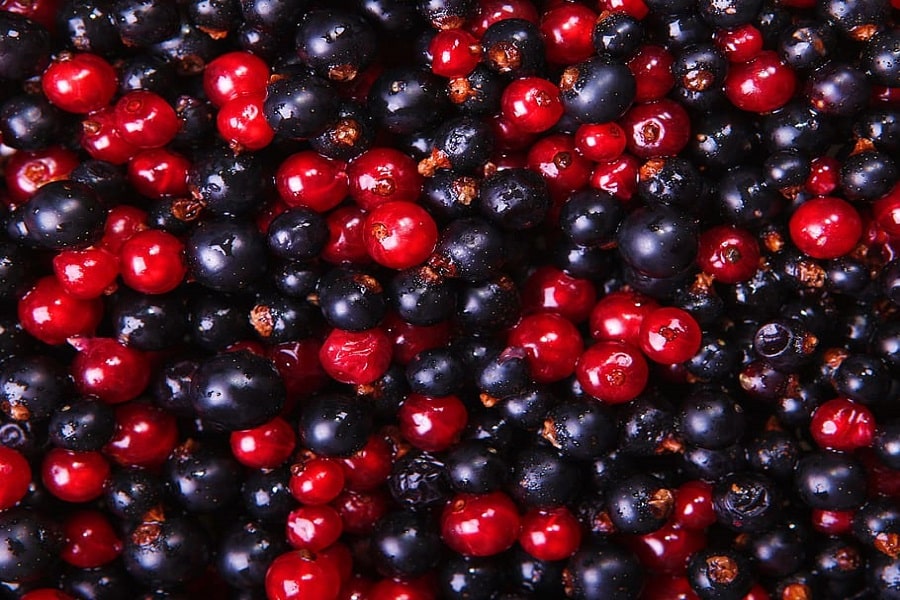
Blackcurrants are great soft fruits to grow in UK gardens. Easy to cultivate, prolific and relatively forgiving, they are great for beginners as well as more experienced gardeners. In this guide, we will walk you through the basics, so you can understand how and where to grow blackcurrants at home.
Table of Contents
Why to Grow Blackcurrants: Need to Know Info
So, why should you grow blackcurrants?
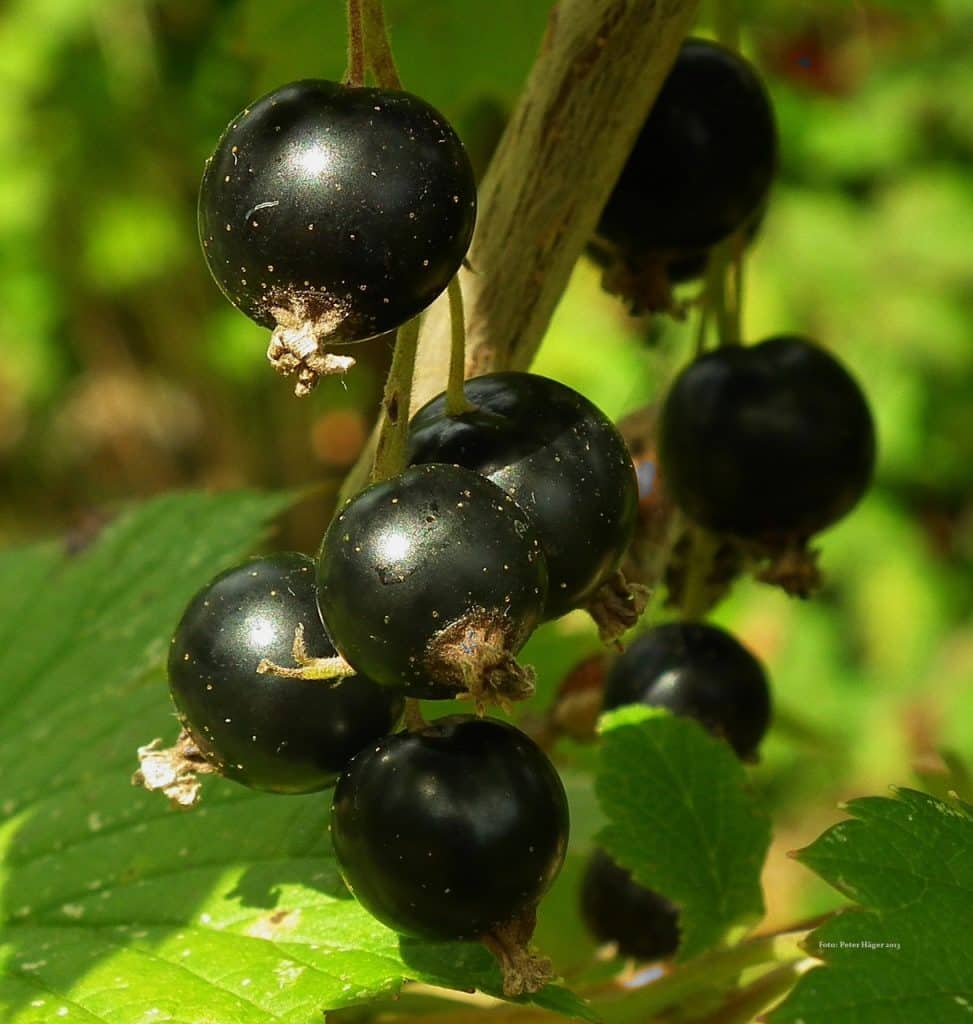
Blackcurrants are deciduous shrubs, which go by the Latin name Ribes nigrum. They are native to central and northern parts of Europe and northern Asia and are widely cultivated for their edible berries.
These shrubs can ultimately grow to around 1.5m in height and diameter, but are often kept smaller in size. They are largely insect pollinated and are beloved by a range of native pollinators in the UK. The berries ripen to deep purple, almost black in summer, and can be harvested for use in a range of different ways.
Blackberries make a good addition to a fruit-producing garden, and these shrubs can deliver abundant berry yields. Blackberries can also be useful within garden systems, as shrubs within a forest garden, for example, or as part of a fruiting hedgerow or partition between garden rooms. By following the information below in this guide, you will learn how to grow blackcurrants and how you could potentially grow them in a polytunnel too.
If you are interested in growing other varieties of berries, here’s how to grow cranberries.
Selecting the Right Blackcurrants
Choosing to grow blackcurrants is one decision made. But you will also need to choose a specific variety or specific varieties to grow in your garden. Some varieties that are highly regarded to consider growing in the UK are:
Where to Grow Blackcurrants
Blackcurrants are hardy enough to grow outside in UK gardens year-round. But they can also be a good choice for cultivation in a polytunnel, or within the protection of a fruit cage.
Whether you grow them outdoors or under cover, the key things to remember are that these plants require a position in full sun to light or dappled shade.
They will do best in a somewhat sheltered position though are generally pretty unfussy about aspect and orientation. Avoid planting in frost pockets or sites where cold winds are commonly experienced in the spring.
They should be grown in a well-drained but relatively moisture retentive soil or growing medium and can be grown in containers as well as in the ground.
A neutral to slightly acidic growing medium/soil is preferred – a pH around 6 is ideal. Where the soil is more acidic, these plants may not do quite as well, though they are generally not that fussy and can cope with a wide range of conditions.
We also have a useful guide on how to gross cress! Find out more.
Preparing the Planting Site
Once you have chosen the planting site for your new blackcurrants, it is of course important to clear the area of any perennial weeds, and to amend the area where you have not already done so by top dressing with plenty of homemade compost or well-rotted manure.
Blackcurrants are pretty heavy feeders and so it is important to make sure that the soil contains plenty of the key nutrients that they need.
Planting Techniques for Blackcurrants

The best time to plant blackcurrants is during their dormant period, from November to March. You can either purchase blackcurrants as bare root or pot grown specimens. The former is the more affordable choice.
Whether planting in the ground or in containers, blackcurrant plants should typically be planted a little deeper than they were previously – around 5cm lower into the ground or growing medium.
Planting more deeply encourages the formation of strong shoots from the base. Those specimens that are trained to grow as standards however, like trees with a single main stem, should be planted to the same depth that they were at in their previous position.
The hole for planting blackberries should be around twice the diameter of the rootball and you should spread the roots out within the hole before firming the soil back around the base of the plant. Make sure there are no air pockets around the roots, and water the plant or plants in well.
Mulch around the plant (but not touching the stems) with organic matter to add fertility slowly over time, retain moisture and reduce weed growth.
If planting multiple blackcurrants, these should usually be spaced around 1.5m apart, unless growing standard-trained plants, which can be spaced more closely.
Interested in growing onions? Here is what you need to know…
Caring for Blackcurrant Plants
When learning how to grow blackcurrant plants, you also need to know how to care for them. The main things to think about are watering, feeding, and protection. As long as you take care of these three things it will be difficult to go too far wrong when growing blackcurrants in your garden.
When it comes to watering, it is important to water plants regularly through their first summer until they become properly established. After this, those growing in the ground will only need to be watered during prolonged dry spells. But plants in pots will continue to require frequent watering.
Water the soil not the foliage/ fruits, and aim to keep the soil or growing medium moist but not saturated. Make sure that excess water can drain away freely. Avoid watering too heavily while the fruits are ripening as this can cause their skins to split.
In the late winter, it is a good idea to feed plants growing in the ground with an organic fertilizer such as fish, blood and bonemeal, or similar. If the plants seem weak, or when growing in pots, additional feeding may be beneficial – a nitrogen rich feed before flowering, and then a potassium rich one while the plants are flowering and setting fruit.
If you are not already growing your blackcurrants in a polytunnel or fruit cage, you may with to add some protection against frost in spring and for the berries so you can harvest them before the birds eat the lot.
Are you interested in eating more healthily? Here are some low carb fruits and veg to grow.
Companion Planting with Blackcurrants
Blackcurrants will grow well alongside other related berry bushes such as redcurrants or gooseberries, but of course, can share certain pests and diseases in common. So to make sure that any problems are kept to a minimum, it is a good idea to create polycultures of plants that work well with one another, creating thriving, biodiverse garden ecosystems. Perennial herbs can work well planted below and around blackcurrant bushes, creating good groundcover without competing overly with the berry bushes themselves.
Managing Pests and Diseases
Blackcurrants are typically not problematic plants and they can often thrive without much care and attention at all. However, problems can of course arise with certain pests and diseases.
For example, those growing blackcurrants may encounter issues with blackcurrant gall midge, blackcurrant big bud mite, currant blister aphid, and powdery mildews. Birds can also be a problem and can eat the entirely of an unprotected harvest.
Promoting natural biodiversity in your garden, attracting predators for common pests, and paying attention to spacing and other elements of plant care can help reduce the chances of a serious problem taking hold.
Pruning and Training Blackcurrant Plants
When pruning blackcurrants the key thing to understand is that they fruit best on strong growth made over the previous few years.
So when pruning established blackcurrants, our goal is primarily to remove some of the oldest growth which will have become a little less productive. Doing this each year should encourage new growth to emerge from the base of the plant.
So, in winter while the plants are dormant, it is best to prune out up to a third of the oldest stems down to the base. These oldest stems will be thicker and darker in hue. Cut just above an outward facing bud.
Harvesting Blackcurrants
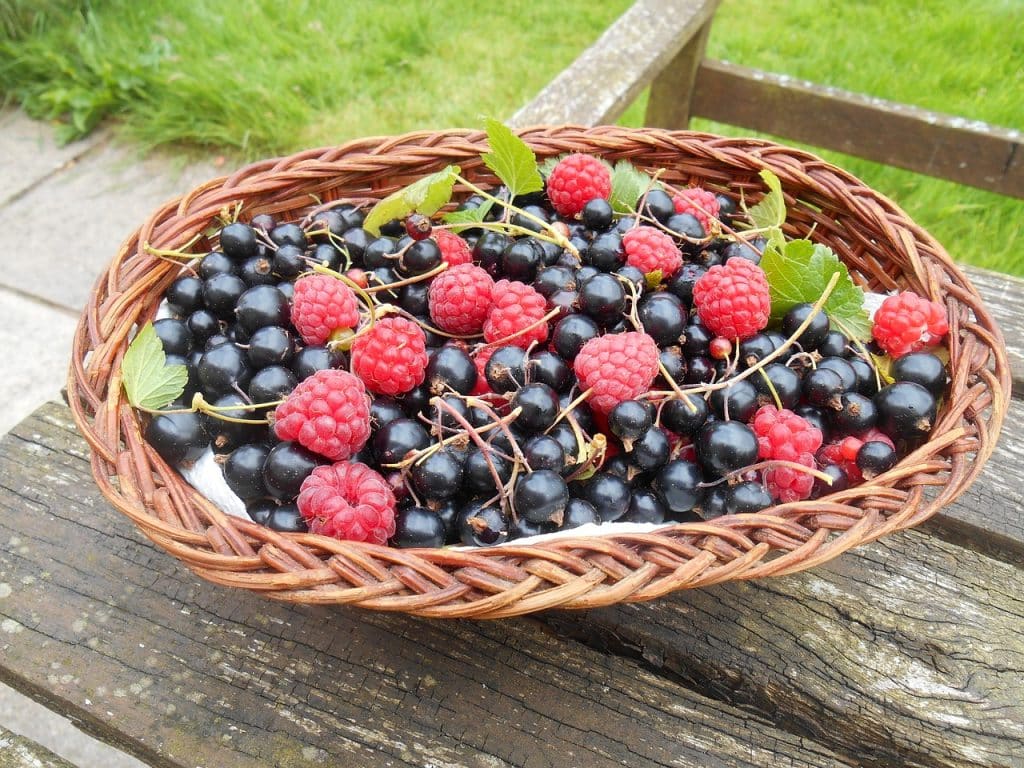
Blackcurrants will typically be ready to harvest from early summer onwards. But the precise time of the harvest will depend on the variety or varieties that are grown. Some will fruit a little earlier and some a little later, and by growing different varieties that fruit at different times you can potentially significantly prolong the harvesting period.
With older varieties, the currants on each bunch, or strig, will ripen at different times. But with more modern cultivars they should usually ripen all at once. You can tell that the berries are ripe when they are deep purplish black in colour and a little softer than they were before.
Handle the blackcurrants carefully, as they can be squashed or damaged easily. They are best eaten or preserved promptly. Keep them in the fridge for a few days, or preserve them by canning or freezing if you cannot use them up right away.
Blackcurrant Uses and Recipes
Blackcurrants are commonly used in a range of different ways. They can be eaten raw, though it is more common to use them in cooked recipes, bakes or preserves like jams, jellies, and chutneys. If you would like to learn more about blackcurrant uses, try these blackcurrant recipes.
Grow Blackcurrants with our essential advice
In conclusion, this is everything that you need to know about how to grow blackcurrants in the UK. By following our advice, your blackcurrants will have fruitful results in a matter of months, and you will truly find the benefits of blackcurrants when introducing them to your culinary efforts.
FAQs
When is the best time to plant blackcurrants?
Blackcurrants are best planted during late autumn or early winter when they are dormant. This allows them to establish their root systems before spring growth.
What type of soil do blackcurrants prefer?
Blackcurrants thrive in well-draining, fertile soil with a pH between 6.0 and 6.5. They prefer soil that is rich in organic matter.
How much sunlight do blackcurrant bushes need?
Blackcurrant bushes require full sun exposure to produce abundant fruit. Aim for at least 6 to 8 hours of sunlight daily.
Do blackcurrants need a lot of water?
Blackcurrants require consistent moisture, especially during dry spells and when they are fruiting. However, avoid waterlogged soil as it can lead to root rot.
Sources
- Royal Horticultural Society (RHS). (n.d.). Ribes nigrum ‘Big Ben’ PBR (B). Retrieved from https://www.rhs.org.uk/plants/245685/ribes-nigrum-big-ben-pbr-(b)/details [accessed 21/07/23]
- Thompson & Morgan. (n.d.). Blackcurrant ‘Ben Connan’. Retrieved from https://www.thompson-morgan.com/p/blackcurrant-ben-connan/cww3190TM [accessed 21/07/23]
- Chris Bowers & Sons. (n.d.). Black Benhope. Retrieved from https://www.chrisbowers.co.uk/product/black-benhope/ [accessed 21/07/23]
- Ashridge Trees. (n.d.). Ben Sarek Blackcurrant. Retrieved from https://www.ashridgetrees.co.uk/ben-sarek-blackcurrant [accessed 21/07/23]
- Ashridge Trees. (n.d.). Ben Lomond Blackcurrant. Retrieved from https://www.ashridgetrees.co.uk/ben-lomond-blackcurrant [accessed 21/07/23]
- BBC Good Food. (n.d.). Seven ways to cook blackcurrants. Retrieved from https://www.bbcgoodfood.com/howto/guide/seven-ways-cook-blackcurrants [accessed 21/07/23]