

Hedges are an invaluable part of gardens and landscapes, offering privacy, protection, and a thriving habitat for wildlife. However, to keep hedges healthy, attractive, and functional, they require regular maintenance.
Understanding when can you cut hedges and how to do so is crucial, not only for the hedge’s well-being but also to ensure you comply with legal requirements and avoid disturbing local wildlife. In this guide, we’ll explore the best times and methods for hedge cutting in the UK, along with practical tips on keeping your hedges in excellent condition year-round.
Quick facts
- Young hedges benefit from formative pruning in their early years, usually in winter or early spring.
- Legally, hedge cutting is restricted during bird nesting season (March to August) under the Wildlife and Countryside Act 1981.
- Most hedges require trimming at least once or twice a year, depending on the plant species.
- Different plants have different trimming needs—fast-growing hedges like Leylandii need more frequent maintenance, while slower-growing species require less intervention.
When Should I Cut Back Young Hedges?

If you’ve recently planted a hedge, it’s vital to establish a good structure from the outset. Formative pruning encourages dense growth, creating a strong and healthy hedge for the future.
Deciduous Hedges
For species like beech (Fagus sylvatica) or hawthorn (Crataegus monogyna), formative pruning should take place in late winter or early spring, before new growth begins.
Evergreen Hedges
Evergreens such as yew (Taxus baccata) or box (Buxus sempervirens) should be pruned in spring or early summer.
Prune young hedges by:
- Reducing the height and width slightly to encourage bushier growth.
- Trimming side shoots to create a compact, neat shape.
- Removing any damaged or weak stems.
Regular formative pruning in the first couple of years will establish a well-structured hedge that requires less drastic maintenance later on.
When Can You Cut Hedges? Getting Legal Permits
One of the most important considerations when cutting a hedge in the UK is compliance with wildlife protection laws.
Under the Wildlife and Countryside Act 1981, it is illegal to intentionally damage or destroy an active bird’s nest, which means that hedge cutting should generally be avoided during nesting season—typically March to August.
Exceptions and Responsibilities
- If your hedge poses a safety risk—for example, obstructing a road or pathway—you are permitted to trim it, but always check for nesting birds first.
- Light maintenance trimming (using hand shears rather than power tools) may be acceptable in certain cases, provided you have thoroughly inspected the hedge for nests.
- Farmers and landowners must also adhere to the Cross Compliance Regulations, which prohibit hedge cutting on agricultural land between 1st March and 31st August, except in specific circumstances.
If in doubt, wait until September before undertaking any major hedge cutting to ensure you are not disturbing wildlife.
How Often Should I Trim My Hedge?
The frequency of hedge trimming depends on the species and the purpose of the hedge.
- Fast-growing hedges (e.g., Leylandii, Privet, Cherry Laurel): Trim two to three times per year to keep them under control.
- Medium-growth hedges (e.g., Beech, Hornbeam, Yew): Once or twice per year is usually sufficient.
- Slow-growing hedges (e.g., Holly, Box, Hawthorn): A single annual trim is enough to maintain shape.
Regular maintenance keeps hedges healthy and prevents them from becoming overgrown, which can be difficult to correct later.
How Often Do Particular Hedge Plants Need To Be Trimmed?
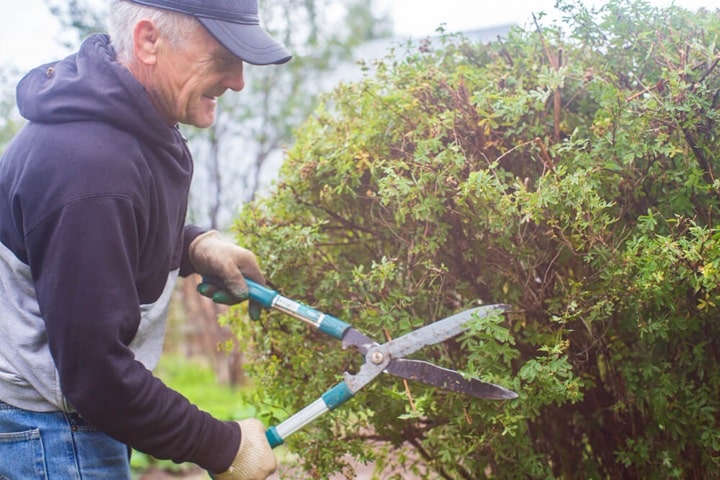
Below is a guide to common native hedge species, with details on how and when to trim them to keep them healthy and thriving:
| Hedge Species | Trimming Frequency | Best Time to Trim |
|---|---|---|
| Hawthorn | 1–2 times per year | Late summer/autumn |
| Alder | 1 time per year | Late summer/autumn |
| Blackthorn | 1 time per year | Late summer/autumn |
| Beech | 1–2 times per year | Late summer |
| Hornbeam | 1–2 times per year | Late summer/winter |
| Holly | 1 time per year | Late summer/autumn |
| Field Maple | 1 time per year | Late summer/autumn |
| Hazel | 1 time per year | Late summer/autumn |
| Dog Rose | 1 time per year | Late autumn/winter |
| Wild Privet | 2–3 times per year | Spring/summer/autumn |
| Guelder Rose | 1 time per year | Late autumn/winter |
| Rowan | 1 time per year | Winter |
| Elder | 1 time per year | Late winter/early spring |
| Spindle | 1 time per year | Late autumn/winter |
| Wayfaring Tree | 1 time per year | Late winter/early spring |
Hawthorn (Crataegus monogyna)
Hawthorn is one of the most popular native hedge species in the UK, known for its dense, thorny structure and abundant spring blossoms. It provides excellent shelter for birds and produces red berries (haws) in autumn, which are a valuable food source for wildlife.
Hawthorn hedges should be trimmed once or twice a year, ideally after flowering in late summer or early autumn. Light pruning maintains a tidy shape, while harder pruning in winter can encourage bushier growth. Avoid cutting in spring to protect nesting birds.
Alder (Alnus glutinosa)
Alder is a fast-growing native tree often found in damp conditions, making it ideal for hedges in wet or waterlogged areas. It is particularly beneficial for wildlife, supporting various insect species and birds that feed on its small, cone-like seeds.
Alder hedges should be trimmed once a year, in late summer or early autumn to maintain their shape. Since alder can grow rapidly, light pruning throughout the year can help control excessive growth. Harder pruning is best done in late winter or early spring before new growth begins.
Alder is a robust species that responds well to cutting and can be managed as a traditional coppiced hedge if desired.
Blackthorn (Prunus spinosa)
Blackthorn is another dense, thorny hedge species, often used in rural settings. It flowers early in spring, providing nectar for pollinators before producing sloes in autumn.
To keep a blackthorn hedge manageable, it should be trimmed once a year, in late summer or early autumn. A harder winter prune can be done if necessary, especially to control suckering growth, which can cause the hedge to spread aggressively.
Beech (Fagus sylvatica)
Beech is a deciduous species that retains its brown leaves through winter, making it an excellent hedge for year-round privacy. It thrives with one or two trims per year, best done in late summer (August to September) to maintain its neat, formal shape.
Young beech hedges benefit from formative pruning in their first two winters to establish strong structure. Beech is slow-growing, so excessive pruning is unnecessary.
Hornbeam (Carpinus betulus)
Similar in appearance to beech but more tolerant of clay soils and damp conditions, hornbeam forms a dense, attractive hedge. It should be trimmed once or twice a year, with the main cut in late summer to shape the hedge, followed by an optional winter trim to encourage thick growth. Hard pruning is best done in winter when the hedge is dormant.
Holly (Ilex aquifolium)
Holly is a tough, evergreen hedge with glossy, spiky leaves and bright red berries, making it an excellent choice for privacy and wildlife. It requires one trim per year, usually in late summer or early autumn to maintain shape. Since holly is slow-growing, avoid cutting too hard into old wood, as regeneration takes time. A light winter prune may be done if needed.
Field Maple (Acer campestre)
A resilient, fast-growing native species, field maple is a great addition to mixed native hedging. It provides brilliant autumn colour and supports a range of pollinators. It should be trimmed once a year, in late summer or early autumn, using light pruning to maintain its shape. Harder cuts in winter or early spring will encourage fresh growth.
Hazel (Corylus avellana)
Hazel is often used in traditional hedgerows and is ideal for coppicing. It provides excellent wildlife habitat and produces edible nuts in autumn. Hazel hedges should be trimmed once a year, in late summer or early autumn. Every few years, you can rejuvenate the hedge by coppicing sections in winter, cutting them back to ground level to encourage new growth.
Dog Rose (Rosa canina)
A wild rose species, dog rose produces beautiful pink flowers in summer, followed by red rosehips that birds and small mammals love. It thrives in informal hedging and should be trimmed once a year, in late autumn or winter. Light pruning keeps it in check, while harder pruning in winter encourages fresh growth and abundant flowering the following year.
Wild Privet (Ligustrum vulgare)
This semi-evergreen hedge is popular for its resilience and pollinator-friendly summer flowers. It requires two to three trims per year, ideally in spring, summer, and late autumn, to maintain a tidy shape. Avoid trimming in mid-summer if you want to preserve flowers for pollinators.
Guelder Rose (Viburnum opulus)
A striking hedge species with clusters of white flowers in spring and bright red berries in autumn, guelder rose is an excellent choice for wildlife-friendly gardens. It should be trimmed once a year, in late autumn or winter. Pruning should be light to maintain shape while allowing old wood to remain, as flowers and berries form on older branches.
Rowan (Sorbus aucuparia)
Rowan, or mountain ash, is often used in mixed hedging and produces vibrant red berries in autumn. It requires minimal pruning, with one trim per year in winter to remove dead or crowded branches. Light pruning helps maintain shape without reducing berry production.
Elder (Sambucus nigra)
Elder is a fast-growing native hedge species with fragrant flowers in summer and dark berries in autumn. It thrives with one trim per year, in late winter or early spring. Hard pruning in winter can rejuvenate older hedges and encourage new growth, but avoid excessive cutting if you want a good berry harvest.
Spindle (Euonymus europaeus)
Spindle is an ornamental native hedge with vivid pink and orange berries in autumn. It should be trimmed once a year, in late autumn or winter, using light pruning to maintain shape. Avoid cutting back too hard, as flowers and fruit develop on older wood.
Wayfaring Tree (Viburnum lantana)
This native species produces creamy-white flowers in spring and red berries that turn black in autumn. A good choice for mixed hedging, it should be trimmed once a year, in late winter or early spring. Light pruning helps maintain a dense structure while allowing flowers and fruit to develop.
Getting Started: How To Trim A Hedge
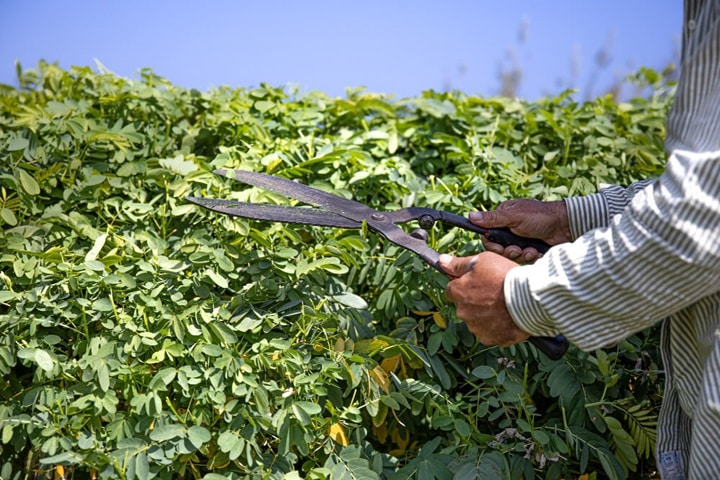
- Step One: Gather Your Tools
- Hand shears for smaller hedges or light trimming.
- Electric or petrol hedge trimmers for larger hedges.
- Loppers for thicker branches.
- Gloves and safety goggles for protection.
- Step Two: Trimming Technique
- Start by cutting from the bottom upwards to maintain an even shape.
- Angle the cut slightly so the base is wider than the top—this allows light to reach lower branches, promoting healthy growth.
- Use a string line as a guide to ensure a straight hedge top.
- Trim in dry weather to avoid spreading fungal diseases.
- Aftercare
- Watering: Newly cut hedges benefit from deep watering, especially in dry spells.
- Mulching: Apply organic mulch (e.g., compost or wood chips) around the base to retain moisture and improve soil quality.
- Feeding: Use a balanced, organic hedge fertiliser for new hedges or hedges that could do with a boost in spring to encourage robust growth.
How does my hedge impact wildlife?
Native hedges are not only a practical boundary solution but also vital for supporting biodiversity, providing food and shelter for birds, insects, and small mammals.
Wildlife-Friendly Hedge Maintenance
- Delay major cuts until after nesting season (August onwards).
- Allow seasonal flowering for pollinators before cutting.
- Leave some areas untrimmed to provide shelter.
- Plant a mix of native species to maximise biodiversity.
How can I take care of my hedge?
- Prune regularly to prevent disease and overgrowth.
- Monitor for pests like box blight or aphids.
- Mulch annually with organic matter and use additional organic fertiliser where results are poor to boost growth.
FAQs
Is there a particular technique for cutting hedges?
Yes—use an angled cut, work from bottom to top, and avoid cutting too hard into old wood, as some species struggle to regenerate.
How do I dispose of hedge clippings?
Compost them if the cuttings are small.
Leave some cuttings in a corner of the garden to create wildlife habitats.
Use a garden shredder to make a mulch/ path material from larger woody clippings.
Can I cut my hedge during nesting season?
Not unless absolutely necessary. Always check for active nests and delay cutting until September if possible.
Sources
Lake, S., Liley, D., Still, R., Swash, A., (2020).What wildlife can I see in British hedgerows? BBC Science Focus. [online] Available at: https://www.sciencefocus.com/nature/what-wildlife-can-i-see-in-british-hedgerows