
When to Repot Seedlings: The Key Signs You Shouldn’t Ignore
Knowing when to repot seedlings can feel surprisingly stressful for beginner growers. Move them too early and fragile roots can struggle to recover. Leave them too long and seedlings quickly become crowded, root-bound, and weakened.
The good news is that seedlings usually tell you when they are ready.
Rather than relying strictly on dates or sowing schedules, I’ve found it far more useful to watch for visual signs and patterns of growth. Root development, true leaves, spacing, and overall plant health are usually much more reliable indicators than the calendar alone.
In this guide, I’ll explain when to repot seedlings, the signs that matter most, common timing mistakes, and how conditions inside a polytunnel, indoors, or outdoors can all affect the process.
Key Takeaways
- Repot seedlings when they develop 2 to 3 true leaves
- Visual growth cues matter more than fixed timelines
- Healthy root development is the main driver of timing
- Waiting too long increases root-bound stress
- Repotting too early can cause transplant shock
What Does “Repotting Seedlings” Actually Mean?
Repotting seedlings simply means moving young plants into a larger growing space once they outgrow their original container.
This process is sometimes called “potting up” when seedlings move from small trays into slightly larger pots before eventually reaching their final growing position.
For many crops, the progression looks something like this:
- Seed tray or module
- Small individual pot
- Larger pot or final planting position
The goal is not simply to give plants more room above ground. The real reason for transplanting plants is to support healthy root development beneath the surface.
Why Repotting Matters
- Prevents overcrowding
- Reduces competition for nutrients
- Encourages stronger roots
- Supports healthier growth
- Improves airflow between seedlings
I often think of repotting as creating the next stage of conditions a plant needs to continue developing steadily.
From a more ecological gardening perspective, healthy roots are the foundation of resilient plants. Strong root systems help seedlings cope better with fluctuations in temperature, moisture, and nutrients later on.
When to Repot Seedlings (The Simple Rule)
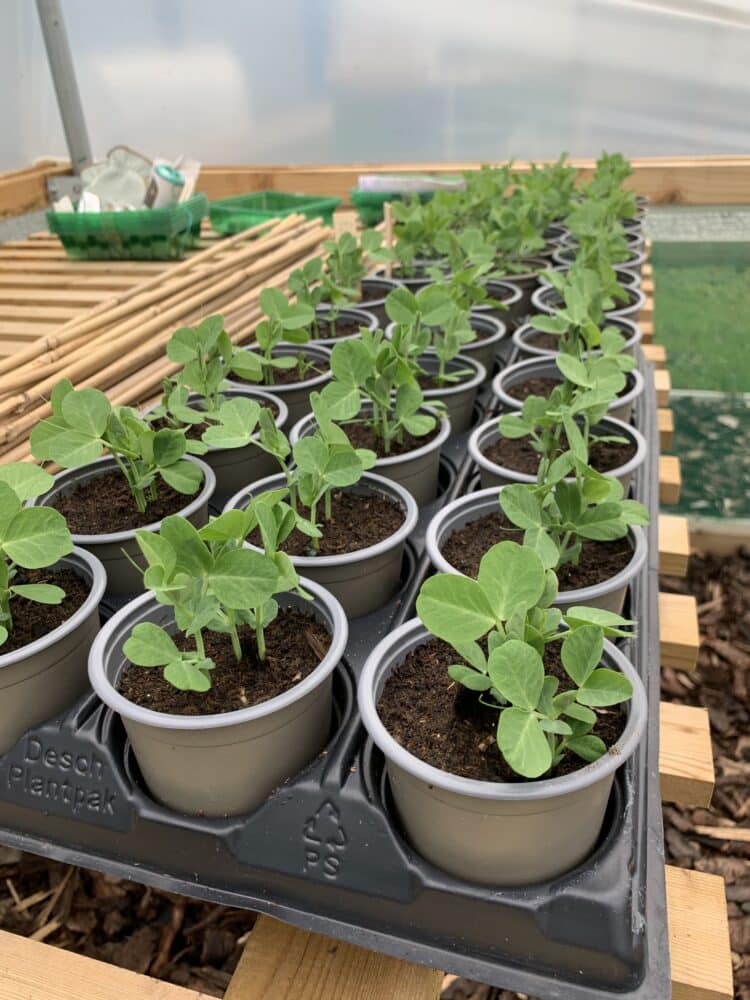
As a general rule, seedlings are usually ready for repotting once they develop 2 to 3 true leaves.
This is one of the most reliable visual indicators because it shows the plant has moved beyond its earliest stage of growth and begun producing mature foliage.
Cotyledons vs True Leaves
The first leaves to appear are called cotyledons or seed leaves.
These:
- Often look smooth and simple
- Contain stored energy from the seed
- Are not considered true mature leaves
True leaves:
- Appear afterwards
- Resemble the mature plant’s foliage
- Signal active ongoing growth
Key Point: True leaves matter far more than the number of days since germination.
Typical Timing
Many seedlings become ready for repotting somewhere between 10 to 21 days after germination but timing varies depending on:
- Temperature
- Light levels
- Water availability
- Plant variety
- Growing conditions
A seedling growing quickly in a warm polytunnel may need repotting much sooner than one growing slowly on a cool windowsill.
That is why observing the plant itself matters more than following strict schedules.
5 Clear Signs Your Seedlings Are Ready to Repot
If you are unsure when to transplant seedlings, these are usually the clearest signs to look for.
1. True Leaves Have Fully Developed
Once seedlings produce 2 to 3 true leaves, they are often ready for more space.
2. Roots Are Visible at Drainage Holes
Roots emerging beneath trays or modules usually indicate the plant is running out of room.
3. Soil Dries Out Very Quickly
If seedlings suddenly need watering far more frequently, roots may already be filling the container.
4. Growth Begins Slowing
When conditions seem good but growth stalls, restricted roots are often the cause.
5. Seedlings Are Crowded
Leaves touching heavily or stems competing for light usually means it is time to separate plants.
Tip: Healthy seedlings should look sturdy and balanced, not stretched, pale, or congested.
Signs You’ve Waited Too Long
Leaving seedlings in trays for too long often creates more stress than careful transplanting does.
Common Signs of Delayed Repotting
- Roots circling tightly around pots
- Yellowing lower leaves
- Slow or stunted growth
- Seedlings drying out rapidly
- Increased wilting between watering
Once seedlings become root-bound, recovery can take time.
I often notice that gardeners delay transplanting because they are nervous about disturbing roots. But healthy young seedlings generally recover well when moved at the right stage.
Can You Repot Too Early?
Yes, absolutely.
Very young seedlings with underdeveloped roots are much more vulnerable to transplant shock.
Problems With Repotting Too Early
- Roots struggle to establish
- Seedlings may wilt heavily
- Growth often slows temporarily
- Small stems are easily damaged
- Excess compost stays wet for too long
Oversized pots can also create issues because unused compost retains moisture and reduces oxygen around fragile roots.
I usually prefer moving seedlings gradually into slightly larger spaces rather than placing tiny seedlings straight into very large containers.
Timing Differences by Plant Type (e.g. Tomatoes, Beetroot)
Different crops respond differently to transplanting.
Some seedlings recover very quickly, while others dislike root disturbance and are better sown directly where they will grow.
Crop | Repotting Behaviour | Key Notes |
|---|---|---|
| Tomatoes | Very transplant-friendly | Repot at 2 to 3 true leaves |
| Peppers | Slower growing | Need warmth before repotting |
| Lettuce | Fairly easy to transplant | Avoid drying roots out |
| Beetroot | Sensitive roots | Minimal transplanting preferred |
| Cucumbers | Dislike disturbance | Handle carefully and transplant young |
When to Repot Tomato Seedlings
Tomatoes are among the easiest crops to repot successfully.
Transplanting Beetroot
Transplanting beetroot can work, but timing matters.
Because beetroot dislikes root disturbance:
- Repot while seedlings are still small
- Avoid damaging roots
- Disturb the compost as little as possible
From a permaculture perspective, this highlights an important principle: different plants naturally have different strategies and preferences. Working with those tendencies usually leads to stronger growth and less stress overall.
Indoor vs Polytunnel vs Outdoor Timing
Growing environment changes seedling development significantly.
Indoor Seedlings
Indoor seedlings often:
- Grow faster initially
- Become leggy in low light
- Need earlier repotting
Warm temperatures combined with limited light can create weak stretched growth surprisingly quickly.
Outdoor Seedlings
Outdoor seedlings:
- Usually grow more slowly early in the season
- Experience larger temperature swings
- Depend heavily on weather conditions
Hardening off becomes especially important before moving indoor-grown seedlings outside permanently.
Polytunnel Seedlings
Polytunnels usually create:
- More stable temperatures
- Better natural light
- Longer growing windows
- More controlled transplant timing
For many growers, this makes timing decisions easier and reduces environmental stress during transplanting.
These domestic polytunnels for raising and transplanting seedlings help create more consistent growing conditions while still allowing plants to adapt gradually to outdoor environments.
Understanding how to control temperature when transplanting seedlings also helps reduce transplant shock significantly.
What Happens After Repotting?
After transplanting, seedlings usually go through a short adjustment phase.
This is completely normal.
Even when seedlings are handled carefully, repotting still disrupts the root environment. The plant suddenly has to adapt to new compost, different moisture levels, more space, and often slightly different temperatures or light conditions. For a short time, growth above ground can slow while the seedling redirects energy into establishing its roots.
I often think of this stage as a settling-in period. Healthy seedlings may look slightly droopy for a day or two after transplanting, particularly in warm weather or bright sunshine, but they should recover fairly quickly once roots begin exploring the new space.
What Seedlings Need After Repotting
- Moist but not waterlogged compost
- Gentle airflow
- Stable temperatures
- Good light without intense scorching sun
- Time for roots to establish
Simple Aftercare Checklist
- Water carefully after transplanting
- Avoid overwatering
- Keep seedlings sheltered initially
- Monitor for wilting
- Resume feeding only after recovery
I often find seedlings pause briefly after transplanting before suddenly putting on strong new growth once roots settle into the new space.
Common Mistakes When Repotting Seedlings
Most transplanting problems come from a few very common mistakes.
Mistakes to Avoid
- Repotting too early
- Waiting until seedlings become root-bound
- Using excessively large pots
- Holding seedlings by the stem
- Damaging roots unnecessarily
- Overwatering immediately afterwards
Whenever possible, handle seedlings gently by their leaves rather than their stems. Leaves can regrow more easily if damaged, while stem damage is often far more serious.
Key Point: Successful transplanting is usually about minimising stress rather than trying to create perfect conditions.
For growers wondering which crops are suitable for transplanting in a polytunnel, crop choice and timing both influence how smoothly seedlings establish themselves.
Learning when to repot seedlings becomes much easier once you stop focusing entirely on dates and start observing the plants themselves.
True leaves, healthy root development, spacing, and overall growth patterns provide far better guidance than the calendar alone. Different crops, temperatures, and environments all influence timing naturally.
In my experience, seedlings are usually more resilient than beginners expect. Gentle handling, sensible timing, and stable growing conditions go a long way towards reducing transplant stress and helping plants establish successfully.
Like many aspects of gardening, transplanting is less about rigid rules and more about learning to notice what the plants are already telling you.
Frequently Asked Questions
When should I repot seedlings according to RHS guidance?
Generally, seedlings are repotted once they are large enough to handle comfortably and have developed true leaves.
When should you transplant seedlings from Jiffy pellets?
Transplant seedlings once roots begin emerging through the pellet netting or growth noticeably accelerates.
When should I transplant germinated seeds from a paper towel?
Move germinated seeds once roots emerge but before they become tangled or damaged during handling.
Can I transplant seedlings before they have true leaves?
It is usually better to wait. Seedlings without true leaves often have underdeveloped root systems and are more vulnerable to transplant shock.
Sources:
BBC Gardeners’ World Magazine (2026) How to transplant seedlings. Available at: https://www.gardenersworld.com/how-to/grow-plants/how-to-transplant-seedlings/ (Accessed: 20 May 2026).
Garden In Minutes (2026) Transplanting seedlings from seed trays. Available at: https://gardeninminutes.com/blogs/easy-growing/transplanting-seedlings-seed-trays (Accessed: 20 May 2026).