

When thinking about hardiness, many gardeners will look at their planting zone. Planting zones tell you about the winter temperatures experienced on average in your area. And are one factor that you can use to help you work out which plants will be hardy. In other words – help you work out which plants will survive outdoors over the winter in your area. In this article, you will read about our advice regarding hardiness zones uk so that you understand what area zone you may live in within the country, and how this may affect your plant growing.
USDA Planting Zones
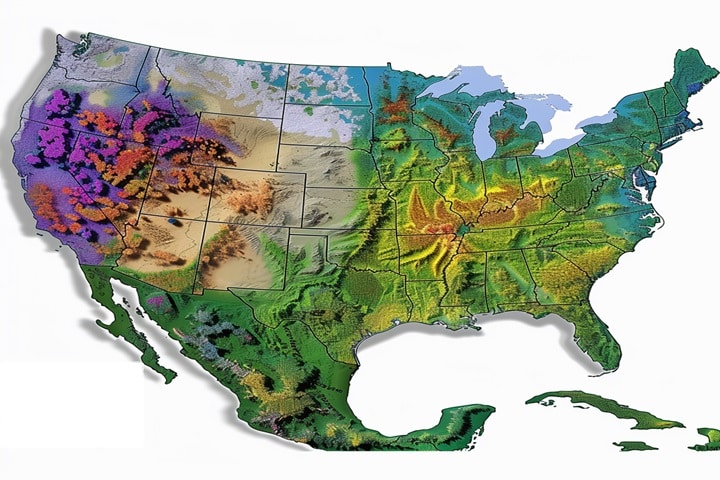
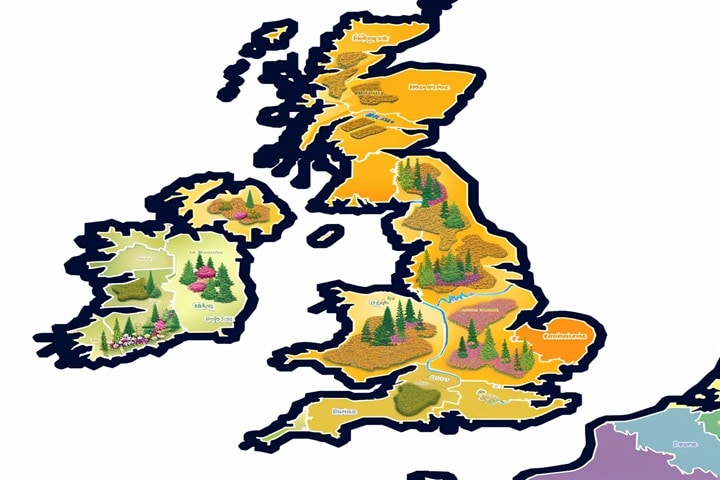
The most common system used to determine planting zone globally are the USDA plant hardiness zones. All of the UK lies within USDA planting zones 6-9. These planting zones are based on average winter temperatures. Few areas in the UK are zone 6, where winter temperatures can drop below minus 17.8 degrees Celsius. Few are in zone 7, where temperatures drop below minus 12.2 degrees C. Most parts of the UK are in zones 8 or 9.
- USDA Zone 8a – minus 12.2 – minus 9.4
- 8b – minus 9.4 – minus 6.7
- 9a – minus 6.7- minus 3.9
- 9b – minus 3.9 – minus 1.1
A few areas in the far south of the UK are Zone 10a, where temperatures in winter can fall to minus 1.1 – 1.7 degrees C.
RHS Plant Hardiness Rating
Another important system that is used to determine hardiness in the UK is the RHS Plant Hardiness Rating.
The RHS Plant Hardiness levels are defined as follows:
Hardy
- H7 – Plants with this rating are hardy even in the most exposed upland locations in the UK.
- H6 – Plants are hardy even in a very cold winter in the UK. However, plants grown in containers may still be damaged unless provided with some protection.
- H5 – Plants are hardy throughout most of the UK, even in severe winters. But they may not survive in particularly exposed or northerly sites. Foliage damage may occur and plants in containers will be at increased risk.
- H4 – Plants are hardy in an average winter in much of the UK. However, there is potential for foliage damage in particularly cold or exposed locations, and container plants will be more vulnerable.
Half-Hardy
- H3 – Plants are half-hardy. They can typically cope with a very mild winter, or in an unheated undercover growing area (greenhouse or First Tunnels polytunnel) in most parts of the UK.
Tender
- H2 – Plants are tender and though they are tolerant of low temperatures, will need a frost-free environment (greenhouse) over the winter months. But can be grown outdoors in the summer.
- H1c – Plants belong to warm temperate climates. They will need a heated greenhouse in winter, but can usually be grown outdoors during summer in most of the UK.
- H1b – Plants come from subtropical climes, and need a heated greenhouse. They can potentially be grown outdoors in summer in milder and sunnier, sheltered locations. But will usually perform best when grown indoors or under cover all year round.
- H1a – Plants are tropical, and need temperatures to be warmer than 15 degrees all year round. These plants must be grown in heated greenhouses or indoors as houseplants all year round.
Zone 6a equates to H7, Zone 6b and 7a to H6. Zones 7b and 8a equate to H5, Zones 8b and 9a to H4, and zones 9b and 10a to H3. Plants with a hardiness rating of below H3 will not typically survive a winter outside in most of the UK.
The RHS provides ratings for most common plants and lets you know where they lie on this scale. Looking at the hardiness rating for a given plant, in combination with looking at your planting zone, can help you work out which plants to grow where you live.
It is important to note, however, that hardiness is only one of the factors you should be looking at when choosing your plants.
Hardiness is Not the Only Factor to Look At When Choosing Plants
When choosing plants for your garden, it is important to understand that you cannot rely on planting zone and hardiness rating alone. The broad planting zone will be based on the general climate in your area.
But it is important to note that micro-climate can also come into play. One garden can be very different to another close by. Even neighbouring gardens can be very different due to patterns of wind, water, sunlight and shade. As well as considering the general climate you also need to take your local microclimate conditions into account.
Think about whether your garden is sunny or shaded. Think about how the sun passes across the space throughout each day and throughout the year. Consider where the wind comes from, and how exposed this makes certain areas of your garden.
Think about the soil where you live, and its characteristics. Be sure to think about its type, how free-draining or moisture retentive it is, how quick it is to warm in spring and how quick to freeze in winter. Environmental factors can create frost pockets etc. which must be taken into account.
Think About Summer as Well as Winter
It is also important to understand that winter hardiness is only one factor for plants. The planting zone will not tell you anything about summer temperatures. And extremes and averages of summer must also be taken into account when making decisions in your garden.
Though USDA (North American) planting zones are commonly used around the world, including here in the UK, it is important to note that a zone 8 UK garden will have summers that are a lot cooler than a typical zone 8 garden in the US.
Thinking about summer temperatures (and rainfall of course) can be just as important as thinking about how well plants can stand up to winter cold.
A plant may be fully hardy in your area, but may struggle to survive in your garden if it gets very dry during the summer where you live. Other plants may cope fine with the temperatures but struggle with excess rainfall.
Choosing the right plants for your garden is not always straightforward. But if you begin with careful observation of the space, you are far more likely to get it right. When it comes to your plant choices, the more informed you are about your specific garden, the better.
Think Holistically – Beyond Hardiness Zones UK Alone
Another key thing to remember is that plants should not be considered in isolation. When you choose any plants for your garden, you should think not just about the conditions, and the plant itself,. But also how it will fit in with its ‘neighbours’ and into the garden ecosystem as a whole.
The right plant choices will be those that not only thrive in your garden. But also allow you to create resilient and biodiverse ecosystems. Plant with wildlife in mind, and be sure to incorporate as many different plants as possible.
Looking at plant hardiness can be useful. But do not make the mistake of thinking that just because a plant can survive the winter in your garden, that it is the best plant for where you live.
FAQs
What are hardiness zones?
Hardiness zones, often referred to as planting zones, are defined areas that categorise regions based on the minimum temperatures they can typically expect. These zones help gardeners and growers determine which plants are most likely to thrive at a location.
What hardiness zone is London in?
London is typically classified within hardiness zone 9. This indicates that it can support plants that tolerate winter minimum temperatures down to -7°C to -1°C (20°F to 30°F).
Can you grow tropical plants in UK hardiness zones?
Tropical plants can be challenging to grow outdoors in most UK hardiness zones due to cold winter temperatures. However, in milder zones (9-10), some hardier tropical plants might survive, especially if provided with protection during the coldest months. Typically, tropical plants are better suited for greenhouses or indoor cultivation in the UK.
Sources
Gardenia. (2020) Hardiness Zones in the USA. [online] Available at: https://www.gardenia.net/guide/united-states-hardiness-zones [accessed 24/07/24]