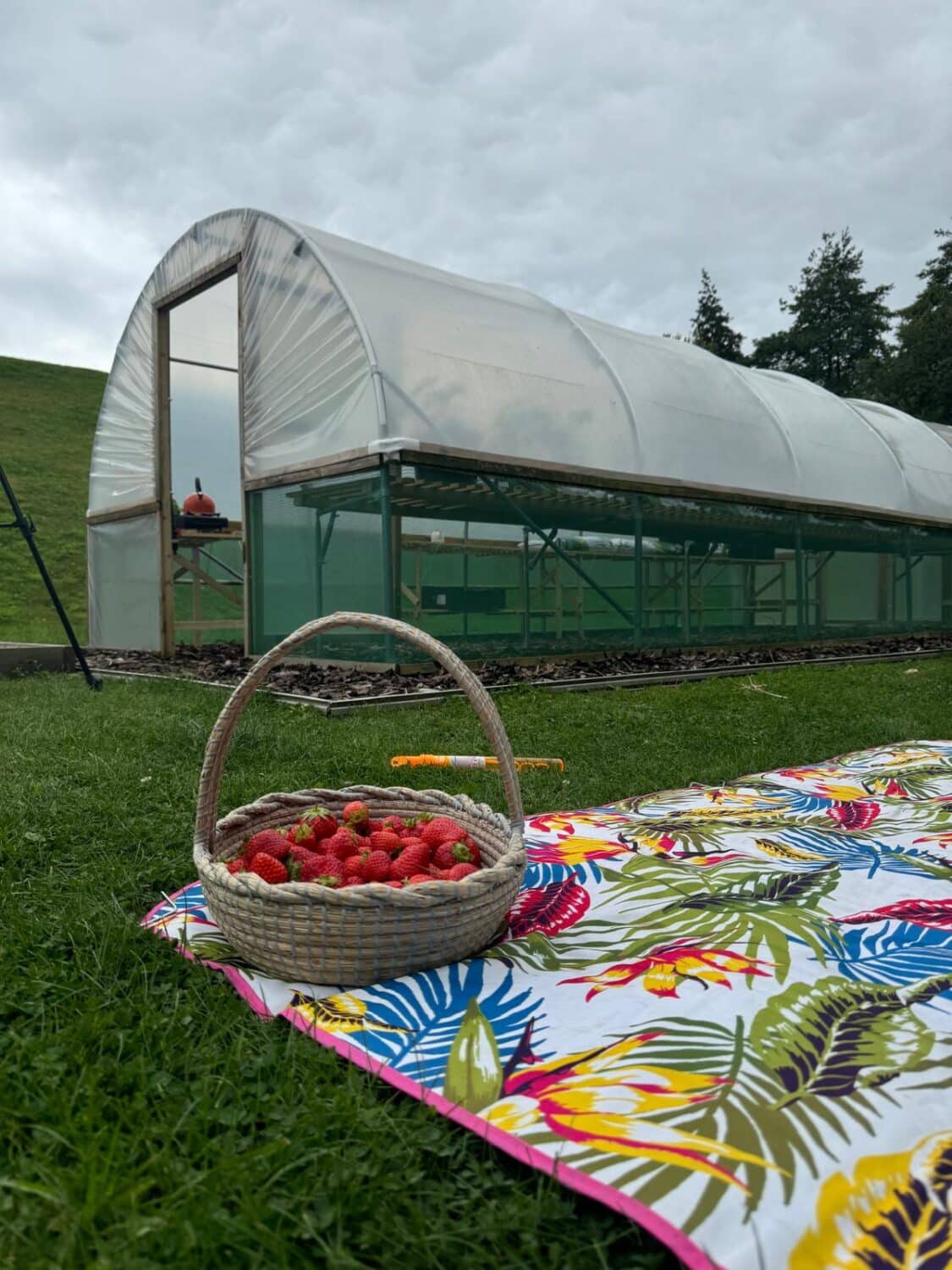
Growing strawberry plants in gutters inside a polytunnel can be a practical way to make better use of your growing space. The combination of elevated planting channels and a protected environment gives you more control over moisture, temperature and growing conditions.
I have found that strawberry gutter growing works particularly well for gardeners who want cleaner fruit, easier harvesting and a more organised growing system. Instead of bending down to pick strawberries from ground-level beds, plants can be positioned at a comfortable height where they are easier to monitor and maintain.
That said, gutters are not a shortcut to effortless strawberry growing. They create a controlled growing environment, but they also require careful planning. Drainage, watering and positioning all make a significant difference to how well the plants perform.
A polytunnel gives you an advantage because it reduces some of the challenges that strawberries face outdoors, such as heavy rainfall, sudden temperature changes and inconsistent growing conditions. If you are considering adding strawberries to your protected growing space, you can discover how to grow strawberries successfully in a polytunnel.
Key Takeaways
- Strawberries adapt well to gutter systems when drainage and watering are managed properly.
- A polytunnel creates a more stable environment with cleaner fruit and fewer weather-related problems.
- Elevated gutters make harvesting and maintenance easier, especially for larger plantings.
- Good layout planning is essential to avoid watering problems and difficult access.
- Gutter growing works best as a carefully managed growing system rather than simply planting strawberries in containers.
Growing tip: The success of strawberry gutters usually comes down to consistency. Getting water, drainage and positioning right is more important than simply fitting in as many plants as possible.
Why Grow Strawberries in Gutters?
Growing strawberries in gutters is a form of elevated growing where plants are placed into shallow channels rather than directly into the soil.
At first, it might seem like an unusual approach, but there are several reasons gardeners choose this method.
For me, one of the biggest advantages is simply accessibility. Strawberries are wonderful plants to grow, but harvesting from traditional beds can involve a lot of bending and searching through foliage. Raising plants into gutters makes picking fruit much quicker and easier.
Benefits of Strawberry Gutter Growing
Cleaner Fruit
Because the plants are lifted away from the ground, strawberries are less likely to sit on damp soil. This can help keep fruit cleaner and reduce some of the issues associated with wet conditions.
Easier Harvesting
Elevated strawberries are easier to inspect, pick and maintain. This is especially useful if you are growing a larger number of plants.
Better Use of Space
Gutters allow you to use areas of your polytunnel that might otherwise be unused, including walls, edges and raised structures.
More Control Over Growing Conditions
A gutter system gives you greater control over:
- Growing medium
- Drainage
- Watering
- Plant spacing
- Maintenance access
However, there are limitations.
Gutters contain a relatively small amount of growing medium, so plants can dry out more quickly than those grown in the ground. They also rely on a good watering routine, particularly during warmer periods.
If you are interested in making the most of vertical growing space, you can explore vertical growing ideas to maximise polytunnel space.
Why Gutters Work Particularly Well in a Polytunnel
While strawberry gutters can work outdoors, I think they really come into their own inside a polytunnel.
The protected environment solves several common problems at once.
Outdoor strawberries are exposed to everything the British weather can provide: heavy rain, cold snaps, strong winds and changing temperatures. A polytunnel reduces these extremes and gives plants a more predictable environment.
Advantages of Combining Gutters With a Polytunnel
| Attractant | Likelihood of Attracting Foxes |
|---|---|
| Open bins | High |
| Pet food | High |
| Fallen fruit | Moderate to high |
| Bird feeder waste | Moderate |
| Open compost containing food waste | Moderate to high |
| Water sources | Moderate |
A polytunnel also allows you to monitor conditions more closely. Learning to understand how to manage temperature and ventilation inside a polytunnel helps prevent problems caused by excessive heat or stagnant air.
Water management is another important consideration. Because gutters rely on controlled irrigation, it is worth understanding how systems can work together. You can learn how guttering systems can support efficient water use in a polytunnel.
A Simple Comparison
Ground-grown strawberries
- More root space
- Less frequent watering
- Harder harvesting
- More exposure to weather
Gutter-grown strawberries
- Easier access
- Cleaner fruit
- Better use of space
- Requires closer watering management
A gutter system is not necessarily better than traditional growing; it is simply a different approach that suits certain spaces and gardening styles.
Choosing Gutters and Planning Your Layout
Before installing gutters, spend time thinking about how you will use the space.
One mistake I have seen with many growing systems is focusing on fitting in as many plants as possible and forgetting about maintenance. A layout that looks impressive at planting time can become frustrating later if you cannot easily reach the plants.
Planning Checklist
Consider:
- How high the gutters should sit
- Whether you need one level or several layers
- How easily you can water each row
- Whether you can access plants for harvesting
- Where excess water will drain
Horizontal vs Stacked Systems
A single horizontal row is often the simplest option, especially for beginners.
Stacked systems can increase planting capacity but require more planning. Upper gutters may create shading issues, while lower levels may receive less airflow.
The best design depends on the size and shape of your polytunnel.
Preparing and Installing the Gutter System
Once you have planned your layout, installation should focus on stability and drainage.
1. Choose Suitable Gutters
Use strong, clean gutters that can support the weight of growing medium, plants and water.
2. Create Drainage Points
Gutters must allow excess water to escape. Without drainage, strawberry roots can become waterlogged.
3. Build Secure Supports
A filled gutter can become surprisingly heavy. Make sure the support structure is stable before planting.
4. Check the Angle
A slight slope can help water move through the system rather than collecting in one area.
5. Test Before Planting
Run water through the gutters and check for leaks, pooling or uneven drainage.
Taking time at this stage saves a lot of problems later.
Planting Strawberry Plants in Gutters
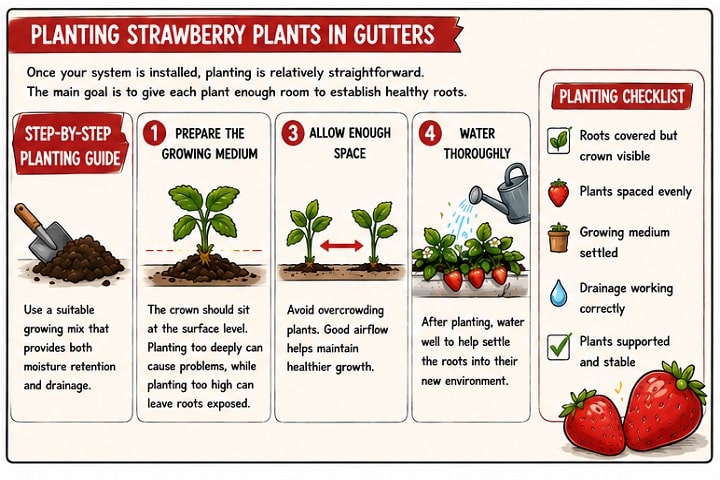
Once your system is installed, planting is relatively straightforward.
The main goal is to give each plant enough room to establish healthy roots.
Step-by-Step Planting Guide
1. Prepare the Growing Medium
Use a suitable growing mix that provides both moisture retention and drainage.
2. Position the Strawberry Crown Correctly
The crown should sit at the surface level. Planting too deeply can cause problems, while planting too high can leave roots exposed.
3. Allow Enough Space
Avoid overcrowding plants. Good airflow helps maintain healthier growth.
4. Water Thoroughly
After planting, water well to help settle the roots into their new environment.
Planting Checklist
- Roots covered but crown visible
- Plants spaced evenly
- Growing medium settled
- Drainage working correctly
- Plants supported and stable
Watering and Feeding Without Overwatering
Watering is probably the most important part of strawberry gutter growing.
Because gutters hold less growing medium than traditional beds, they can dry out more quickly. During warm weather, plants may need checking more often.
I find it is better to check moisture regularly rather than follow a rigid watering schedule. Conditions inside a polytunnel can change quickly.
Do and Avoid
| Do | Avoid |
|---|---|
| Check moisture levels regularly | Letting gutters completely dry out |
| Water consistently | Large amounts of water after long dry periods |
| Ensure drainage works properly | Allowing roots to sit in water |
| Feed during active growth when appropriate | Overfeeding plants |
A well-designed watering system can make maintenance much easier. For more information, you can learn how guttering systems can support efficient water use in a polytunnel.
Common Problems and How to Avoid Them
Even with the protection of a polytunnel, strawberry gutters need monitoring.
Most problems come from issues with water, spacing or plant management.
| Problem | Possible Cause | Solution |
|---|---|---|
| Dry plants | Growing medium drying quickly | Check watering more often |
| Yellow leaves | Overwatering or nutrient issues | Review drainage and feeding |
| Uneven growth | Poor spacing or inconsistent conditions | Adjust plant position and care |
| Weak fruit production | Lack of light or plant stress | Improve growing conditions |
| Too many runners | Plants putting energy into new growth | Remove unwanted runners |
You can also learn how to prevent common strawberry growing problems to keep plants productive throughout the season.
Common Maintenance Tasks
- Remove damaged leaves
- Control runners
- Check irrigation regularly
- Watch for pests
- Harvest fruit frequently
A little regular attention usually prevents small problems becoming bigger ones.
Are Strawberry Gutters Better Than Growing in the Ground?
There is no single best method. It depends on your goals and growing space.
| Feature | Ground Growing | Gutter Growing |
|---|---|---|
| Root space | Greater | Limited |
| Harvesting | Lower down | Easier access |
| Space efficiency | Requires beds | Uses elevated areas |
| Water management | More forgiving | Requires attention |
| Fruit cleanliness | More soil contact | Cleaner hanging fruit |
For gardeners with limited space or those who want easier harvesting, gutters can be a very practical solution.
For those who prefer a low-maintenance approach with minimal watering, traditional beds may still be preferable.
Growing strawberries in gutters inside a polytunnel is a great example of making a growing space work harder. With thoughtful planning, reliable watering and regular care, this method can produce healthy plants, cleaner fruit and a more comfortable harvesting experience.
For me, the biggest benefit is not just the extra growing space. It is the ability to create a system that fits the gardener, one that makes looking after plants easier and more enjoyable.

Frequently Asked Questions
Do strawberries grow well in rain gutters?
Yes, strawberries can grow well in rain gutters when drainage, watering and plant spacing are managed correctly.
How deep should gutters be for strawberries?
Strawberries have relatively shallow roots, but they still need enough growing medium to establish properly. The depth required depends on the gutter design and growing method.
Do strawberry gutters need drainage holes?
Yes. Drainage is essential because strawberries do not perform well when their roots remain waterlogged.
How often should gutter-grown strawberries be watered?
It depends on temperature, plant size and growing conditions. Gutters usually require more frequent monitoring than plants grown directly in the ground.
Can gutters stay installed year after year?
A well-built system can be reused, but it should be checked regularly for damage, stability and cleanliness.
Are gutters better inside a polytunnel?
Gutters often perform particularly well inside a polytunnel because the protected environment improves consistency and reduces weather-related stress.
Sources
Royal Horticultural Society (RHS) (2025) Strawberries: growing guide. Available at: https://www.rhs.org.uk/fruit/strawberries/grow-your-own (Accessed: 1 August 2026).