

In this article, learn the skills and characteristics required about growing gladioli in the UK.
Gladioli, perennial flowering plants, emerge from round corms resembling those of crocuses. Belonging to the Iris family, plants in this genus are often referred to as ‘sword lilies’.
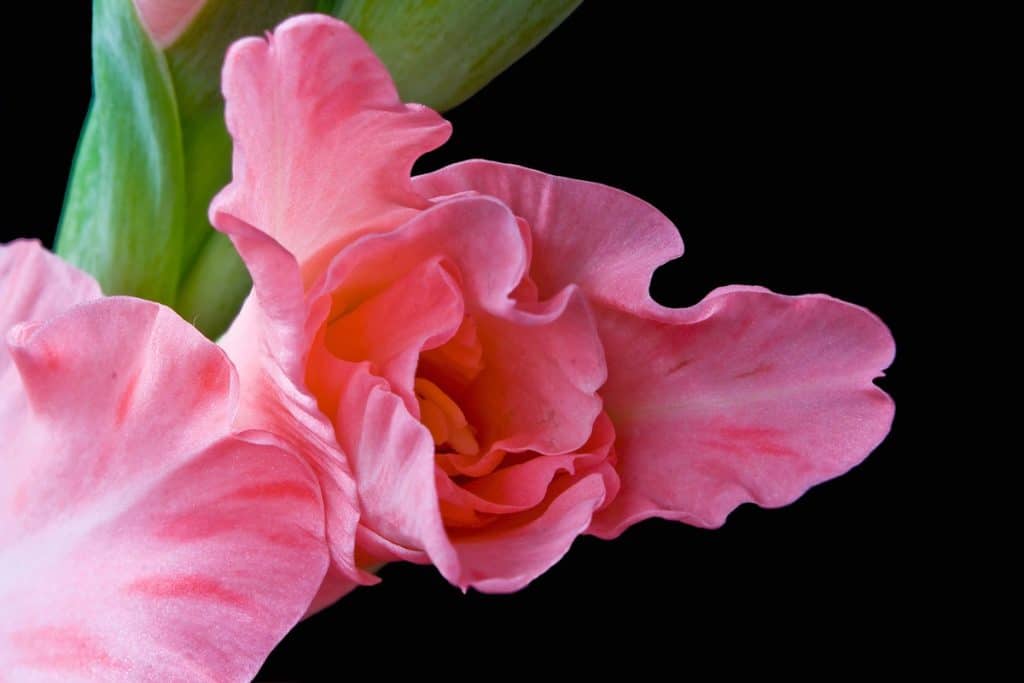
Characterized by sword-like leaves and tall flower spikes, Gladiolus produce funnel-shaped blooms in a vast spectrum of colours, making them a striking addition to any garden landscape.
Quick Facts
Gladioli are flowering plants known for their tall spikes of vibrant blooms. Here are some quick facts to know prior to growing gladioli:
- They belong to the Iris family and are native to Europe, Asia, and Africa.
- Gladioli are available in a wide range of colours, including red, pink, yellow, orange, purple, and white.
- These flowers are popular for cut flower arrangements and garden displays.
- Gladioli are typically planted from corms in spring and bloom in summer.
- They prefer full sun and well-draining soil.
- Some varieties may require staking to support their tall flower spikes.
- Gladioli attract pollinators like bees and butterflies to the garden.
- Regular deadheading can prolong the flowering period.
- Overwintering may be necessary in colder climates, either by lifting and storing corms or providing protective mulch.
| JAN | FEB | MAR | APR | MAY | JUN | JUL | AUG | SEP | OCT | NOV | DEC | |
| PLANT | ✅ | ✅ | ✅ | ✅ | ✅ | |||||||
| BLOOMS | ✅ | ✅ | ✅ | ✅ |
Advice on Buying Gladioli
When you’re in the market for growing gladioli bulbs, keep the following pointers in mind to ensure you bring home healthy and robust ones:
- Choose Reliable Suppliers: Opt for nurseries, garden centres, or online vendors with solid reputations for supplying top-notch bulbs.
- Check over the Bulbs Before Purchase: Look for bulbs that are firm, plump, and devoid of any blemishes, mould, or signs of decay. Steer clear of bulbs that feel soft, wrinkled, or show any damage.
- Bigger is generally better: Whenever possible, go for larger bulbs as they typically yield stronger plants with bigger blooms.
- Check for Sprouting: If buying Gladioli during late spring or early summer, check for signs of sprouting to ensure bulbs are healthy and ready for planting.
- Consider Variety: Select Gladiolus varieties that match your preferences in terms of colour, size, and flowering time. Research different varieties to ensure they’re well-suited to your garden conditions.
- Verify Hardiness: Determine the recommended hardiness zones for the Gladiolus types you’re eyeing and ensure they align with your local climate.
- Evaluate Packaging: Take a close look at the packaging to ensure bulbs are well-protected and clearly labeled with the variety name, planting instructions, and any other essential details.
- Opt for Freshness: Whenever feasible, choose bulbs from the current season’s stock to guarantee freshness and viability.
- Ask Questions: Don’t hesitate to inquire about any specifics regarding the Gladiolus bulbs you’re considering, such as ideal planting depth, spacing, or care requirements.
By adhering to these suggestions, you’ll be equipped to pick out high-quality Gladioli bulbs that promise vibrant and splendid blooms in your garden.
Note that gladioli is not necessarily a pet-safe choice and can, for example, be poisonous to cats. So keep this in mind when deciding where to place it in your garden.
Choosing Gladioli
In order to choose which specific variety of Gladioli to grow, and to understand placement and care, you first have to understand that there are a number of different types. Gladioli are typically divided into the following categories:
- Summer-flowering hybrids: These are commonly grown in gardens and are known for their vibrant blooms during the summer season.
- Early-flowering types: Examples include nanus hybrids, which produce blooms earlier in the season compared to other varieties.
- Other Gladioli commonly grown in gardens: This category includes species such as Gladiolus mureliae and Gladiolus communis subsp. byzantinus, which are popular choices for garden cultivation due to their attractive features.
- Specialist species of Gladioli grown in containers: Some specialized species of Gladioli are specifically cultivated in containers, offering unique and striking displays for container gardening enthusiasts.
How to Grow Gladioli
Gladioli are typically unchallenging to grow. They are usually grown from ‘bulbs’, technically corms, or purchased as potted plants.
When to Plant Gladioli Bulbs
Summer-flowering hybrids, which are prevalent in many garden settings, are typically planted between mid-April and May. To extend the flowering period and harvest of cut flowers, successional planting in batches every two weeks can be beneficial.
Early-flowering types, on the other hand, are usually planted between late March and mid-April to bloom in June. However, these bulbs, technically corms, can also be planted in autumn in a cold frame to induce earlier flowering.
Gladiolus mureliae corms are commonly planted in April, while Gladiolus communis subsp. byzantinus corms are typically planted slightly earlier in spring.
For species that bloom in early spring, planting in autumn is recommended. It is, therefore, essential to verify specific planting details for each Gladiolus variety to ensure successful cultivation.
Where to Plant Gladioli Bulbs
As a general guideline, most Gladioli thrive in open and sunny locations, preferably without excessive shade or competition from neighbouring plants.
It is important to assess the hardiness of the Gladiolus varieties you’re interested in and consider the specific conditions of your garden. This allows for appropriate matchmaking, ensuring you select the right Gladiolus corms for the optimal location.
Whether planted directly in the soil or in suitable containers, many Gladioli are well-suited for container cultivation. In fact, numerous varieties thrive and flourish when grown in pots, offering flexibility in polytunnel gardening arrangements.
How to Plant Gladioli
It’s essential to prioritize healthy soil or growing medium when aiming to cultivate thriving plants.
When preparing to plant corms in a container, choose an appropriate one and fill it with a versatile, peat-free potting mix.
For planting corms in the ground, ensure to amend the area beforehand by incorporating ample homemade compost, well-rotted manure, or other organic materials. This practice aids in retaining moisture, supplying nutrients, enhancing drainage, and to some extent, suppressing weed growth.
Once you’ve prepared your container or the designated growing area for your gladioli, it’s time to create holes for individual corms or dig a trench if you’re planting in a row.
Ensure that the holes or trench are approximately 10-15cm deep, roughly three times the height of the bulbs. It’s crucial not to plant too shallowly, as this may result in the production of small offspring corms instead of larger, healthier ones for next year’s planting.
In sandy soil, you might consider planting the corms even deeper, as this can improve the stability of taller cultivars against strong winds.
For planting in rows in the ground, it’s customary to space the corms roughly the same distance apart, typically leaving 10-15cm between them. However, there’s some flexibility depending on the location and type of gladiolus being planted.
In containers, corms can be placed closer together. When planting, simply position the corms into the holes or trench, ensuring they are facing the correct way up, and cover them with soil or the growing medium in the container.
Additional information for planting specific gladioli:
Summer-flowering garden hybrids
The classic, customary timing for planting traditional gladioli spans from mid-April to May. By planting in successive batches every couple of weeks, you can avoid simultaneous flowering, which is beneficial for staggered crop yields, particularly if they’re cultivated for cut flowers.
The emerging growing tips typically appear once the risk of frost has passed, typically around the end of May or the beginning of June.
Early flowering garden gladioli (like nanus hybrids)
For flowering in June, plant Gladioli into a sunny site in early spring, ideally between late March and mid-April. Alternatively, for an early cut flower crop, consider planting them in autumn within a cold frame.
For container planting, place five corms into a 15cm (6in) pot, burying them 6cm (2in) deep. To encourage root development in cooler weather, dig a hole in the ground and sink the pot level with the soil surface.
In early December, move the pots to frost-free conditions, such as a cool greenhouse, to facilitate flowering. This careful timing and placement strategy can help maximize the success and timing of your Gladioli blooms.
Other garden gladioli
In April, you can plant Acidanthera (Gladiolus mureliae) either in pots or directly in the ground. Potted corms of Acidanthera can also be placed in their pots to fill gaps in summer borders, providing additional flexibility in garden design.
For Gladiolus communis subsp. byzantinus, plant them in early spring in a sunny location with well-draining soil. This ensures optimal conditions for their growth and flowering.
Specialist species gladioli for growing in containers
The timing of planting may vary depending on the flowering time of each species, so it’s essential to check the specific requirements for individual species. For instance, early spring-flowering species may need to be planted in autumn to ensure proper development.
When planting, select a free-draining compost to provide the optimal growing conditions for your bulbs or corms. This helps prevent waterlogging and promotes healthy root development.
How to Care for Gladioli
- Feeding and watering
Ensure thorough watering throughout the growing season but ensure that the water can drain freely, and maintain a soil or growing medium that is consistently moist but not overly damp or waterlogged.
During the flowering period, nourish your gladioli with either tomato feed or comfrey feed every two weeks to promote robust growth and vibrant blooms.
- Staking
Staking isn’t always necessary, though it does help prevent blooms from flopping over.
However, if you’re growing gladioli for competitions or show benches, it’s common practice to stake individual flower spikes with canes. Take care to insert the cane far enough away to avoid damaging the corm and its roots.
Alternatively, in windy conditions such as on allotment sites, taller grandiflorus hybrids can be grown through a horizontal mesh like pig wire fencing as an alternative support method.
- Weeding
Weed little and often to avoid excessive competition around your plants, but take care not to damage the gladioli as you do so.
- Cutting
When growing gladioli for cut flowers, aim to cut the flower spikes while retaining as much foliage as feasible. While this may not always be possible, leaving behind some foliage is beneficial as it supports the development of next year’s corm.
- Dividing
Over time, by growing gladioli left in the ground, and those grown in containers, can become congested. Therefore, it’s advisable to periodically lift and divide them in autumn. Replant the larger corms at wider spacings to ensure optimal growth and flowering in the coming seasons.
How to Propagate Gladioli
Division is also a means of propagation for your gladioli plants. Corms can be split from the clump to create new plants for a different container, or a different part of your garden.
When growing gladioli, can I leave gladioli bulbs in the ground?
In more northern regions of the UK, gladioli may struggle to survive in the ground over winter without protection. Some hardier varieties and in certain areas, you might successfully overwinter the corms by heavily mulching with a carbon-rich material like straw or dried leaves. However, in areas with harsher winters, it’s often more effective to lift the corms out of the ground and store them in frost-free conditions.
To store lifted corms over winter, carefully unearth them and divide them up. Trim each stem back to within a couple of centimetre of the corm. Remove the old corms and gently clean the new ones of soil and dead layers. Discard any corms showing signs of rot or disease. Place the clean corms into a well-ventilated container, such as a cardboard box, and store them in a frost-free but cool location. Regularly check the corms throughout winter and discard any that begin to rot.
Alternatively, you can grow gladioli in containers and move them under cover when frost is forecasted, providing a simpler solution for winter protection.
Growing gladioli: problem solving
Gladioli are susceptible to pests such as slugs, thrips, and aphids. To manage these pests in your organic garden, it’s essential to prioritize wildlife care and boost biodiversity.
Encourage slug-eating creatures and predatory insects like ladybirds and lacewings to your garden by creating habitats that attract them. This helps naturally control pest populations and minimize the chances of infestations occurring.
Stay vigilant and promptly remove any affected foliage and blooms when you notice signs of insect infestation. By taking proactive measures and fostering a balanced ecosystem, you can effectively manage pest issues while maintaining a thriving garden environment.
Gladioli Varieties
There is a diverse array of varieties suitable for growing gladioli in UK gardens. Here are some options to consider:
- Gladiolus ‘Robinetta’ (recurvus hybrid) (Award of Garden Merit – AGM)
- Gladiolus communis subsp. Byzantius (Award of Garden Merit – AGM)
- Gladiolus murielae (Abyssinian gladiolus) (Award of Garden Merit – AGM)
- Gladiolus italicus (Field gladiolus)
- Gladiolus papilio (butterfly sword gladiolus)
- Gladiolus cardinalis (waterfall gladiolus)
- Gladiolus tristis (evening flower)
- Gladiolus ‘Trader Horn’
- Gladiolus ‘Charming Beauty’
- Gladiolus ‘Belle de Nuit’
- Gladiolus ‘Vera Lynn’
- Gladiolus ‘The Bride’
- Gladiolus ‘Happy Weekend’
- Gladiolus nanus ‘Charm’
- Gladiolus ‘Miss Green’
These varieties offer a wide range of colours, sizes, and features, allowing you to create a diverse and stunning display in your garden.
FAQs
What is the best month for planting and growing gladioli?
This very much depends on the variety. Most are planted in spring but some are best planted in autumn.
Can you leave gladiolus in the ground all year?
In some locations, yes. But in colder and more northerly areas, lifting and storing bulbs will be less risky.
Do gladioli bulbs multiply?
Yes, little cormlets will form underground expanding clumps over time.
Are gladioli easy to grow?
Yes, while some gladioli are hardier and more forgiving, all gladioli are relatively easy to grow.
Sources
Copson, K., (2024) Is Gladiolus Poisonous to Cats? Vet Reviewed Advice. Catster. [online] Available at: https://www.catster.com/guides/is-gladiolus-poisonous-to-cats/ [accessed 21/03/24]