

Without reliable pollination, many plants will flower beautifully but fail to set fruit, or produce smaller, misshapen harvests. From my own experience growing under cover, once you understand how polytunnel or greenhouse pollination works, and how to support it, yields become far more consistent.
In protected growing spaces, natural insect activity is often reduced. That means growers often need to actively support polytunnel or polytunnel or greenhouse pollination, especially when working out how do tomatoes pollinate in a greenhouse or managing cucumber pollination in greenhouse environments.
Key Takeaways: Pollination in Polytunnels
- Pollination directly affects fruit set, size, and final yield
- Many covered crops need help with polytunnel or greenhouse pollination
- Understanding how do tomatoes pollinate in a greenhouse improves reliability
- Managing cucumber pollination in greenhouse conditions prevents crop loss
- Combining natural and manual pollination methods gives the best results
If you are planning to grow crops under cover and planning your setup:
Start here: small polytunnels
What Is Pollination? (And Why It Matters in a Polytunnel?)
Pollination is the movement of pollen from the male part of a flower to the female part. Without this step, fertilisation can’t happen — and fruit won’t develop.
Outdoors, pollination happens constantly through insects, wind, and plant movement. Indoors, polytunnel or greenhouse pollination is less reliable because insect access is lower and airflow is reduced.
In enclosed growing spaces, understanding polytunnel or greenhouse pollination is essential to maintaining reliable fruit production.
Poor pollination can lead to flower drop, misshapen fruit, and reduced crop yields.
The Role of Pollinators in Greenhouse Growing
Of course, the most important pollinators in a garden are insects. While wind and manual pollination can play a role, most fruiting crops rely heavily on insects to move pollen efficiently and consistently.
In outdoor growing spaces, this process happens naturally and often goes unnoticed. Inside a greenhouse or polytunnel, however, the protected environment that benefits plant growth can also create barriers to natural pollination, making it something growers need to think about more carefully.
How Do Bugs Pollinate Plants in the Garden?
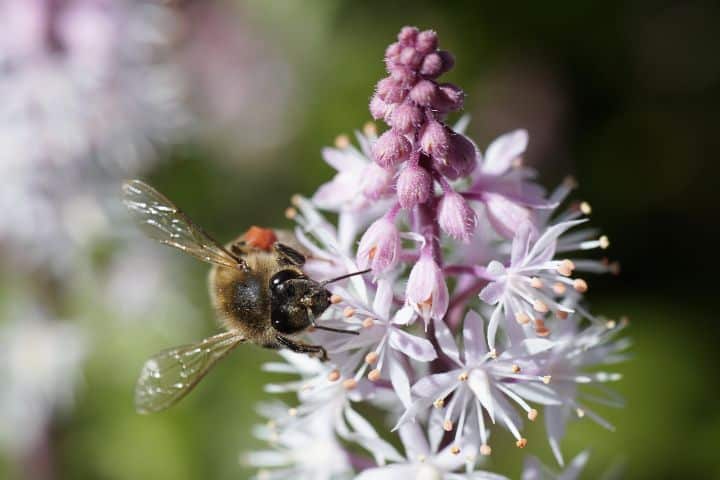
Insects pollinate plants as a natural result of feeding. Many flowering plants produce nectar and pollen as rewards to attract insects.
As insects such as bees, hoverflies, and beetles move from flower to flower collecting nectar or pollen for food, tiny pollen grains stick to the hairs and surfaces of their bodies. When they visit the next flower, some of that pollen rubs off onto the flower’s reproductive structures, enabling fertilisation.
This process is highly efficient because insects often visit many flowers in a short period. Different insects are adapted to different flower shapes, sizes, and colours, which helps maintain plant diversity and resilience in growing systems.
Successful natural pollination depends on several key factors. Insect numbers are critical — more pollinators generally mean better pollination coverage.
Air movement also plays a role, helping carry scent cues that attract insects and allowing some pollen movement.
Flower access is equally important. If flowers are difficult to reach due to dense foliage, closed tunnel ends, or lack of entry points, insects may struggle to do their job effectively.
Inside covered growing, natural polytunnel or greenhouse pollination often drops dramatically. The physical barrier of plastic or glass limits insect entry.
Temperature and humidity levels may also influence insect behaviour. In very still air conditions, pollen may not move as easily, and some crops that rely partly on vibration or wind may struggle to release pollen efficiently.
How Does Pollination Affect Yield and Fruit Production?
Strong pollination inside a polytunnel or greenhouse directly improves crop performance. When flowers receive enough viable pollen, plants can produce higher fruit numbers. Fruit size also tends to increase because fully fertilised flowers develop more evenly.
Shape uniformity improves as well, which is especially important for market growers and anyone wanting reliable harvests. Good pollination also supports proper seed formation, which influences fruit structure and overall plant health.
Poor pollination, on the other hand, often shows up quickly. Flowers may drop before fruit sets. Fruits that do form may develop patchily, with sections that are underdeveloped.
Misshapen fruits are common when only part of the flower is pollinated. In crops like tomatoes, peppers, cucumbers, and strawberries, these effects can significantly reduce both yield and quality.
Supporting pollinators in protected growing spaces can involve simple steps. Opening tunnel doors during warm daylight hours, planting pollinator-friendly flowers nearby, or even introducing managed pollinators where appropriate can all help maintain healthy, productive growing systems.
Over time, creating a welcoming environment for beneficial insects supports not only pollination but overall ecosystem balance inside your growing space.
Which Vegetable Plants Need Pollination?
Understanding crop differences is key to managing polytunnel or greenhouse pollination.
| Crop | Pollination Type | Needs Help Indoors? |
|---|---|---|
| Tomatoes | Self pollinating | Often yes |
| Cucumbers | Cross pollinating (many types) | Usually yes |
| Peppers | Mostly self pollinating | Sometimes |
| Courgettes | Cross pollinating | Often yes |
How Biodiversity Affects Pollination Success
In outdoor gardens, biodiversity supports natural polytunnel or polytunnel or greenhouse pollination by increasing insect numbers. Inside tunnels, biodiversity is naturally limited.
Even with open doors, natural insect numbers may not always be enough to support reliable polytunnel or greenhouse pollination for high-yield crops. However, there are steps we can take to increase biodiversity in and around a greenhouse or polytunnel:
- Plant flowering companion plants inside the tunnel, such as basil, calendula, or nasturtiums
- Grow pollinator-friendly plants just outside entrances to attract insects toward the structure
- Keep tunnel doors and vents open during warm, calm daytime conditions where possible
- Avoid broad-spectrum pesticides, which can harm beneficial insects as well as pests
- Create habitat zones nearby, such as wildflower strips or undisturbed grass margins
- Provide shallow water sources with landing spots for insects to drink safely
- Allow some crops or herbs to flower rather than harvesting everything early
- Stagger planting times to ensure a continuous supply of flowers across seasons
- Include structural diversity, such as trellises and mixed crop heights, to create micro-habitats
- Consider manual or assisted pollination methods for crops that struggle in low-insect conditions
Choosing suitable crops can also help balance risk:
Explore crop options, check out our polytunnel crop growing guides.
What Is Self-Pollination?
Self-pollination means pollen moves within the same flower or plant. However, this does not mean pollination always happens automatically indoors.
What Plants Are Capable of Self-Pollination?
Tomatoes are a key example. Many growers ask how do tomatoes pollinate in a greenhouse.
Tomatoes release pollen through vibration. Outdoors, wind and insects provide this movement. Indoors, growers often need to create vibration manually.
Understanding the answer to the question – how do tomatoes pollinate in a greenhouse – helps avoid poor fruit set. Even self-fertile crops benefit from supported polytunnel or polytunnel or greenhouse pollination.
Learn more here:how to grow tomatoes.
What Is Cross-Pollination?
Cross-pollination requires pollen to move between different flowers.
This is where polytunnel or greenhouse pollination becomes more challenging.
Managing cucumber pollination in greenhouse environments is especially important with traditional varieties. Many growers struggle with cucumber pollination in greenhouse setups because pollen must move between male and female flowers.
Understanding cucumber pollination in greenhouse conditions prevents flower drop and fruit failure.
Learn more here: how to grow cucumber.
How Can You Pollinate Plants by Hand in a Greenhouse?
Manual polytunnel or greenhouse pollination works because it replaces insects or wind.
It is most useful when:
- Growing high-value crops
- Early season insect activity is low
- Growing spaces are tightly enclosed
Many growers rely on manual vibration methods. Similarly, manual transfer often helps with pollination in polytunnel or greenhouse growing.
Methods for Pollinating Greenhouse Plants
Hand / Manual Pollination
Manual polytunnel or greenhouse pollination is reliable and low cost.
Best for:
- Tomatoes
- Peppers
- Cucumbers
- Courgettes
Pollinate Greenhouse Plants Using a Small Paintbrush
Steps:
- Identify open flowers
- Look for visible pollen
- Transfer gently between flowers
- Repeat every few days
Useful when supporting cucumber pollination in greenhouse growing.
Pollinate Greenhouse Plants by Shaking Plants
This method is essential when learning how do tomatoes pollinate in a greenhouse.
Why it works:
- Tomato pollen releases through vibration
Tips:
- Shake flower trusses gently
- Repeat every few days
- Best during warm, dry conditions
Pollinate Greenhouse Plants with Fans
Fans improve polytunnel or greenhouse pollination by simulating natural airflow.
Best for:
- Tomatoes
- Peppers
- Aubergines
Device Pollination
Vibration tools support large-scale polytunnel or greenhouse pollination, especially when managing how do tomatoes pollinate in a greenhouse commercially.
Using Pollinators in a Greenhouse
Bumble Bee Pollination in a Greenhouse
Bumblebees are extremely effective for polytunnel or polytunnel or greenhouse pollination because they naturally vibrate flowers.
Best crops:
- Tomatoes
- Strawberries
- Peppers
They are widely used commercially when managing pollination in a greenhouse or polytunnel at scale.
Alfalfa Leafcutter Bee Pollination in a Greenhouse
Used mainly in specialist crop production. Can support certain polytunnel or greenhouse pollination needs where targeted pollination is required.
Timing Pollination for Successful Fruit Production
Timing is critical for reliable polytunnel or polytunnel or greenhouse pollination.
Best conditions:
- Mid morning pollination
- Moderate humidity
- Warm but not hot temperatures
Best polytunnel or greenhouse pollination usually happens in warm, dry, stable conditions.
Common Pollination Problems in Polytunnels
Common signs of poor polytunnel or polytunnel or greenhouse pollination include:
- Flower Drop
Often linked to poor pollination or environmental stress. - Poor Fruit Set
Common when airflow or vibration is limited. - Misshapen Produce
Often linked to incomplete pollination.
Diagnosing issues correctly helps fix both how do tomatoes pollinate in a greenhouse problems and cucumber pollination in greenhouse failures.
Final Thoughts: Getting Reliable Pollination Under Cover
From experience, successful polytunnel or greenhouse pollination usually comes from combining approaches.
Reliable results usually mean:
- Supporting natural insect access
- Improving airflow
- Using manual pollination when needed
If you’re planning crops or setups, our polytunnel crop growing guides should help you get started and understand the basic processes that will be required.
Reliable polytunnel or greenhouse pollination is one of the biggest factors in successful protected growing. Understanding how do tomatoes pollinate in a greenhouse and managing cucumber pollination in greenhouse conditions helps prevent crop failure and improves consistency.
Once pollination is supported properly, fruit production becomes far more predictable and reliable.
Sources
Royal Horticultural Society (2023) Pollination and plant reproduction. Available at: https://www.rhs.org.uk [Accessed 17 Feb 2026]
Food and Agriculture Organization (2020) Pollinators and food production. Available at: https://www.fao.org [Accessed 17 Feb 2026]