

Ladybirds are, of course, a familiar site in UK gardens. Most common are Coccinella septempunctata, the seven-spot ladybird. Though there are actually a wide variety of different varieties that you might encounter. There are a range of other native ladybirds that we should welcome into our polytunnel gardens.
But not all ladybirds are quite so welcome. Harmonia axyridis (the Harlequin ladybird) is an invasive species. It reached the UK in 2004. There are fears that the seven-spot ladybird is being outcompeted for food by this newer arrival. So this type of ladybird is not a visitor we want to see.
That said, most ladybirds are very, very welcome for gardeners. They aid us in our gardens in a range of different ways. In order to understand how exactly they help us, and how to attract ladybirds to our gardens, read more.
What Are Ladybirds?
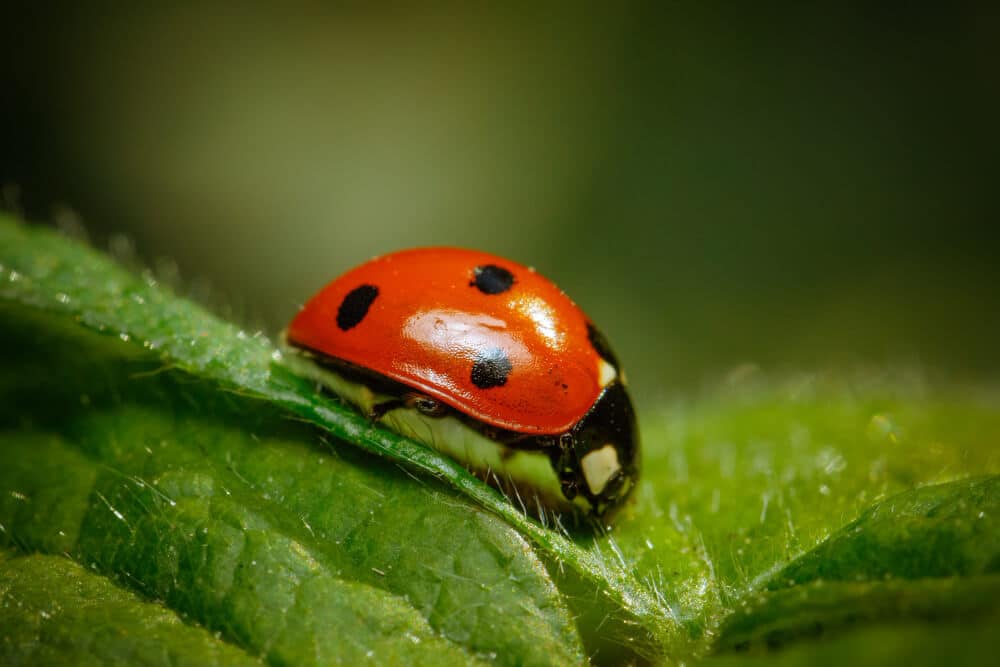
First, let’s examine what ladybirds actually are. These creatures are a range of small insects in the Coccinellidae family. Most people are familiar with the common red ladybirds with their black spots. But ladybirds actually come in a wide range of colours, with differing patination.
Ladybirds are amongst those creatures that aid us in our gardening endeavours. Everything gardens – not just human beings. Ladybirds can be part of a garden’s pest defence force. The more you know how to attract ladybirds to your garden, the easier it will be to manage the populations of pest species.
What Do Ladybirds Eat?
Ladybirds, as a predatory species, eat a range of sap-sucking insect pests. By eating them, ladybirds are beneficial in our gardens first and foremost because they keep down populations of pests such as aphids and scale insects.
Ladybirds don’t only eat aphids and other pests. Many also supplement their diet with nectar. As ladybugs come to sip nectar from flowers, they also carry pollen from one flowering bloom to another. Though, unlike bees, ladybirds are not primarily looking for nectar. But they will ingest some as they go about their business. And as they do this, as a side effect, they can help to pollinate your plants.
You can attract ladybirds to your garden relatively easily. And keep them around. One key way to do so is by making sure there is food available for them to eat.
Providing Food For Ladybirds
The first thing to remember when it comes to attracting and protecting wildlife in your garden is that you should always garden organically. Synthetic pesticides, herbicides and fertilizers can do untold harm to the ecosystem, and can be just as bad for the beneficial creatures as for those we do not want.
Another important thing to bear in mind is that though ladybirds can be beneficial for pest control – the key word is control, not elimination. It may seem counterintuitive, but aphids and other pest species must be present in your garden as a food source to attract ladybirds and other beneficial wildlife. A ladybird-friendly garden will have some sap-sucking insects.
Try not to be too neat and tidy in your garden. In a wildlife friendly space, there should always be wilder spaces and hidden corners where the creatures you want to see can flourish relatively undisturbed.
Attracting Prey To Attract these Beneficial Predators
While it may sound counterintuitive, attracting aphids and other insects is an important part of attracting ladybirds to your garden. Planting species that aphids love, therefore, can help draw in ladybirds to your garden. There are a wide range of herbs and flowers that you should grow which will act as trap crops while also encouraging aphids and other prey (and then ladybirds) to arrive.
What Eats Ladybirds?
Many organic gardeners are aware of the benefits of ladybirds as a predatory species. But some forget that they also play a role in a healthy organic garden ecosystem as prey. They are an important part of the garden food chain. They are a food source for, for example:
- A number of bird species.
- Frogs.
- Dragonflies.
- Wasps.
- Certain spiders.
When we plan, plant and tend our gardens, it is important to think about natural cycles and the food chain. By considering the interactions between all the many creatures that inhabit and visit our gardens, we can build healthy and abundant ecosystems that help us meet our own needs. As well as the needs of those around us.
What is a Ladybird’s Life Cycle?
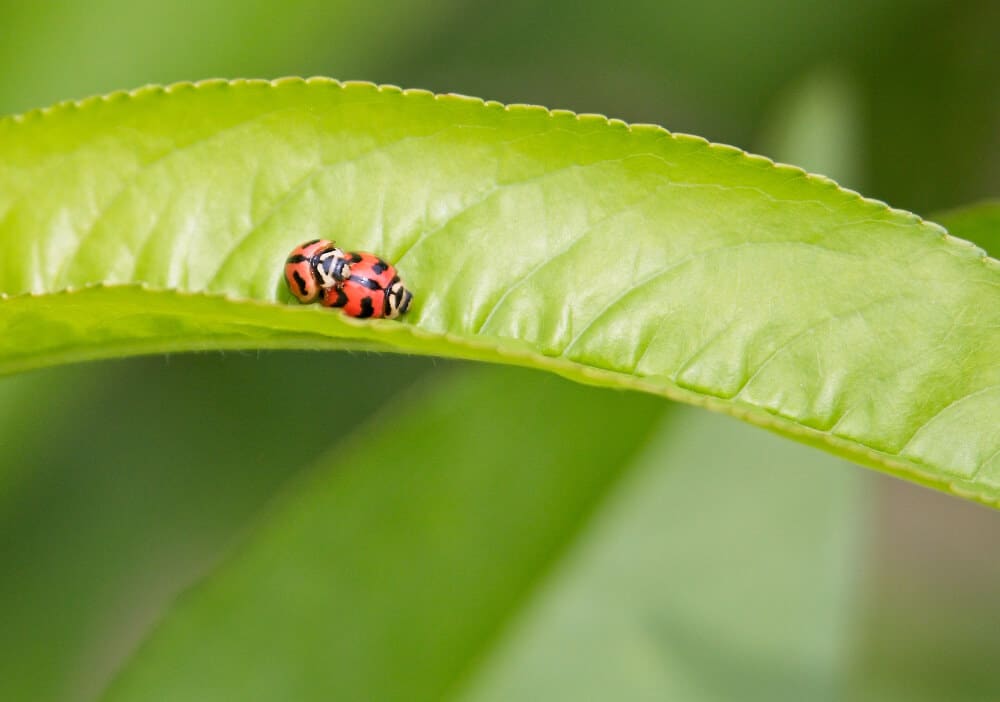
In addition to thinking about planting for ladybirds food needs, you can also plant with their other needs in mind. In order to understand what ladybirds need, and how to attract ladybirds to your garden, you have to understand their life cycle.
Ladybirds lay their eggs in clusters on the undersides of leaves. Including plenty of plants that are suitable for egg laying and as habitat for larvae is another way to make them welcome in your garden.
After a few days, larvae will emerge. The larvae of seven-spot ladybirds are long, black and spiky looking. Many people see these in their garden and do not recognise them as ladybirds. But recognising them can help you to protect and nurture them in your garden.
Larvae shed their skins several times and go through several different instars before they reach the pupal stage. Once larvae reach full size, they pupate and after a week or two, emerge in the more familiar adult form.
Adults are most active during the summer months. But when the weather turns colder, they look for a warm and secluded place to overwinter. Most ladybugs overwinter as adults. When they go into diapause, they are sluggish and mostly inactive.
They need a moist and sheltered environment that will remain frost-free and ideally above around 55 degrees F. They seek out somewhere which offers a degree of protection against predators. This could mean that your polytunnel is the perfect place for ladybirds to overwinter if you make it appealing to them.
They commonly excrete a chemical that attracts others to congregate close by. So if you can encourage a few to stay in your garden over winter, you may well find that this attracts more that will emerge come spring.
One good way to encourage overwintering insects in your garden is to leave brush and hollow-stemmed dead plant matter in place, so they have a place to hide.
But if you wish, you could go even further. Consider making a ladybird house or bug hotel. To make a ladybird house, make a wooden box with a lid, and drill holes in the sides for ladybirds to get in and out. Then place this in a safe and quiet spot.
How Can You Keep Ladybirds Around?
Now that you understand these insects a little better, you should have a much better idea of what they need, how to attract them to your garden, and how to keep them around. Remember, you should include:
Plants that attract and provide food for them.
Species that give them somewhere to lay their eggs, and which provide habitat for ladybird larvae.
Cover for adults of the species which overwinter in your garden.
Take care of these basic things, and think holistically about your organic garden, and you should find that you have plenty of ladybirds to help you in your polytunnel garden over the years to come.
Sources
Wesley, D., (2019) How To Build A Bug Hotel. Woodland Trust. [online] Available at: https://www.woodlandtrust.org.uk/blog/2019/09/how-to-build-a-bug-hotel [accessed 14/03/2025]