

Fairy gardens are a whimsical and creative way to blend storytelling, gardening, and landscape design. Rooted in folklore and fantasy, these (usually miniature) gardens allow gardeners to bring to life the enchanting world of fairies, capturing the magic of nature on a small scale. Today, you will learn about our recommended fairy garden ideas.
The Fairy’s Garden
The concept of fairies has deep roots in the folklore of the UK. In ancient Celtic and British traditions, fairies were considered to be magical beings who lived in secret realms, often hidden within nature.
They were believed to inhabit meadows, forests, streams, and even the hidden nooks of human dwellings. Stories of “fairy rings,” which are naturally occurring circles of mushrooms, were thought to be places where fairies danced and celebrated.
Fairies were often seen as elusive, trickster-like figures, capable of both benevolence and mischief. They were not always the tiny, kindly little sprites we often think of today, but rather mysterious residents of another world, perhaps associated with earlier nature spirits and gods.
In Victorian times, however, the perception of fairies softened, as they became associated with childhood innocence and fantasy. The popularity of fairy tales and stories like J.M. Barrie’s Peter Pan further cemented the idea of fairies as tiny, magical beings that lived in enchanted gardens and glens.
With the rise of the garden fairy trend, it became popular to recreate these imagined fairy habitats on a smaller scale in the home or yard. A fairy garden is a way to express our imagination, connecting with nature while keeping the mystery of folklore alive. Now, let’s look at how to create your own fairy garden, full of miniature landscapes, charming accessories, and, of course, magic.
Fairy Garden Supplies
Fairy gardens are meant to be imaginative and personal, so feel free to experiment with different materials and accessories. There are no specific supplies that you will definitely need – you can use whatever you have to hand or can find in your garden or the surrounding area.
In general, however, you should look for:
- Containers, or a suitable spot such as a bed or border in your garden.
- Soil, stones and other natural materials to make features for your garden.
- Miniature plants that mimic natural environments of fairy garden planting.
- Decorative additions to add to the charm of your fairy garden.
Best Pots for Fairy Gardens
Fairy gardens do not always need to be in containers, but making a fairy garden in a container is a popular choice.
The container that you choose can be of any size and shape – again, remember that you can select whatever container you may have to hand. Those made from natural materials usually help to give the right vibe for a fantastical fairy garden.
Read on because there are some ideas for fairy garden containers a little later in this guide.
Best Plants For a Fairy Garden
The plants you choose for your fairy garden should fit within the scale of your container and theme. Miniature or slow-growing plants work best, as they won’t overwhelm the tiny landscape.
It can be a good idea to choose plants that can mimic natural environments and charming, magical gardens on a smaller scale, to help fairies feel at home. We explore some options and ideas below.
Polymer Clay DIY Fairy Garden Accessories
One of the joys of making a fairy garden is creating your own accessories. Polymer clay is popular for crafting miniature garden items including homes, furniture, and other fun features.
Remember, however, that this plastic material is not necessarily the most eco-friendly choice. You might also like to consider crafting fairy garden accessories from natural materials, like natural clay, or wood, for example.
Other Fairy Garden Features
There are also plenty of other fairy garden features that you might add. Kids will love going on a scavenger hunt to collect natural items like feathers, shells, small stones, bark, twigs, etc. for their fairy garden.
In addition, you may even consider adding some solar fairy lights, a tiny water feature, little bridges and more to your fairy garden.
Assembling Your Fairy Garden
Assembling a fairy garden is an enjoyable process that allows your creativity to run wild. Here’s a step-by-step guide to help you put everything together:
- Choose your container if you are using one: Decide on the size and shape of your garden based on the space you have available.
- Add soil: Fill your container with good quality soil that suits the plants you’ve chosen.
- Place plants: Start with your largest plants first, then work down to smaller varieties. Arrange them to create depth and perspective, with taller plants at the back and shorter ones at the front.
- Add accessories: Position your fairy houses, paths, and other decorative elements in a way that complements the layout of your plants.
- Finish with detail: Use moss, pebbles, and miniature furniture to fill in the spaces, creating a cohesive and enchanted landscape.
Fairy Garden Ideas
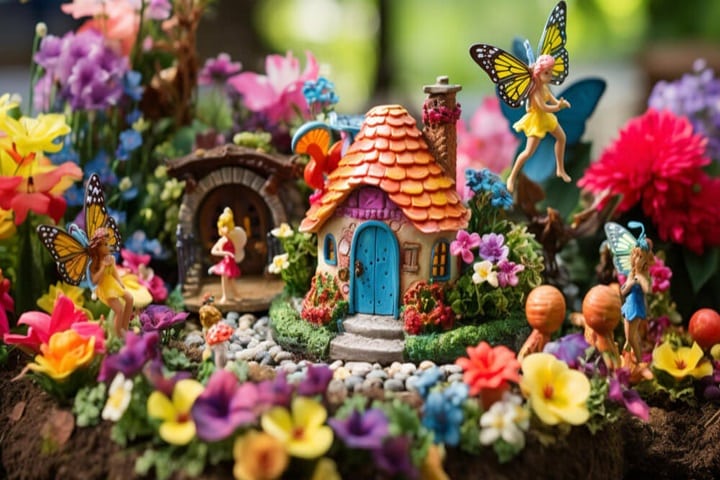
1. Containers for a Fairy Garden:
Fairy gardens can be designed in a variety of containers, each offering its own unique aesthetic and theme.
- Terracotta Pots Garden: These pots give a rustic, earthy look that works perfectly for a woodland fairy theme.
- Wicker Basket Garden: Add charm and texture with wicker baskets. These are perfect for creating a cottage-like fairy garden filled with blooms.
- Galvanized Washtub Garden: Use a metal washtub to give your fairy garden an industrial yet magical look.
- Pumpkin Fairy Garden: Hollow out a pumpkin to create a seasonal fairy garden. It’s perfect for autumn and adds an element of surprise.
- Glass Jar Fairy Garden: Small but mighty, a glass jar fairy garden can sit on your windowsill and is perfect for indoor spaces.
2. Fairy Homes and Other Fairy-Build Features:
The fairy houses and structures in your garden are what make it feel like a home for your magical inhabitants. Even without fairy figures these features can help the garden feel like it really is inhabited.
Fairy Cottage
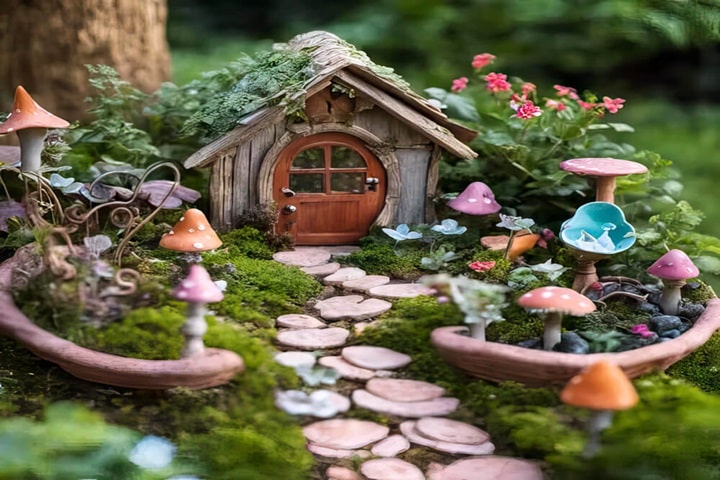
Build or buy a miniature house that looks like it came from a fairytale. Wooden cottages with moss roofs are a popular choice. You can also make a small stone cottage for fairies to live in, with small stones from your garden, and then add bark for the roof.
Fairy Doors
Attach these to the base of trees or along garden walls to give the impression that fairies have secret entrances. These doors, closed or slightly ajar, can give the impression that the fairies themselves are just out of sight.
You can make your own fairy door from some reclaimed hinges and hardware and some reclaimed wood, for example, or other materials that you may have lying around.
Stone Patio and Paths
Create tiny patios and walkways out of pebbles or small stones, giving fairies a place to relax or travel through their garden. You might also make pathways from grass clipped short, or mosses, or from tiny flakes of wood chip/ bark.
Fairy Plantings
There are many different plants that you might use, as mentioned above, to create a lush garden or natural landscape for your fairies to inhabit.
3. Fairy Farm Garden
Imagine a farm for fairies. You can make tiny vegetable gardens, and might even include tools, and mini animals for fairies to tend.
There are plenty of seeds you can sow for micro-greens so you can actually enjoy some food from the fairy garden. I recommend trying some cabbage-family plants like kale and mustard, pak choi and mizuna, as well as lettuce, radishes and rocket, to name some good examples.
Fairy Forest
You can use small coniferous plants or bonsai trees to recreate a forest where fairies might dwell. Pea shoots can also help you make a fairy forest that is edible too. Some sub-shrub herbs can also work well as trees for a fairy woodland. Try some thyme, for example, or some small rosemary cuttings, in a sunny spot.
Fairy Flowers
Plant tiny flowers like forget-me-nots, violas, or baby’s breath to add bursts of colour to the fairy garden. Little blooms often work best so you do not throw out the sense of scale in your fairy garden project.
But remember, there are plenty of beautiful flowers that you might include to help your fairy friends to feel at home.
Mosses and Succulents
These are great for adding a soft, green foundation to your fairy garden and can be used to create fairy lawns or hills. You will often find mosses and succulents easy and useful plants to include in a fairy garden.
4. Full Size Fairy Gardens or Fantasy Gardens
If you have more space, you can take your fairy garden to the next level by expanding it into a full-size area in your yard. A full-size fairy garden can include:
- Larger trees or shrubs that provide shade and structure.
- Bigger fairy homes or castles built into the landscape.
- Full-size pathways with fairy lights, lanterns, or hidden fairy doors attached to tree trunks.
- Areas dedicated to wildlife, such as bird baths or insect hotels, further enhancing the magical feel.
By following these guidelines and letting your creativity shine, you’ll create a captivating fairy garden that adds a touch of magic to your home or outdoor space. Whether you choose a small tabletop version or a full-sized garden, the world of fairies awaits!
Be sure to expand your knowledge further with detailed articles on our blog.
FAQs
What are the rules for fairy gardens?
There are no hard-and-fast rules for fairy gardens, but the key is to create a magical and imaginative space. Fairy gardens should be whimsical and personal, reflecting your own vision of what a fairy’s world might look like.
How do I make a fairy garden?
Start by choosing a container or plot of land, then gather plants and accessories that match your theme. Incorporate miniature houses, fairy figurines, pathways, and furniture to bring the space to life. Don’t forget to use natural elements like moss and pebbles to ground the fantasy in nature.
What does a fairy garden need?
A fairy garden needs a mix of plants, accessories, and imagination. Include elements like small plants, fairy houses, moss, and pebbles to create an enchanted atmosphere.
What to put in the bottom of a fairy garden?
When planting in a container, it’s a good idea to add a layer of drainage material like gravel or pebbles at the bottom before adding soil. This prevents water from pooling and ensures that your plants thrive.
Sources
Goddess Lifestyle Plan. (2023) How To Create A Magical Garden And Outside Space. [online] Available at: https://goddesslifestyleplan.com/how-to-create-a-magical-garden-and-outside-space/ [accessed 28/10/2024]