A Practical Guide to Growing in Containers
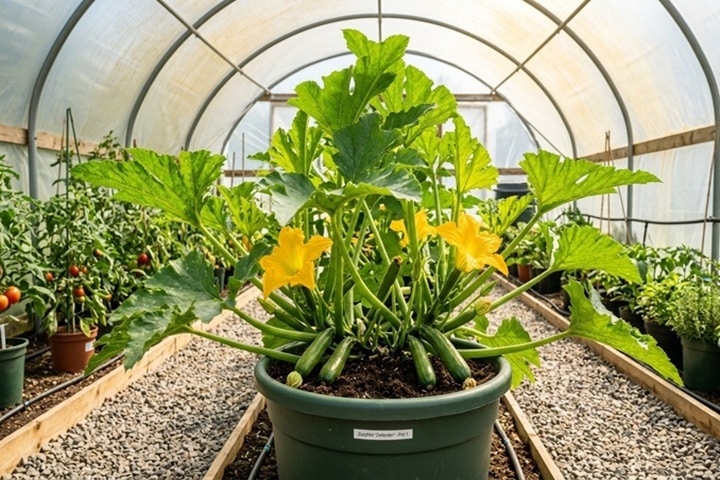
Growing a courgette in pot inside a polytunnel is one of the easiest ways to enjoy reliable harvests, even when space is limited. Whether you have a small garden, an allotment plot, or a compact growing area, container-grown courgettes can be surprisingly productive when given the right conditions.
One of the advantages of growing courgettes in pots within a polytunnel is the extra control you gain over temperature, watering, and soil conditions. The protected environment helps plants establish quickly, while containers allow you to make the most of available space.
In this guide, I’ll explain how to grow courgettes successfully in containers inside a polytunnel, from choosing the right pot and compost through to watering, feeding, and harvesting.
For more inspiration on how to grow courgettes and other vegetables successfully in a polytunnel environment, visit: https://blog.firsttunnels.co.uk/topics/growing/fruits-and-vegetables/
Key Takeaways
- Courgettes grow exceptionally well in large containers inside polytunnels.
- Pot size and compost quality have a direct impact on plant health and yield.
- Consistent watering is essential for good fruit development.
- Polytunnels provide warmth and can extend the growing season.
- Good airflow and sensible spacing help prevent common growing problems.
Choosing the Right Pot for Courgettes in a Polytunnel
A healthy courgette plant develops a substantial root system, so choosing an adequately sized container is one of the most important decisions you’ll make.
Small pots often dry out too quickly and can restrict root growth, leading to weaker plants and reduced harvests.
What Size Pot Does a Courgette Need?
As a general rule, choose a container that holds at least 30 to 40 litres of compost. Larger pots are often better because they retain moisture more effectively and provide more room for root development.
Key Considerations
- Use a pot with plenty of drainage holes.
- Choose a sturdy container that will not topple once plants become large.
- Position containers where they will receive maximum sunlight.
- Allow enough room between pots for good airflow.
- Consider adding trays only if excess water can drain freely.
Choosing the Right Compost
Courgettes are hungry plants that perform best in fertile growing media.
A good mix should be:
- Rich in organic matter.
- Moisture retentive but free draining.
- Able to support strong root growth.
- Nutrient rich throughout the growing season.
I usually find that incorporating well-rotted compost into a quality peat-free compost mix helps support strong early growth.
Quick Pot Setup Checklist
- Minimum 30-litre container
- Excellent drainage
- Rich compost mix
- Sunny position
- Good spacing between plants
If you’re still planning your growing space, explore choosing a domestic polytunnel suitable for growing courgettes in containers at home.
Planting Courgettes in Containers
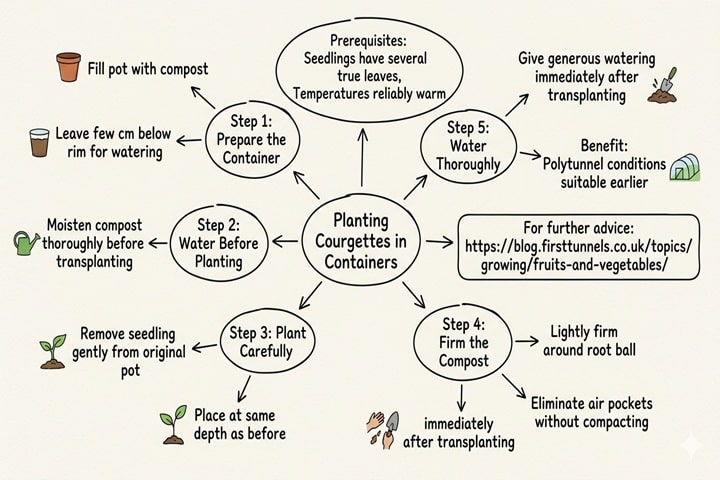
Once seedlings have developed several true leaves and temperatures are reliably warm, they can be transplanted into their final containers.
One of the benefits of growing in a polytunnel is that conditions often become suitable slightly earlier than outdoors.
Here is a guide on how to grow courgettes and other vegetables successfully in a polytunnel environment.
Step 1: Prepare the Container
Fill your chosen pot with compost, leaving a few centimetres below the rim to make watering easier.
Step 2: Water Before Planting
Moisten the compost thoroughly before transplanting.
Step 3: Plant Carefully
Remove the seedling gently from its original pot and place it at the same depth it was previously growing.
Step 4: Firm the Compost
Lightly firm around the root ball to eliminate air pockets without compacting the compost.
Step 5: Water Thoroughly
Give the plant a generous watering immediately after transplanting.
Spacing Inside the Polytunnel
Courgettes may start small, but they quickly become large plants.
Aim to leave:
- At least 60cm between containers.
- Clear access paths for maintenance and harvesting.
- Space for airflow around mature foliage.
Good spacing reduces humidity around leaves and helps minimise disease issues later in the season.
Watering and Feeding Courgettes in Pots
Watering is often the biggest challenge when growing a courgette in a pot.
Because containers hold a limited volume of compost, they dry out much faster than plants growing directly in the ground. During warm summer weather inside a polytunnel, daily watering may become necessary.
Consistency is important. Allowing compost to swing between very dry and very wet conditions can stress plants and affect fruit production.
Watering Tips
- Water deeply rather than little and often.
- Aim to keep compost consistently moist.
- Check containers daily during hot weather.
- Water around the base of plants rather than over the leaves.
- Water early in the day whenever possible.
You can learn more on managing watering effectively for courgettes grown in pots inside a polytunnel.
Feeding Courgette Plants
Courgettes produce large leaves and a steady supply of fruit, so they require regular feeding.
Once plants begin flowering, apply a suitable liquid feed regularly according to product instructions.
Benefits of Mulching Containers
A mulch can help:
- Reduce moisture loss.
- Regulate compost temperature.
- Suppress weed growth.
- Improve soil health over time.
Quick Tips Box
Remember: Underwatering is usually a bigger problem than overfeeding when growing courgettes in containers. Healthy plants need a reliable supply of moisture throughout the growing season.
Managing Polytunnel Conditions for Healthy Growth
The protected environment inside a polytunnel is one of the reasons courgettes perform so well. However, successful growing depends on maintaining balanced conditions.
Excessive heat, poor airflow, or overcrowding can all lead to unnecessary problems.
Here is more on keeping your polytunnel conditions stable for healthy container-grown courgettes.
Polytunnel Management Checklist
- Ventilate regularly during warm weather
- Avoid overcrowding plants
- Monitor temperatures during heatwaves
- Water consistently
- Remove damaged leaves when necessary
- Keep pathways clear
Why Ventilation Matters
Good airflow helps:
- Reduce humidity.
- Lower disease pressure.
- Improve pollination.
- Prevent heat stress.
Even in the UK climate, temperatures inside a closed polytunnel can rise quickly on sunny days.
Troubleshooting Common Issues
| Problem | Possible Cause | Solution |
|---|---|---|
| Wilting leaves | Heat stress or dry compost | Improve ventilation and water thoroughly |
| Powdery mildew | Poor airflow | Increase spacing and ventilation |
| Small fruits | Inconsistent watering | Water more regularly |
| Yellowing leaves | Nutrient deficiency or stress | Review feeding programme |
| Poor fruit set | Heat or pollination issues | Improve airflow and growing conditions |
Harvesting Courgettes from Container Plants
One of the pleasures of growing courgettes is how quickly plants begin producing harvests.
For the best flavour and texture, pick fruits while they are still relatively young and tender. Waiting too long can result in oversized courgettes with tougher skin and larger seeds.
Harvesting Tips
- Check plants every few days.
- Harvest regularly throughout the season.
- Cut fruits cleanly rather than pulling them.
- Pick before fruits become excessively large.
- Continue harvesting to encourage further production.
Regular picking is one of the simplest ways to increase overall yields. When mature fruits are left on the plant, production often slows as the plant shifts energy towards seed development.
Common Beginner Mistakes
- Allowing compost to dry out.
- Using containers that are too small.
- Growing plants too close together.
- Forgetting to ventilate the polytunnel.
- Leaving fruits on plants for too long.
Conclusion
Growing a courgette in pot inside a polytunnel is a straightforward and rewarding way to produce generous harvests in a relatively small space. With a large enough container, fertile compost, regular watering, and good ventilation, even beginner gardeners can achieve excellent results.
The controlled environment of a polytunnel helps create the warmth and protection courgettes enjoy, while container growing allows flexibility and efficient use of available space. By focusing on consistent care and maintaining healthy growing conditions, you can enjoy a steady supply of fresh courgettes throughout the season.
FREQUENTLY ASKED QUESTIONS
Can you grow courgettes in pots in a polytunnel?
Yes. Courgettes grow very successfully in large containers inside a polytunnel, provided they receive adequate water, nutrients, sunlight, and ventilation.
How big should a pot be for courgettes?
A container holding at least 30 to 40 litres of compost is generally recommended. Larger pots often provide more consistent moisture levels and better root development.
Can courgettes be grown vertically in pots?
Some compact or climbing varieties can be trained upwards using sturdy supports. However, most traditional courgettes are naturally bush-forming plants and require sufficient space around them.
When should you pot on courgette seedlings?
Seedlings can usually be moved into their final containers once they have developed several true leaves and the risk of cold conditions has passed. Inside a polytunnel, this may be slightly earlier than outdoor planting.
Sources
Royal Horticultural Society (RHS) (2026) How to grow courgettes. Available at: https://www.rhs.org.uk/vegetables/courgettes/grow-your-own (Accessed: 19 June 2026).