


If all you have is a paved over yard or courtyard space, it is certainly possible to start a garden over concrete or paving.
Not everyone is lucky enough to have a garden space where there is bare soil or lawn available to provide a space to start a garden. However, while you might not be aware of the possibilities, a garden can be started almost anywhere. Having an outside area where you don’t have direct access to the soil can bring up some challenges.
But whether you own or rent your space, there are solutions that will allow you to start a garden and potentially grow at least some of your own food at home, by using concrete in gardens.
The Benefits of Starting a Garden Over Concrete or Paving
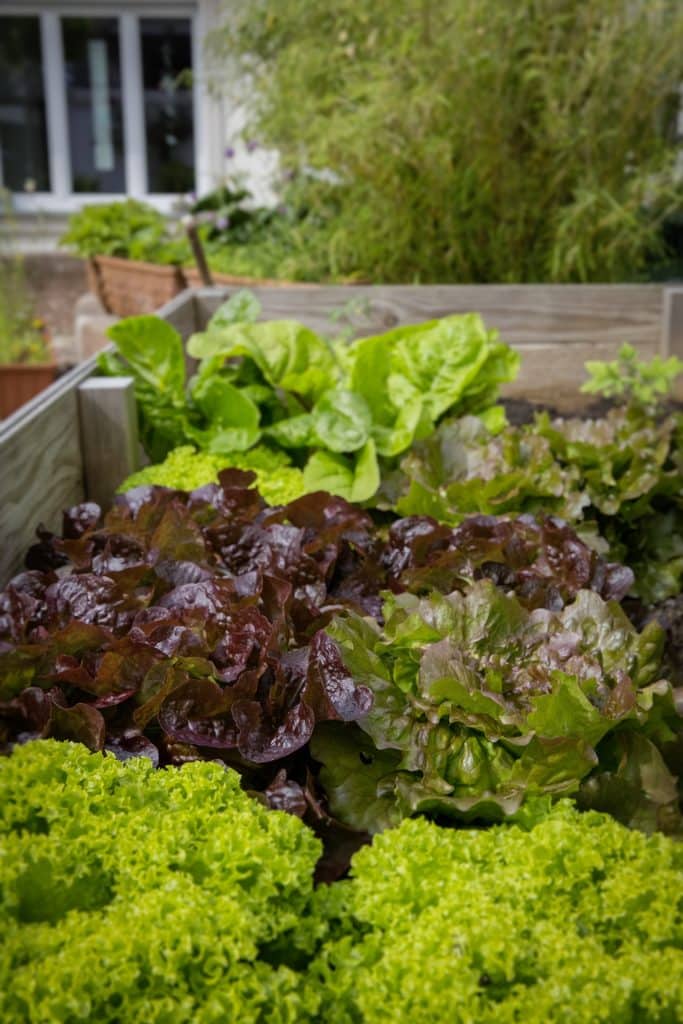
Ideally, we should all consider taking up expansive areas of concrete or impermeable paving in our gardens.
Removing hardstanding areas that don’t let water permeate into the soil can help create healthier, more biodiverse ecological systems, and allow us to manage water wisely in the plants and soil on our properties, sequester more carbon, and grow the things we and wildlife need.
Of course, we don’t all have the ability to do so, or cannot do so right away. So in the meantime or to allow us to get growing, we can create gardens that sit on top of these surfaces instead.
Reducing barren areas of man-made surface on our properties can allow us to work with nature and bring it into our lives.
Introducing plants into these areas that are otherwise devoid of life can allow us to fight climate change by introducing carbon sequestering plants, improve environmental conditions for ourselves and for the creatures that share our space, and make the most of space that would otherwise be largely wasted to meet our own basic needs.
Starting a garden over concrete or patio paving might not always seem ideal. But it is also worthwhile noting that while such areas have their downsides, there are also benefits to be had.
For one thing, the concrete or paving can catch and store the sun’s energy, releasing heat slowly when temperatures fall and keeping temperatures more stable over time.
Another thing to consider is that there can already be a ready-made pathway around your bed, creating a stable and level surface for the gardener as they tend and harvest from the garden area created on it.
How to Create a Raised Bed on Concrete or Paving
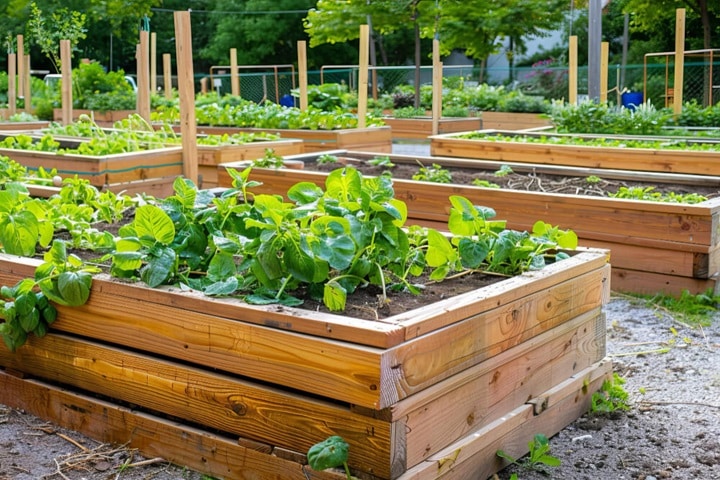
Raised bed gardening can be a useful way to maximise your space, and can help you create a garden that can be positioned over soil, lawn or concrete or patio paving. If you need or wish to create a garden over an existing area of concrete or paving then creating a raised bed is one of the easiest ways to proceed.
To create a raised bed over concrete or paving, working through the following steps will help you to avoid some of the most common pitfalls and make sure you end up achieving optimal results.
1. Consider Your Space
Before you begin work on designing a raised bed for your space, you need to understand it clearly.
When creating a raised bed over concrete or a raised bed on your patio, as when creating any other new growing area in your garden, it is vital to observe and understand the characteristics of the space.
Thinking about climate, microclimate, sun, wind, water, slope etc. you can begin to build up a clear picture of the location and determine the best position for a raised bed within the space. Of course, when choosing a location for any new growing area, you also need to spend some time thinking about the requirements of the specific plants that you would like to grow.
2. Choose a Type of Raised Bed
When you think about a raised bed, you might simply imagine a framework of edging filled with compost/ soil. But there are a number of different types of raised bed that you might consider, which can be suitable for placing over solid and impermeable surfaces with the right adaptations and strategies.
For example, you might consider:
- A simple ‘lasagna’ style no-dig raised bed.
- A hugelkultur style raised bed. (with woody materials to hold water and provide nutrients).
- A closed-base raised bed with feet to raise it off the ground.
- A movable raised bed planter on wheels.
- A wicking bed with a built-in reservoir for water at the base.
Deciding which type of raised bed might work best for your project will help you to set out on the right track and think through any potential issues that might arise before you actually begin to create your new garden over concrete or paving.
3. Determine the Dimensions of Your New Garden Area
Another important thing to think about when creating a new garden area on concrete or over paving or patio is how large or small that new growing area will be.
Smaller raised beds can often be more practical for new growers, but this should be balanced with the fact that the larger a bed is, in general, the less watering it will require and the easier it will be to maintain.
Keep in mind that you should always be able to easily reach the whole of the raised bed from the sides.
4. Think About Water, Drainage & Base Structure for Your Garden
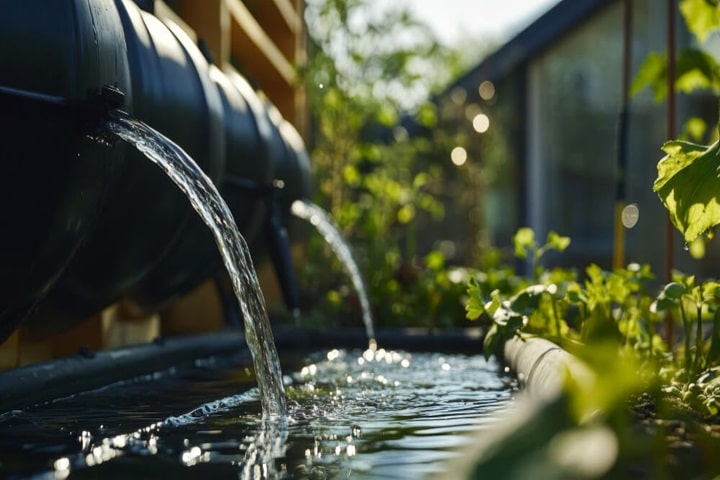
In many ways the most important thing to think about when you are creating a new raised bed over concrete or other impermeable surfaces is water, and drainage.
Remember, the water that falls on impermeable surfaces will not pass through the surface to the ground below, but rather run off over the surface, draining to the lowest point. You will need to consider the impact that a raised bed on your patio will have in terms of water.
When rain falls on your raised bed, rather than the patio, the water will be stored to a degree within the growing medium used, and within the plants you grow within it.
But for healthy plants, that water typically will need to drain away at the base of the raised bed, to prevent waterlogging from occurring.
With most raised beds, you need to think about how water can escape from the structure at the base, and where that excess water will go.
With lasagna or hugelkultur style raised beds, the water from the base will typically escape into the soil below. But on areas of hardstanding, the water will not seep slowly into the soil below but will rather join the runoff from the hard surface.
When growing over concrete or patio paving, you need to think about how you can allow this water to drain away without taking the soil or growing medium with it. This typically involves creating a drainage layer at the base of the structure.
You might, for example, add a layer of gravel or small stones below the organic layers. Or you might use a metal mesh and some reclaimed natural fabric to create a kind of sieve at the base so water but not soil can pass through.
However, with some raised beds, you might simply have a base with holes in it (like a typical container or planter), and feet to raise the structure off the ground.
And for a few raised beds, such as wicking beds, you might contain water within a reservoir at the base. Such structures might be incorporated into more complex water management or water-based growing systems in your garden.
5. Select the Edging and Growing Medium for your Raised Bed
Another important area of focus when making decisions about a new raised bed over concrete or a new garden on a patio is how you will create the edging/ structure for your bed, and how you will fill the growing area.
Of course, how you build and fill your raised bed will depend on which of the above mentioned types of raised bed you choose.
But whichever type of raised bed you choose, remember that you can often create one relatively cheaply, or even for free. You should use natural and/or reclaimed materials whenever possible since that won’t just make a project more affordable, it will also be the most eco-friendly and sustainable choice.
Over concrete or paving, the height of the materials you choose might be important. Make sure you think about the strength of the substrate, since a raised bed can be very heavy when wet and filled with growing medium and plants. In most cases, however, concrete or paving slabs will be able to cope with the weight of a new garden.
Alternative Growing Solutions for a Garden Over Concrete or Paving
Finally, remember that while raised beds are one of the most obvious ways to start a garden over concrete or impermeable paving, there are plenty of other ways to get growing at home even when there are no areas of soil for planting.
For example, you might consider vertical garden solutions, hanging planters, and more…
Use your imagination and ingenuity and you will find that there are ways to grow food and other resources no matter where you live.
FAQs
Can I put concrete in my garden?
Yes, you can put concrete in your garden for structures like pathways, patios, or bases for sheds.
Can you pour concrete straight onto soil?
Yes, but it is recommended to prepare the site with a sub-base of crushed stone or gravel to ensure stability and drainage, and to prevent cracking.
Do I need planning permission to concrete my garden?
Generally, you don’t need planning permission to concrete your garden unless it significantly affects drainage or the use of the land. However, it’s best to check with your local council as regulations can vary.
Is it cheaper to lay slabs or concrete?
Pouring concrete is usually cheaper than laying individual slabs due to lower material costs and quicker installation, but the final choice might depend on the desired aesthetic and specific garden needs.
Sources
Talerico, D., (2020) How to Build a Raised Garden Bed on Concrete, Patio, or Hard Surface. Homestead and Chill. [online] Available at: https://homesteadandchill.com/build-raised-garden-bed-on-concrete/ [accessed 20/09/24]