

Planting flowers among your vegetables can improve pollination, reduce pests and even boost yields. But it is important to remember that it only works when you choose the right flowers and plant them in the right places.
This approach, known as companion planting, combines vegetables and flowers in a way that supports a healthier, more balanced garden ecosystem. Done well, it attracts pollinators, confuses pests and makes better use of your growing space.
Research supports some of these benefits, particularly around pollination and biodiversity. However, evidence on pest control is mixed, so it is best to treat companion planting as part of a wider, practical growing strategy rather than a cure-all but what are the best companion flowers for vegetables.
Key Takeaways
- Companion flowers attract pollinators and beneficial insects
- Some flowers act as trap crops, drawing pests away from vegetables
- Marigolds produce compounds linked to nematode suppression
- Flower diversity can make it harder for pests to locate crops
- Bloom timing and spacing are just as important as plant choice
Why Mix Flowers with Vegetables?
Companion planting simply means growing different plants together to support each other. In a permaculture garden, we always try to integrate rather than segregating. By bringing diverse elements and plants together, the whole can become greater than the sum of its parts.
In a vegetable garden, flowers play several important roles.
They bring in bees and other pollinators at the exact moment crops need them. This is particularly important for crops like courgettes, beans and tomatoes. Research shows that when flowers bloom at the same time as crops, pollination and yields can improve.
They also help us to create diversity. A mixed planting scheme makes it harder for pests to locate their preferred crops. Instead of a uniform bed of cabbages, you have a varied environment that disrupts pest behaviour. Flowering plants may sometimes confuse, repel or distract pest species.
That said, it is important to stay realistic. Studies from the University of Minnesota highlight that while some combinations reduce pests, others show little measurable effect. Companion planting works best when combined with good soil care, crop rotation and observation. What works very well in one location might not necessarily deliver the same results in another.
Another key factor is timing. Flowers must be in bloom when your vegetables need them. This is often overlooked but makes a significant difference when we are choosing companions to aid pollination.
Of course, there are two very important things to consider when choosing companion flowers for a vegetable garden:
- Environmental conditions – flowers must like similar conditions to the crops in terms of sunlight, water, and soil in order to be good companions.
- Competition – flowers must not compete excessively with vegetables for water, nutrients or space to be good additions to your vegetable garden.
A protected space like a polytunnel can make growing crops and companion planting easier to manage, especially in the UK climate where seasons can be unpredictable.
Choosing Flowers for Pollinators & Beneficial Insects
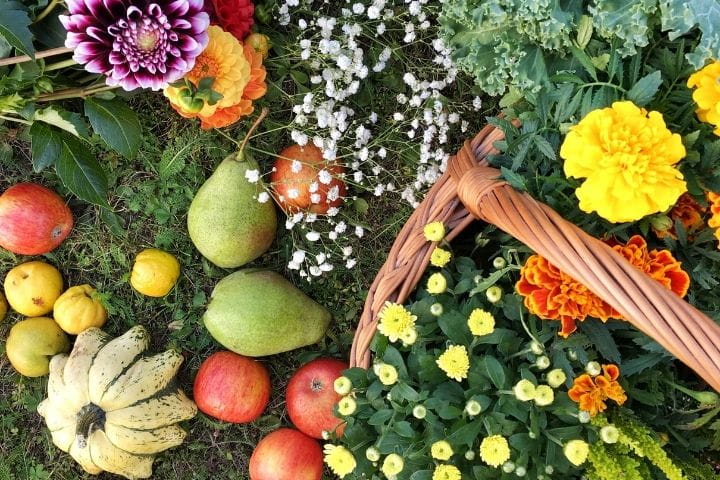
If your main goal is better pollination, focus on flowers that produce plenty of nectar and bloom over a long period.
Best companion flowers for vegetable garden pollination:
Some of the most popular flowers to attract pollinators are:
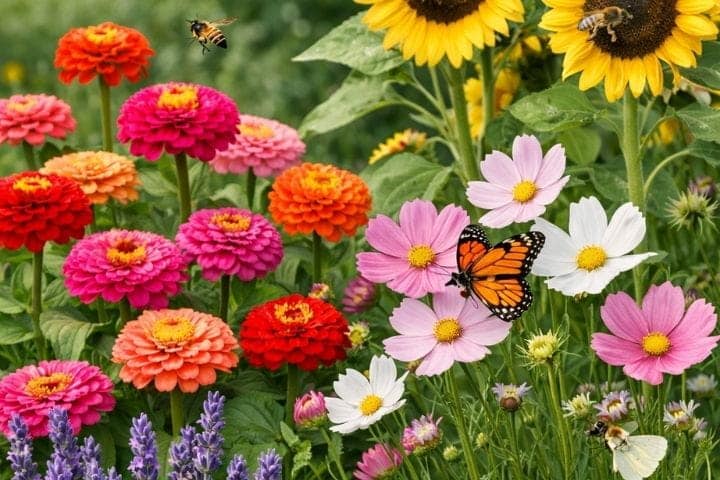
- Zinnias
Bright, long-lasting blooms that attract bees and butterflies. Ideal for boosting overall pollinator activity.
- Cosmos
Light, airy flowers that attract pollinators and may help deter aphids and thrips.
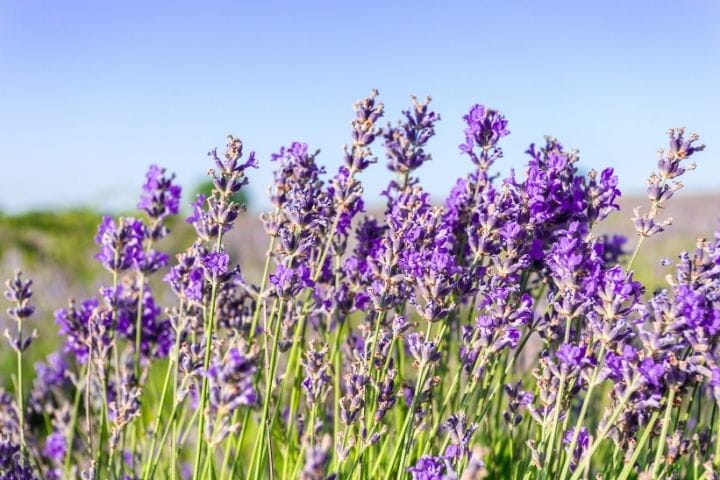
- Lavender
Excellent for bees. Its strong scent can also discourage some moth pests.
- Chamomile
Attracts hoverflies, whose larvae feed on aphids.
- Sunflowers
Provide both nectar and structure, drawing in pollinators while offering light shade.
Practical tip:
Plant flowers in clusters rather than scattering single plants. This makes them easier for pollinators to find and more effective overall.
However, many UK native plants are also excellent choices for attracting pollinators, and other beneficial insects, often outperforming more ornamental options because they have evolved alongside local wildlife. In my experience, including a few natives alongside your companion flowers for vegetables creates a more resilient and active garden ecosystem.
Some of my top picks are:
- Oxeye daisy (Leucanthemum vulgare)
A familiar wildflower that draws in bees, hoverflies and beetles. It is easy to grow and fits well around the edges of vegetable beds.
- Red clover (Trifolium pratense)
Brilliant for bumblebees. It also fixes nitrogen in the soil, which can benefit nearby crops over time.
- Field scabious (Knautia arvensis)
A magnet for pollinators, especially butterflies. It flowers over a long period, helping TO bridge the gaps between crop blooms.
- Yarrow (Achillea millefolium)
Attracts hoverflies and predatory insects that help control aphids. It is hardy and extremely tolerant of typical UK conditions.
- Bird’s-foot trefoil (Lotus corniculatus)
Excellent for supporting a wide range of insects, including some specialist pollinators.
- Viper’s bugloss (Echium vulgare)
One of the best nectar sources for bees. It produces striking blue flowers and thrives in poorer soils.
These native plants work particularly well when planted in small drifts or clusters near your crops, rather than dotted individually. They can be tucked into borders, paths or less intensively managed areas of your plot, where they will quietly support pollination throughout the season.
Flowers and Pest Control and Trap Crops
Some companion flowers help manage pests either by repelling them, attracting beneficial insects or acting as sacrificial plants.
Remember, as well as attracting bees and other pollinators, we can also use flowering plants to attract predatory insects like ladybirds and lacewings that help to keep down the numbers of aphids and other insect pests through predation. This is long-term thinking and part of an holistic organic gardening approach to pest control.
| Flower | Pest Target | Mechanism | Companion Vegetables |
|---|---|---|---|
| Marigold | Nematodes, aphids | Chemical compounds in roots/leaves | Tomatoes, potatoes |
| Nasturtium | Aphids, whitefly | Trap crop | Brassicas, beans |
| Calendula | Aphids | Attracts hoverflies | Leafy greens |
| Alyssum | Aphids | Attracts lacewings | Carrots, lettuce |
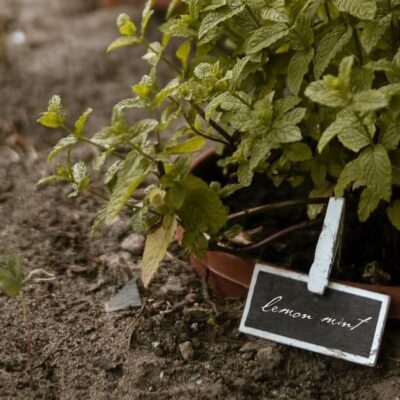
| Mint* | Ants, aphids | Strong scent deterrent | Brassicas (in pots only) |
*Always grow mint in containers in confined beds to stop it from spreading excessively.
Marigolds are often highlighted. They produce compounds such as α-terthienyl and limonene, which have been linked to reduced root-knot nematodes and some fungal issues. However, results vary depending on planting density and conditions.
Nasturtiums are one of the most reliable choices. I use them regularly as a trap crop. Aphids, blackflies and certain beetles tend to settle on them instead of nearby fruits and vegetables, making them easier to manage.
In more enclosed growing spaces, like polytunnels, scent and plant compounds can become more concentrated, which may improve effectiveness.
Structural & Supportive Flowers
Not all companion flowers are about insects. Some provide physical benefits.
- Sunflowers
Act as natural supports for climbing beans
- Borage
Pairs well with tomatoes and improves overall garden biodiversity
- Three Sisters approach
Combines maize, beans and squash, showing how structure and planting relationships can work together
Quick checklist:
- Use taller flowers on the north side to avoid shading crops
- Combine deep-rooted and shallow-rooted plants
- Think about wind protection as well as sunlight
Planning & Planting Tips (Layout, Spacing & Rotation)
A successful companion planting setup comes down to planning.
Step-by-step checklist:
- Match bloom times
Ensure flowers are open when crops need pollination
- Avoid planting large blocks of one crop
Mix species to reduce pest pressure
- Rotate crops each year
Prevent soil-borne pests and diseases
- Plant flowers in groups
Clusters are more effective than isolated plants - Control vigorous growers
Keep mint and similar plants in pots
Spacing matters too. Avoid overcrowding, which can reduce airflow and increase disease risk. Ensure each plant has enough room to grow properly.
Consistent watering or sustainable irrigation also supports both flowers and vegetables. A simple irrigation setup can make a big difference during dry spells.
Creating polycultures in your vegetable garden means moving away from single-crop rows and instead growing a thoughtful mix of vegetables, herbs and companion flowers together in the same space.
I have found this approach leads to healthier plants overall, as diversity helps attract pollinators, supports beneficial insects and makes it harder for pests to spread quickly.
The key is to combine plants with different growth habits and needs, such as pairing deep-rooted crops with shallow ones, or tall structures like sunflowers with lower-growing salads and flowering companions.
Keep spacing generous, group plants in small clusters rather than strict lines, and observe how they interact over the season. With time, a well-planned polyculture becomes more balanced, productive and resilient than a traditional single-crop bed.
Top Companion Flowers: Detailed Profiles
Marigold
Benefits: May suppress nematodes, attracts beneficial insects
Companions: Tomatoes, potatoes
Height: 20–50 cm
Edible: Some varieties
Caution: Works best in dense planting
Nasturtium
Benefits: Excellent trap crop for aphids
Companions: Brassicas, beans
Height: Trailing or bush types
Edible: Yes, leaves and flowers
Caution: Can spread widely
Calendula
Benefits: Attracts hoverflies
Companions: Salads, brassicas
Height: 30–60 cm
Edible: Yes
Caution: Self-seeds readily (which is good in some cases, but may not always be desirable)
Cosmos
Benefits: Pollinator attraction, possible pest deterrence
Companions: General use
Height: Up to 1.5 m
Edible: No
Caution: Needs support in windy locations
Borage
Benefits: Attracts bees, supports tomatoes
Companions: Tomatoes, strawberries
Height: 60–90 cm
Edible: Yes
Caution: Self-seeds easily
Sunflower
Benefits: Structure, pollinators
Companions: Beans, cucumbers
Height: Up to 2 m+
Edible: Seeds
Caution: Can shade crops (so grow on the north side of beds to keep crops to the south unshaded)
Alyssum
Benefits: Attracts lacewings
Companions: Carrots, lettuce
Height: Low-growing
Edible: No
Caution: Best as edging plant
Lavender
Benefits: Attracts bees, deters some pests
Companions: General use
Height: 60–90 cm
Edible: Yes (limited culinary use)
Caution: Prefers well-drained soil
Common Mistakes & What to Avoid
Watch out for these common issues:
- Overcrowding plants and restricting airflow
- Relying entirely on companion planting myths
- Letting invasive plants like mint take over
- Planting too many crops from the same family together
- Allowing tall flowers to block essential sunlight
Companion planting works best when it complements solid gardening fundamentals rather than trying to replace them.
Companion flowers for vegetables are not just decorative. They are a practical tool for improving pollination, supporting beneficial insects and creating a more resilient garden.
Start simple. Choose a few reliable flowers, plant them in clusters and observe what happens. Over time, you will develop a system that works for your space and growing style.
Frequently Asked Questions
Do marigolds really deter pests?
They can help, particularly with soil nematodes, but results vary. Dense planting and the right conditions matter.
What flowers are edible as well as useful?
Nasturtium, calendula and borage are all edible and beneficial.
Can I grow flowers and vegetables together in a polytunnel?
Yes, and it can be very effective. Protected environments can enhance growth and extend flowering periods.
How many flowers should I plant per bed?
Aim for clusters rather than exact numbers. A few well-placed groups per bed is usually enough.
Which flowers should I avoid planting next to vegetables?
Avoid overly invasive plants like mint unless contained, and be cautious with anything that creates excessive shade.
Sources
University of Minnesota Extension (n.d.) Companion planting in home gardens.
https://extension.umn.edu/planting-and-growing-guides/companion-planting-home-gardens