

Bunching onions are a useful perennial crop – one that just keeps on giving. This can be a useful crop for many gardeners.
What are Bunching Onions?
Bunching onions, also commonly referred to as Japanese bunching onions, long green onions or ‘Welsh Onions’ are plants in the onion family – their Latin name is Allium fistulosum.
This is a type of perennial allium, a type of ‘spring onion’ or ‘scallion’. Rather than being grown for their bulbs, these onions are typically grown for their leaves/stems. They form bunches of hollow leaves and scapes and will not grow large bulbs at their base like the common onion, Allium cepa.
Why Grow Bunching Onions?
Bunching onions are one of several perennial vegetables that can be grown in your garden. Perennial allium varieties can be very useful to grow in your garden and if you are new to growing perennials these can be a great place to begin.
From wild garlic, ramsons or ramps, to bunching or walking onions, chives and perennial leeks, there are a wide range of plants in the onion family that are perennial vegetables and will provide a yield over a number of years.
They’re not just good for culinary purposes. Perennial alliums are fantastic for pest control too. They can be excellent companion plants in an organic garden.
These hardy bunching onions are harvested and used as spring onions or green onions. But the difference is that you can enjoy these ‘spring’ onions throughout the winter. These take up little space and once established, will endure for years in a perennial vegetable bed.
Another key benefit of growing bunching onions is that unlike other alliums grown as annual crops, bunching onions need only be sown once and can then be harvested from and enjoyed over a number of years.
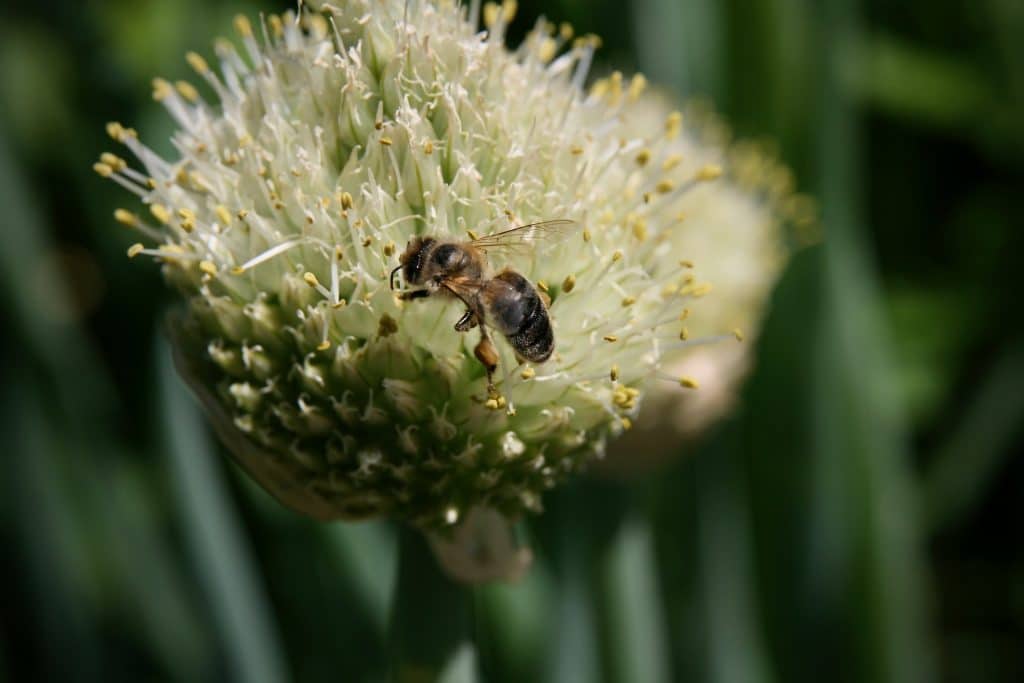
The small bulbs and white stem sections, and the green leaves all have a mild onion flavour. These onions can be used raw or cooked in a range of recipes. The flowers, when these form, though they can be rather dry, also have a pleasant onion flavour.
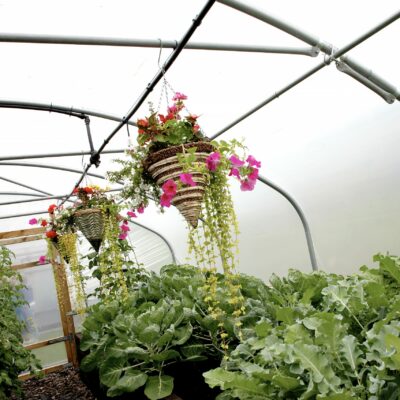
When grown under cover, in a polytunnel, for example, the green onions can be enjoyed all winter long.
How to Grow Bunching Onions
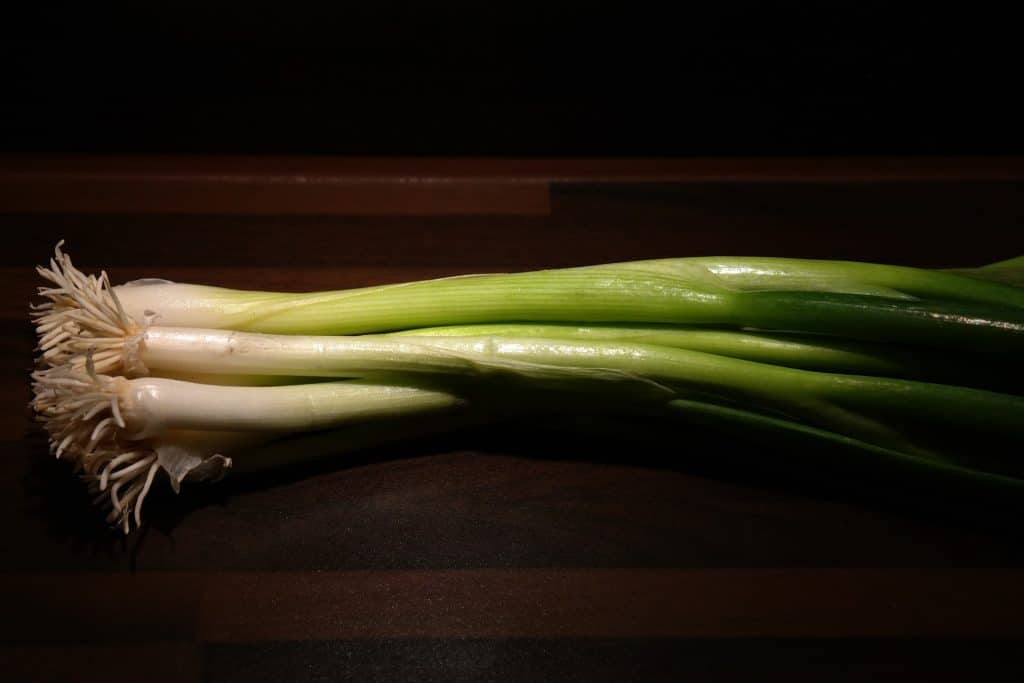
Bunching onions are really easy to grow, and they can be grown in a wide range of different locations. Even if you have not attempted to grow your own food much before, they are a great crop to consider and should not take up much of your effort or time.
There are a range of different cultivars or varieties of bunching onion to choose from. Many of the named oriental varieties are particularly hardy and can even often retain their leaves through winter outdoors – even when covered with snow. But they will fare particularly well if afforded some winter protection.
You can choose from cultivars that have single stems, which divide less freely, and multi-stemmed varieties that will bunch out better over time. I recommend the latter type as these produce a greater abundance of food.
Where to Grow Bunching Onions
The first thing to decide if you would like to grow bunching onions is where you will grow them. You can grow them in raised beds or in the ground in your garden or in containers. They can be placed either outdoors, or in a greenhouse or polytunnel, or even indoors on a sunny windowsill.
Bunching onions are fairly tolerant of varied growing conditions and soils or growing media. But they need a spot that is sunny, and free-draining. They will do best where the pH is between 6.5 and 7.5. But they can grow even in acidic conditions.
When choosing where to grow bunching onions you should not only think about the needs of the plants themselves, but also how they can be combined with other plants in your garden.
As mentioned above, bunching onions can be beneficial companion plants. Like other alliums, their scent can confuse, repel or distract a range of pest species in an organic garden.
Though quite intolerant of competition from other plants, bunching onions are great companion plants for a range of other plants, including annual crops like carrots and beetroots, and either perennial or annual brassica crops.
However, you should not place these close to legumes (such as peas and beans) as alliums can stunt their growth.
These also grow well in mixed perennial planting schemes with edible and ornamental plants and can be beneficial when planted alongside flowering shrubs and other flowering plants. They are of benefit to roses, for example.
Bunching onions can also be beneficial planted around the sunny edges of a fruit tree guild, or in sunnier areas within a forest garden.
Sowing Bunching Onions
Bunching onions can be sown during two key periods. They can be sown in early spring for a harvest in the summer, or in late summer or autumn for overwintering and a harvest through winter and into spring.
You can either sow seeds indoors to transplant later into your garden, or direct sow the seed where they are to grow.
Generally, since seeds germinate best at reasonably high temperatures, it is best to sow indoors for later transplantation in the UK. Start seeds indoors in spring around 5-6 weeks before the last frost date in your area, or in late summer/ early autumn.
Sow the seeds around 1cm deep into seed trays or soil blocks, filled with a moist seed starting growing medium, maintaining a temperature of between 15 and 20 degrees C. The seeds should germinate within a week or so.
When the seedlings are large enough to handle, those sown in a seed tray should be pricked out and potted into their own individual containers.
Planting Bunching Onions
Once the seedlings are 7-10 cm tall and, when sowing in spring, after all risk of frost has passed, they can be transplanted to their final growing positions in your garden. Leave around 5-10cm spacing between each one, so they have space to bunch out.
Bunching onions sown in late summer/ autumn are best grown on in an undercover growing area and if you plan to grow them outdoors, should be planted out once well established the following spring.
Caring for Bunching Onions
- Water consistently through the growing season (especially when growing under cover) but take care not to over-water and make sure that excess water can drain away freely.
- If growing in the ground, mulch around the plants with a layer of organic mulch, such as a homemade compost, replenishing this each spring. But make sure that the mulch does not touch the stems of the plants. A mulch will ensure ongoing fertility, conserve water, and help to suppress weed growth.
- Plants in containers may benefit from feeding with an organic liquid plant feed such as comfrey tea through the growing season.
- Over time, plants will bunch out, and mature clumps can easily be divided to produce new plants for your garden. The best time to divide clumps on bunching onions is in the spring.
How to Harvest Bunching Onions
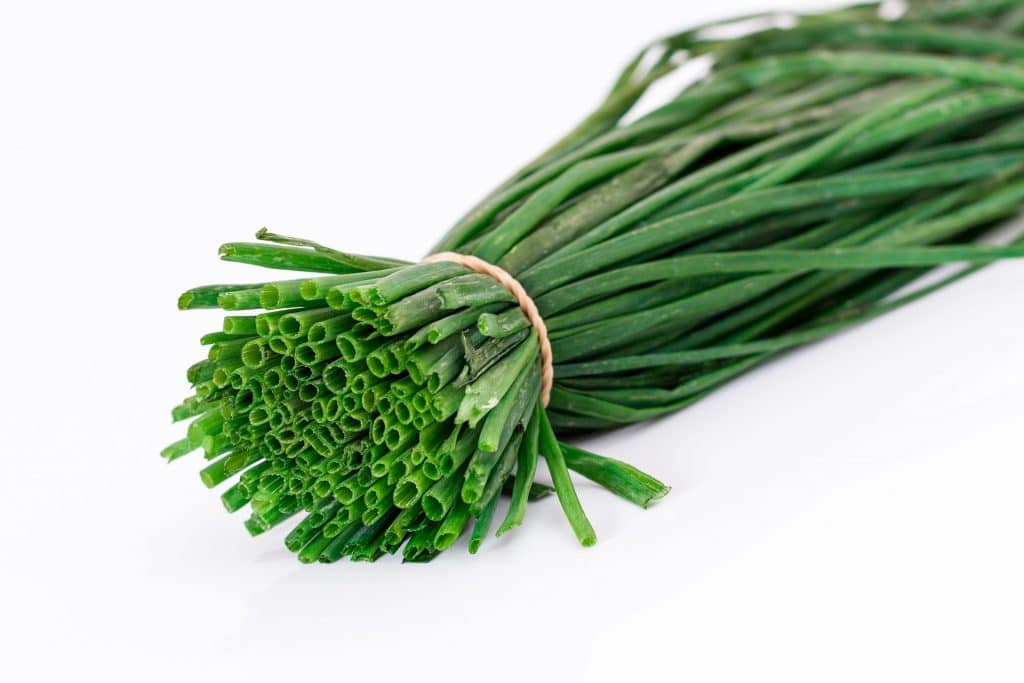
Bunching onions can be harvested at any time from around late June to the end of February or early March, depending on when they are sown and where they are grown.
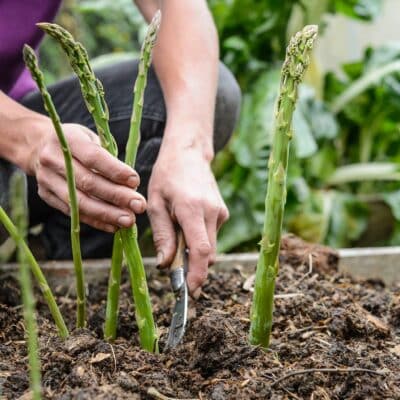
You can simply snip the greens off the tops of the plants as required, or lift entire plants so that you can use the whole of the plant including the white stem and small bulb at the base. If you simply take the upper portions of the plants, then they will readily regrow and continue to provide you with more food from your garden.
How to Store and Use Bunching Onions
Bunching onions are best used fresh from your garden. You can eat the greens raw, right away, in salads or sandwiches. You can also chop them up and use them in a range of different ways – in stir fries, quiches, omelettes, soups, stews or curries, for example.
If you cannot use them right away, however, you can keep them for a week or so, perhaps a little longer, in the crisper drawer or a sealed container in your fridge.
You can also freeze them raw for longer term storage without any preparation, other than cutting them into small rings of a suitable size for the use to which you wish to put them and placing them in freezer-suitable containers.
Another way that you can store bunching onions for later use is to dry some. You can dehydrate the rings of bunching onion in a dehydrator, or using your oven or stove.
You can also use them, like other onions, in a range of pressure canning recipes if this is something that you do in your home.
As you can see from the above, this is a very useful crop for a polytunnel gardener, that can be used in a wide range of different ways.
Want to know more about onions? Try out these onion types.
FAQs
Are bunching onions the same as green onions?
Bunching onions are similar to green onions, also known as scallions, but they differ slightly. Bunching onions have a milder flavor and are perennial, meaning they can grow back each year. They do not form bulbs as green onions might.
How do you know when bunching onions are ready?
Bunching onions are ready to harvest when the greens are tall, typically about 12 inches or more, and the stems are thick and firm. You can harvest them as needed by cutting what you need at the base, leaving the roots for continued growth.
What do you do with bunching onions?
Bunching onions can be used similarly to scallions or chives. They are excellent in salads, as garnishes, in soups, and in stir-fries. Both the white and green parts are edible and can be used to enhance the flavour of various dishes.
Do bunching onions come back?
Yes, bunching onions are perennial, which means they can come back year after year. They survive winter and regrow in the spring, making them a valuable addition to any garden for continuous harvesting.
Sources
Pan, J., (2018) 6 Types of Onions and How to Use Them. Taste of Home. [online] Available at: https://www.tasteofhome.com/collection/types-of-onions [accessed 23/07/24]