

Garlic is a must for polytunnel growers. Home gardeners and commercial growers alike will find it an extremely valuable and healthy crop.
But which variety or varieties should you grow? In this guide, we will talk about some of the different options, and help you decide which garlic varieties to try.
Choosing Garlic Varieties to Grow in Your Garden

Before you buy garlic bulbs to plant in your garden, it is important to think carefully about what exactly you are looking for.
Flavour will of course be one important consideration, and while all garlic varieties will have a lot in common, they can differ surprisingly markedly in taste. Some taste much stronger than others. But aside from flavour, there are also a number of other important considerations to bear in mind.
Here are some questions that it is important to ask yourself before you decide which garlic to grow:
- Is the size of the cloves/ ease of peeling/ preparation important to you?
- Do you need a garlic variety more tolerant of colder temperatures for where you live?
- Do you require a variety that is less likely to bolt in hot weather?
- Are you looking for a garlic that will store well?
- Do you want a garlic to grow over a single season, or a perennial garlic variety that will remain in your garden over multiple years?
Think about the answers to these questions and you should be able to find which garlic variety or varieties will be right for you and your situation.
Harvested Garlic
Remember that once you purchase the right garlic once, you can then save back some of the harvested garlic each year as stock to plant for the following season. By saving your own garlic bulbs to replant you can potentially obtain garlic better and better suited to your particular location over time.
Finding Types of Garlic to Grow
Garlic bulbs to plant are often available from garden centres and plant nurseries, so you should be able to pick some up locally.
Online, there will like be more choice, however, and you can make sure you get the right variety for you. Just try to obtain garlic from reasonably close to home, so that it will be suited to the conditions where you live.
Garlic Varieties for Your Garden
Most garlic varieties grown in an annual vegetable garden or polytunnel fall into one of two main categories – softneck and hardneck. Discover the differences between these two categories and some common cultivars to consider within each of these groups below.
Softneck varieties:
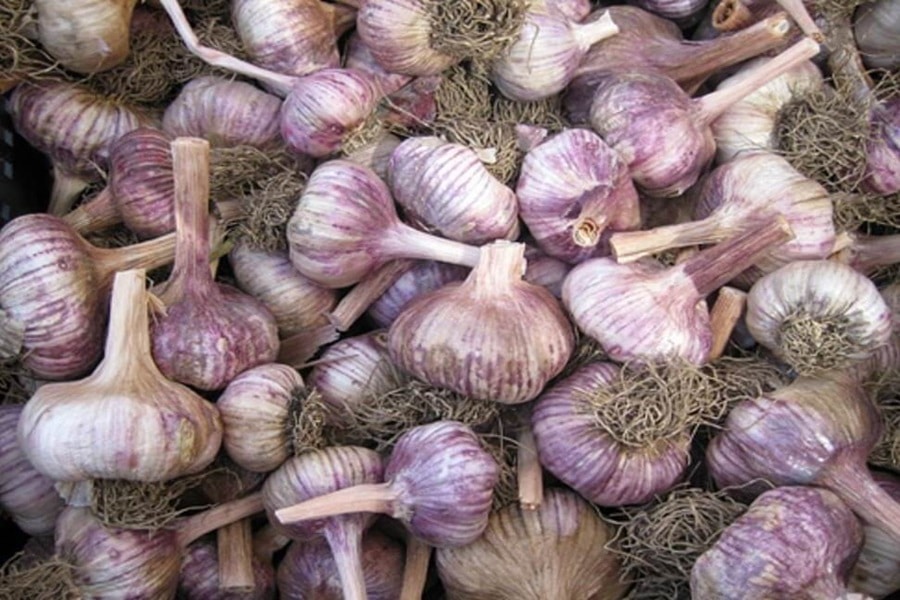
Softneck varieties, Allium sativum, do not form flowering stalks, or if they do these are very weak and bendy. They have smaller cloves, more tightly packed together. They store for longer and are less likely to bolt (produce flowers) as long as the conditions are right. However, northern gardeners may find them a little less tolerant of cold temperatures than hardneck types.
Silverskin, Artichoke, and Middle Eastern are subcategories of softneck garden sometimes applied, though these distinctions are not often used in the UK.
1. ‘Arno’
This softneck variety of garlic produces large bulbs whose pinkish cloves are contained within a white outer skin.
It has a moderate flavour, is quite easy to peel, and stores quite well. This is a recipient of an Award of Garden Merit from the RHS. You can plant this variety either in autumn or in the spring.
2. ‘Cristo’
Another option for planting in autumn or in the spring, this variety hails from France and yet is suitable for UK cultivation. This is another recipient of an Award of Garden Merit from the RHS.
It has a strong flavour and a light aroma, producing large cloves that are white skinned. It can do well in our climate as long as it is grown in full sun, in a well-drained neutral to alkaline soil. Typically, this variety will be ready to harvest in June or July.
3. ‘Early Purple Wight’
Though it should be noted that this variety bred on the Isle of Wight does not store as well as many other softneck types, one of the main benefits of this cultivar is that it produces large bulbs much earlier in the year than many other types. This variety also has an Award of Garden Merit from the RHS.
The bulbs can be ready to harvest as early as the middle of May in the south of England, and from early June further north when planted in October or early November. The bulbs are purple tinged and are prized for their good flavour.
4. ‘Germidour’
This is a softneck variety from France that is often considered highly reliable, even for cultivation in the UK. The large, white bulbs that it produces sometimes have a hint of purple colouration. Award of Garden Merit from the RHS has also been awarded to this variety.
The cloves are mild but still have a rich flavour to them. They are usually planted in autumn and are ready to harvest from 6-7 months from that time.
5. ‘Solent Wight’
This is a garlic variety that has been bred in Britain specifically to create a garlic well suited to our own colder climate. So this can be a good choice for somewhat cooler regions where softneck garlics can often be more challenging to grow. It has an Award of Garden Merit from the RHS.
It can be planted in either the autumn or the spring, and produces bulbs with excellent flavour that will not only taste good when eaten fresh but which will also store well into the following winter months.
6. ‘Wight Cristo’
Another variety with an Award of Garden Merit from the RHS, this softneck garlic has uniform bulbs with attractive purplish cloves and white skin.
It provides a variable but satisfactory yield of good flavour and quite delicate scent and is well-suited to autumn planting.
7. Messidrome
This is a versatile softneck garden variety from France suited to milder and more southerly regions of the UK that produces large white bulbs that are prized for their excellent flavour that can be used in the kitchen in a wide range of different ways.
This variety was traditionally grown in the Drome region of France but can also be successful in some parts of the British Isles.
Hardneck varieties:
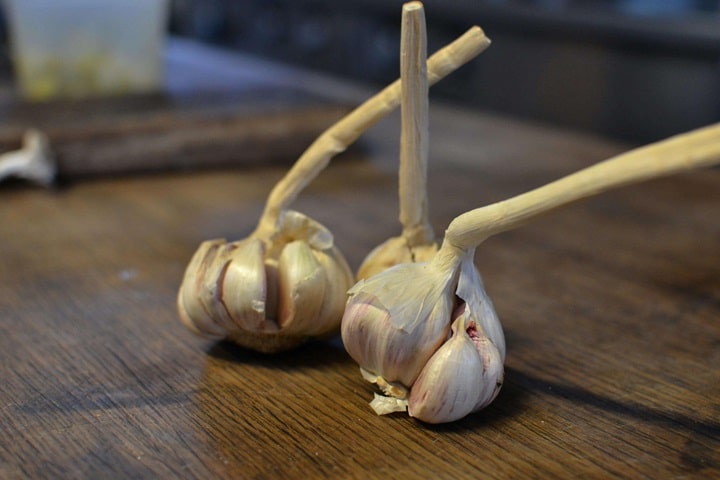
Hardneck varieties, Allium sativum var. ophioscorodon, form stiff scapes or flowering stalks. They have larger, looser bulbs and a stronger taste. They are prone to bolting, but the scapes or flowering shoots produced can be a valuable subsidiary yield. One thing to remember though is that they will not usually store as well, nor for as long, as softneck types.
Hardneck varieties of garlic are sometimes further divided into eight groups: Porcelain, Rocambole, Purple Stripe, Glazed Purple Stripe, Marble Purple Stripe, Asiatic, Turban, and Creole.
8. ‘Caulk Wight’
Hailing from Eastern Europe originally, this hardneck garlic variety has a striped, purplish appearance. The cloves are pinkish with purple marbling. These tend to be well-enclosed and unlike some other varieties in a damper climate, the bulbs of this variety will not tend to split.
The bulbs are large and plump, easy to peel, and vigorous, with a strong, spicy flavour. This variety has been proven to grow well in our British climate, even further north, and it can cope with temperatures that drop as low as minus 20 degrees C. It is therefore well suited to autumn planting.
9. ‘Kingsland Wight’
Though it was first cultivated near Toulouse in southern France, this variety is also a proven winner in colder and northern regions of the UK, though it will frankly still do best in the south. It can be planted either in the autumn or in early spring.
This cultivar has an abundance of large and easy to un-sheath cloves, which have a rich and nuanced flavour and which can be used in a wide range of different ways. It is said to be one of the most versatile of hardneck garlics.
10. ‘Lautrec Wight’
This is another hardneck type particularly prized for its strong and rich flavour. It is another variety that originated in France. French gourmands often refer to this as one of the very best tasting varieties.
The white-skinned bulbs contain deep, pinkish-purple cloves that can be used in a range of different ways in the kitchen to enliven the dishes you create.
11. ‘Lubasha Wight’
This garlic originated in Ukraine but is considered to be well-suited to UK cultivation. It produces exceptionally large bulbs with a vivid purple streaking and takes its name from the Russian for ‘little loved one’. It is considered valuable for base flavour and roasting.
This variety can store well for up to 6 months or so from the time it is harvested. So it is a good choice of hardneck for those who do still want a garlic they can store.
12. Rocambole Garlics
Rocambole is the name given to varietals of hardneck garlic – Allium sativum var. ophioscorodon – as well as to the sand leek, Allium scorodoprasum. Both of these are used in similar ways to other garlic varieties.
Rocambole garlics are worth considering, with their looping scapes and excellent flavour. These garlics are hardneck types like the above, but are prized because of their loose skin and strong, rich flavour.
Perennial Garlic Types
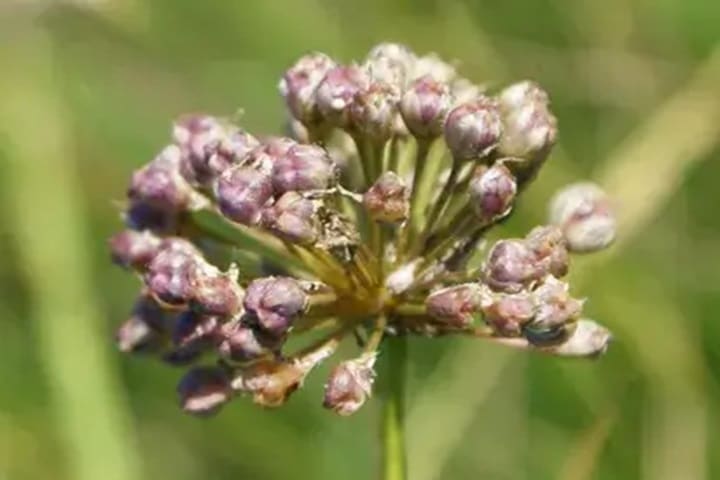
While the garlic varieties mentioned above are typically grown as annual crops in a vegetable garden, it is worth remembering that garlics typically grown as annuals for their bulbs can also be left of perennialize in a garden, and you can harvest their greens, and scapes in the case of hardneck types.
There are also some other perennial garlic types that you might grow that can remain in your garden over a number of years.
13. Elephant Garlic
The first of these to consider is elephant garlic.
Allium ampeloprasum var. ampeloprasum, also known as elephant garlic, is one of the best known perennial garlic varieties. This produces much larger, and milder tasting cloves but other than spacing which should be a little greater, care requirements don’t really differ at all and they like similar growing conditions.
14. Wild Garlic
Wild garlic, Allium ursinum, also known as ramps or ramsons, is another rather different perennial garlic to grow. Unlike other garlics, it likes a woodland environment and will thrive in damp shade, liking slightly acidic conditions. The leaves, flowers and bulbs of the plants can all be eaten.
15. Garlic Chives
Garlic chives, Allium tuberosum, are grown for their leaves and flowering stems. As the name suggests these have a flavour that falls somewhere between garlic and chives and they are great for use in salads. This plant will do well in free-draining soil in a sunny spot.
If you are interested in perennial food production, there are also many other garlic-like alliums to consider polytunnel growing in your garden. But these last three species are a good place to start when looking for perennial garlics to grow in your garden. If you would prefer to grow the garlic outside rather than inside a structure, I recommend using a fruit cage as crop protection against pests,
For more garlic growing tips,facts, and expanding your gardening knowledge, explore our companion plants for garlic.
FAQs
What is the best garlic variety for the UK?
While all of the above are options worth considering, Solent Wight is one of the very best options for the widest range of locations here, and is a reliable and high yielding option.
What is the best tasting garlic variety?
Many garlics taste great and flavour can often be a matter of taste. But ‘Lautrec Wight’ is frequently cited as the best tasting garlic variety by gourmands.
How many varieties of garlic are there?
There are over 600 different named garlic cultivars to choose from, though a great many of those will not be particularly well suited to cultivation in the UK.
What is the best garlic to eat raw?
This is a matter of taste – some like sweeter garlics some like spicier and more pungent ones. Softneck varieties tend to have a milder flavour, and hardneck types tend to be stronger.
Sources
Taylor, V., (2021) Is garlic good for your heart? BHF. [online] Available at: https://www.bhf.org.uk/informationsupport/heart-matters-magazine/nutrition/ask-the-expert/garlic [accessed 29/01/24]