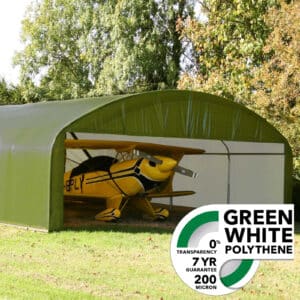
Quality Polytunnel Plastic
Don’t settle for anything less than the strongest and thickest polytunnel plastic covers. Our range includes 4 UV stabilized covers, both polythene and net so you can choose the best for your planting needs.
Our replacement polytunnel covers are made to withstand the UK’s harsh weather conditions. Replacement polythene is sold by the meter so you can order exactly how much you need without waste and with the knowledge that your cover is protected with a 7-year guarantee.
Whether you’re replacing an old sheet or starting fresh, our polytunnel covering options provide the durability and light transmission needed for optimal plant growth.
Polytunnel Covers FAQ’s
See below answers to some common questions we get asked about polytunnel covers.
Click an item to read the FAQ.
How long does Polytunnel plastic last?
The plastic for polytunnel replacement is made with materials that can withstand UV rays. In most cases, you can go up to 10 years before you need to replace your polytunnel cover. However, with a little bit of care and maintenance, you may get a few extra years out of your cover.
How to clean Polytunnel plastic?
During the warmer months, you may only need to hose down your polytunnel cover. However, the polytunnel plastic may develop an unsightly layer of algae over the winter months. If you do notice even a small algae growth, it is recommended that you clean it as quickly as possible to prevent the algae from spreading and compromising the effectiveness of your polytunnel covering.
To clean our polytunnel cover, simply use a large weighted cloth. Spray a gentle cleaning fluid over the polytunnel and then cover with a large cloth and, with the help of a friend, gently pull the fabric to and fro to remove the algae. If any algae appear on the inside, remove it quickly by spraying the cleaning fluid on the algae spots before dipping a sponge in water and cleaning off the algae.
For algae removal, we also offer Algon polythene cleaner. Always follow the product instructions for dilution, application and any precautions.
What size replacement cover do I need?
Your cover needs to fit over the frame with enough extra material to secure it at the sides and cover the ends. The correct sheet size depends on your tunnel’s dimensions and fixing method. Use our polytunnel cover calculator to work out what you need.
How do I measure my polytunnel for a new cover?
Measure the tunnel’s length, its height and the distance over a hoop from ground level on one side to ground level on the other. Follow the hoop’s curve rather than measuring straight across the tunnel. You will also need to know whether the cover will be buried in a trench or attached to base rails.
Will your covers fit a polytunnel from another supplier?
Our replacement polythene is supplied as sheeting in various widths and sold by the metre, so it can suit many other polytunnel frames. Check the measurements and fixing method before ordering. If you are unsure, send us your dimensions and photographs so we can help you choose a suitable size.
What is the difference between Super Therm and white polythene?
Super Therm polythene helps retain warmth and diffuses incoming light, spreading it evenly throughout the tunnel. It allows 90% light transmission and is a good choice for growing crops that benefit from warmth and plenty of light.
Smart White polythene reduces light transmission to 65%, helping to reduce heat build-up and the risk of sun scorch. It is useful for shade-loving plants, livestock shelters and storage structures where excessive heat is a concern.
When should I replace my polytunnel cover?
Consider replacing your cover when it becomes brittle, develops repeated tears or can no longer be kept securely tensioned. Small holes may be repairable, but widespread deterioration usually calls for a new cover. Check its condition regularly rather than relying on age alone.
Can I repair a torn polytunnel cover?
Small holes and tears can often be repaired using specialist polythene repair tape. Clean and dry the area before applying it, following the tape’s instructions. Repair damage promptly to help prevent it spreading. Large tears or brittle polythene may mean the cover needs replacing.
How do I fit a replacement cover?
Remove the old cover and inspect the frame, fixings and anti-hot spot tape. Prepare your trenches or base rails, then position and tension the new sheet following the instructions for your structure. Arrange help, particularly when lifting and securing the polythene. You can find guides and videos on our construction portal.
What weather conditions are best for fitting a cover?
Choose a calm, dry and preferably warm day. Warmth makes the polythene more flexible and easier to tension evenly. Avoid windy conditions, as an unsecured sheet can be difficult to control and may become damaged.
How tight should my polytunnel cover be?
The cover should be evenly tensioned and securely fixed, without loose sections that flap against the frame. Follow your structure’s fitting instructions rather than pulling as hard as possible. Uneven tension and movement can shorten the cover’s life.
Do I need anti-hot spot tape?
Yes. Our fitting guidance requires good-quality anti-hot spot tape between the metal frame and the polythene. It provides a protective barrier against heat and rubbing. Check existing tape when replacing your cover and renew any that is damaged or deteriorating.