

Succession planting is all about thinking carefully about what you plant, and when. It is all about making sure that you are making the most of space and time available to you in your garden. When you succession plant you can care for the soil, increase yields, benefit wildlife and keep your outside space looking lovely all year round.
How you use the space in your garden is obviously very important to the size and quality of the yields you can obtain, as well as how your garden looks and feels. But how you use time is an equally important thing to consider.
Making the most of time as well as space over the main growing season, and year round, is something that can make a big difference to meeting your garden goals.
Key Takeaways
- Succession planting involves sowing and planting in stages to make the most of both space and time, resulting in longer harvest periods and fewer gaps in production.
- A wide range of plants, including vegetables, herbs, flowers, and even perennials, can be used in succession planting to keep gardens productive and visually appealing year round.
- Growing undercover in a polytunnel greatly extends planting windows, making year-round succession planting achievable in many parts of the UK.
- Overlapping crops and thinking in crop windows helps maintain living roots in the soil, improving soil health, reducing weeds, and increasing resilience.
- Careful seasonal planning allows gardeners to increase yields, support wildlife, and create a more balanced, sustainable garden system.
What Is Succession Planting?
Succession planting involves planting in phases, rather than all at once, to manage things like bloom time and harvest season, and to make sure that you have living plant roots in the soil over as much of the year as possible.
Succession planting might involve:
- Succession planting of the same crop and variety
- Succession planting of different varieties
- Succession planting of multiple crops concurrently
- Succession planting of multiple crops one after the other.
With examples in the first category, we are talking about planting multiple batches of the same crop and variety over a period of a number of weeks. For example, you might sow radishes, or lettuce little and often over the spring/ summer months. The idea is to sow a few seeds every couple of weeks rather than sowing all at once.
You might also plant in succession with multiple varieties. Rather than sowing additional seeds of the same variety, you might sow a different type. For example, you might sow first early peas, then second early, then your maincrop. You might take advantage of the different properties and time-to-harvest figures of different varieties to make the most of the space and time available.
You do not necessarily have to wait for one crop to be done before you plant another amid/ between it. Succession planting can also involve planting more than one crop in the same area at the same time. Succession planting can also involve overlapping crops or other plants in your garden and planting quick growing catch crops between slower growing plants.
Finally, succession planting can involve planting/ sowing a second, different crop after the first one has been harvested. In the UK, especially when growing undercover in a polytunnel or other form of protection, it is possible for most gardeners to grow year round rather than just planting a summer crop in spring/ early summer. Considering what comes next can help us plan for year-round garden success.
The Best Types Of Plants For Succession Planting
Succession planting is something to consider throughout your garden, though of course it is most commonly considered in a kitchen garden area or vegetable plot.
Fruits, Vegetables & Herbs
In a food producing garden, many of the crops grown can be useful in different types of succession planting. Here are some common examples to consider:
- Lettuce – sow little batches of seeds every couple of weeks for a staggered harvest.
- Radishes – sow small quantities fortnightly for a prolonged harvest and to avoid gluts.
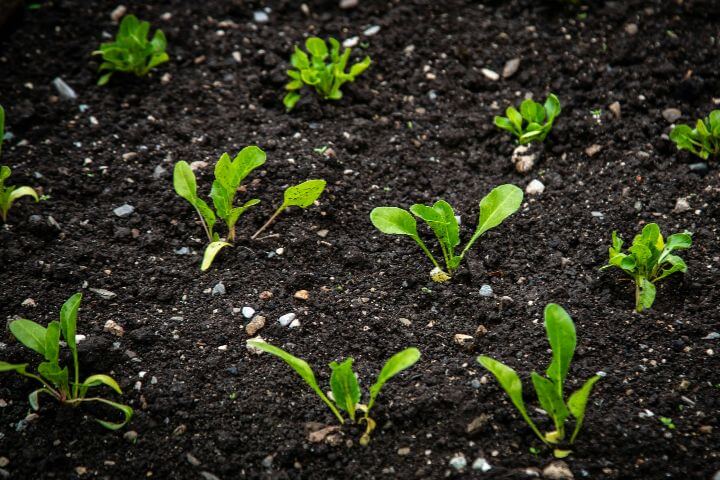
- Spinach – sow regularly from early spring to late summer
- Spring onions – sow little and often to avoid gluts
- Coriander & dill – frequent sowing prevents bolting losses
- Peas & beans – early, mid-season, and late varieties extend harvests
In my polytunnel I often succession sow the above, along with a range of other leafy greens for salads throughout the year.
If you grow undercover, using well-managed polythene tunnels can dramatically increase how many successions you can fit into a year.
Annual Flowers
Succession planting isn’t just for food. Annual flowers benefit enormously from this approach, especially if you want continuous colour or cut flowers.
Good candidates include:
- Calendula
- Cosmos
- Sweet peas
- Cornflowers
- Nigella
- Zinnias (in warmer, protected spaces)
Rather than sowing all your flowers in spring, stagger sowings from early spring through early summer. In a polytunnel, you can often start earlier and finish later, extending flowering well into autumn.
Remember, flowers can and should be integrated with the main crops in your vegetable garden as companion plants, to draw in beneficial insects for pollination and pest control, and/or repel, confuse or distract pest species.
Herbaceous Perennials
While perennials are not usually “succession planted” in the traditional sense, they still play an important role in long-term succession planning.
I like to think of perennials as the backbone of the garden:
- They provide structure year-round
- Their roots protect and improve soil
- They allow annual successions to slot in between them
For example, spring bulbs finish early, leaving space for summer annuals or vegetables. Later, autumn-sown green manures or overwintering crops can take their place.
Planning For Seasonal Succession Planting
Succession planting works best when planned around the seasons. You do not need a complex spreadsheet, but you do need to think ahead.
Succession planting is a simple concept. But it is one that can quickly become quite complicated as you think about how to implement it. My first tip to make sure you are successful is to make sure you have a good plan in place before you sow anything at all.
Think about all the different factors:
- Which climate zone you are in and what conditions are like in your particular garden.
- Crops and varieties that you would like to grow.
- The needs, root form and growth habits of those crops.
- The time-to-harvest expected for each of those crops.
- How time-to-harvest varies depending on when they are sown (weather and other conditions).
Etc…
Start With Your Frost Dates
In the UK, frost dates vary widely depending on location. Growing undercover reduces risk, but timing still matters.
Ask yourself:
- When can I realistically start sowing?
- When does growth slow significantly?
- Which crops tolerate cooler temperatures?
Adding protection such as fleece or proper greenhouse insulation can push these boundaries even further.
Think In “Crop Windows”
Thinking in crop windows rather than calendar months makes succession planting far more intuitive and effective. Instead of focusing on specific dates, it helps to consider the natural rhythm of plant growth and the conditions plants actually experience.
Each crop occupies a window of time in which it germinates, grows, and is harvested, and once that window closes, another can open in the same space.
In practice, this means recognising that early spring salads may finish just as warmth-loving crops are ready to go in, or that summer harvests can be followed by fast-growing autumn greens.
When growing in a polytunnel, these windows are often wider and more flexible, allowing earlier starts in spring and continued production well into autumn and winter.
By viewing the year as a series of overlapping growing opportunities, it becomes much easier to plan ahead and ensure that no bed is left unused for long.
Overlapping Is Key
One of the most effective aspects of succession planting is learning to overlap crops rather than waiting for one to be completely finished before starting the next. This approach ensures that valuable growing time is not lost and that the soil remains covered and active.
I often sow or plant the next crop while the previous one is still producing, allowing young plants to establish before space fully opens up. Smaller or quicker-growing plants can be grown beneath or between larger, slower ones, making use of light and space that would otherwise go unused.
Over time, this overlapping creates a continuous flow of growth, harvest, and renewal, resulting in healthier soil, fewer weeds, and a more productive garden overall.
Benefits Of Succession Planting
Succession planting offers far more than just higher yields. From an ecological perspective, it supports a healthier, more balanced garden system.
It can lead to:
- Increased harvests and maximized yields.
- Improved soil health (Since keeping living roots in the soil feeds soil life, prevents erosion and improves soil structure and fertility.)
- Fewer pests and diseases (with smaller sowing batches and staggered plantings).
- Less waste (due to avoiding gluts and harvesting little and often).
- A more biodiverse, varied, flexible and resilient garden.
Succession Planting For Flowers
Succession planting with flowers keeps the garden looking vibrant while supporting beneficial insects throughout the year.
How I Use Flower Successions
I often:
- Sow early annuals under cover
- Transplant outside once conditions improve
- Follow with later sowings for autumn colour
This approach works particularly well in cutting gardens, where constant harvest encourages repeat flowering.
Many annual flowers bloom again when cut regularly, making them ideal for succession planting strategies. I find that this works especially well when combined, as mentioned above, with a framework or backdrop of reliable perennial planting.
Integrating Succession Sowing with Other Important Organic Gardening Ideas
It is also important to think not only about the plants and the broader environment, but also about how those plants interact with others grown close to them. And how different plants can benefit from having certain neighbours.
Succession planting should be considered in conjunction with companion planting. It is possible to think about how to implement both of these strategies at the same time.
Though it can take some work up front to puzzle out a good and effective plan, the key thing to consider is competition – and how beneficial interactions balance with competition for sunlight, water and nutrients in your garden.
Getting this balance right is key to successfully managing succession sowing and companion planting in your garden.
Remember, too, that you should not only plan for succession planting for a single year. Due to the requirements for crop rotation for certain crops, it is a good idea to work out a plan that spans several years. Take into account how successional plantings will tie in with what will follow in a growing area in the coming years.
With a succession planting scheme, you will be growing plants in your growing areas all year round. So it is even more important to make sure that you rotate legumes and nitrogen fixing plants to replenish this vital nutrient. And avoid build up of pests and diseases in the soil by making sure certain plant families are not grown in the same place year after year.
Succession planting is not about rigid rules or complicated schedules. It is about observing your garden, understanding how plants grow, and making thoughtful decisions about what comes next. Start small, experiment, and adjust as you learn. Over time, you can soon work out which succession planting options work best in your own particular garden.