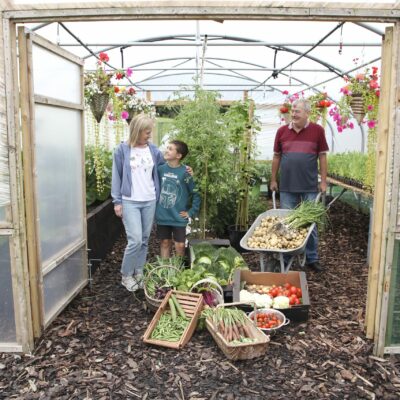


Growing more food with less work means thinking about how we can work smarter not harder and create low maintenance food producing systems where we live. Choosing to grow at least some of your own food at home can be a hugely rewarding experience. And no one should miss out no matter how the size of their garden.
The good news is that you really don’t have to have acres of space to start a small food garden. Fortunately, you don’t have give up the day job or devote hours and hours each week in order to grow your own food on a small scale either. But making the right decisions and making the right choices about your garden is important in order to avoid more work down the road. Here are our tips on starting and maintaining small low maintenance gardens so you can start growing your own food today.
Choose Easy Foods to Grow
First things first, it is important to think carefully about what you grow. Many new gardeners may wonder which foods are the easiest to grow.
It is certainly true that some plants will be generally more challenging to grow than others. But it is important to remember that what is easy to grow in one location is not necessarily easy to grow in another.
The ease of growing specific plants can be very much site specific, dependant on the climate, microclimate, soil and other conditions prevailing in a particular spot.
So you should not look for plants that are easy to grow, but rather plants that are easy to grow where you live and garden. Match the right plants to the right places in order to enjoy less work and less hassle over time.
Find Foods That You Love To Grow (and Eat)
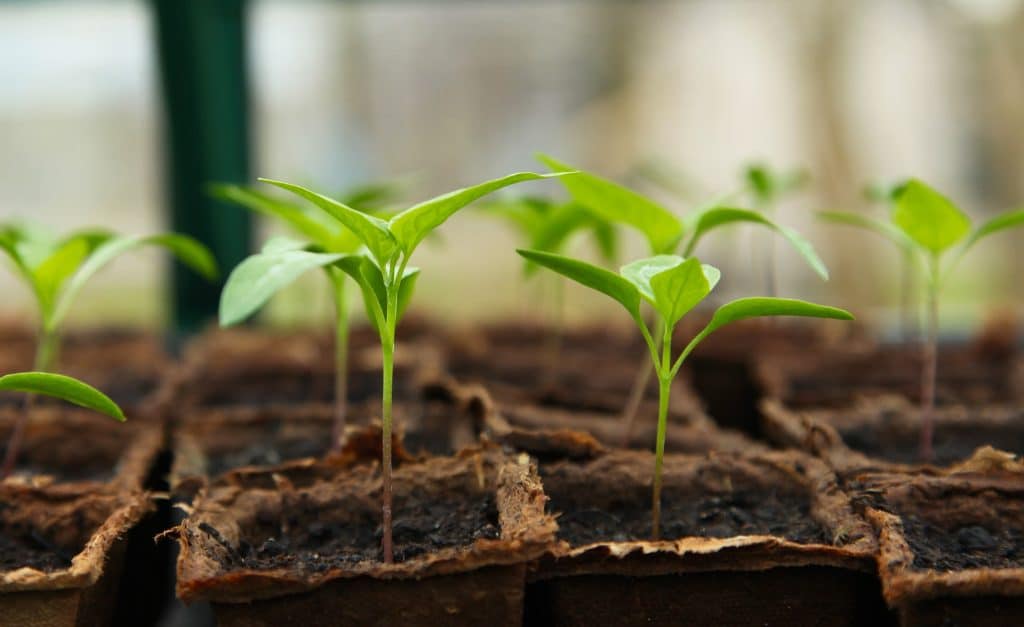
As well as thinking about which food producing plants will be easier to grow where you live, and matching the right plants to the right places, reducing the burden of a garden and making the workload at least seem lighter can also be a case of finding foods that you love to grow and to eat.
When we love doing something it always seems less of an effort. And when we gain a reward that we truly appreciate, the effort to achieve that goal and obtain those yields does not seem anywhere near as onerous.
Whenever we are making decisions in our gardens, it is important not to follow the crowd all the time, but to make more personal decisions about what, how and where we grow that suit us as individuals and as gardeners.
Design for Your Specific Site
It is also so important that, with every decision we make in our gardens, we make sure that we understand and are designing for our own specific sites. What works well and is easy in one garden, remember, will not necessarily be so in another.
Whenever we decide anything in a garden, from what we grow to how we do so, and the methods and practices we employ, doing less work means planning and preparing from the outset, with reference to the real-world conditions where we live.
In any garden, you need to think about sunlight, shade, wind, water and soil, and how all the elements of and forces acting on the space affect the conditions that are found there.
Understanding your garden and making informed design decisions from the beginning really can make a big difference to yields, and how much work you need to put in over time.
Streamline and Improve Annual Vegetable Production
If you decide to grow annual crops in a typical kitchen garden, then planning and preparing from the outset means finding ways to make your life easier, and streamline production in that part of your garden.
Think, for example, about whether growing typical annual vegetable crops in raised beds or in the ground will be the better and least time-consuming choice for your particular garden.
Carefully consider the placement of your beds, thinking about where the bed is best located both in terms of the needs of the plants, and in terms of your own time and effort. Think about regular journeys you will make in your garden and make those journeys as short as possible.
And make sure that you create polycultures – growing multiple different plants in the same growing area rather than sticking with just one crop per bed. Companion planting can help reduce pest problems in an organic garden and can save you a lot of work and effort over the gardening year.
Extend Your Growing Season with Undercover Growing
Protecting your plants with a polytunnel or other undercover growing areas can increase yields by helping you grow for more of the year.
It can also potentially help you cut your losses and enjoy a more productive garden year round, helping to protect plants from weather extremes and certain other challenges in a UK garden.
The protection such a structure affords can mean that your workload is lessened, even when you have to take watering fully into your control.
Embrace Perennial Food Options
While most gardeners will start by growing annual crops when they want to grow their own food, it is important to remember that there are also plenty of perennial food sources to explore. Embracing perennial sources of food in your garden can be a wonderful idea if you want to enjoy higher yields and work less to achieve them.
Perennial plants are those that will remain in your garden and produce food not just over a single season but year after year.
When you grow perennials like fruit and nut trees, fruiting canes and berry shrubs, perennial vegetables and herbs etc. you can avoid having to sow and plant everything fresh each growing season and instead enjoy a nearly continuously productive environment.
Perennial planting schemes like forest gardens take effort and time to establish in the first place, but once established, these can become closed-loop systems that almost entirely take care of themselves and require some, but only very little, intervention from you.
Enlist Natural Garden Helpers
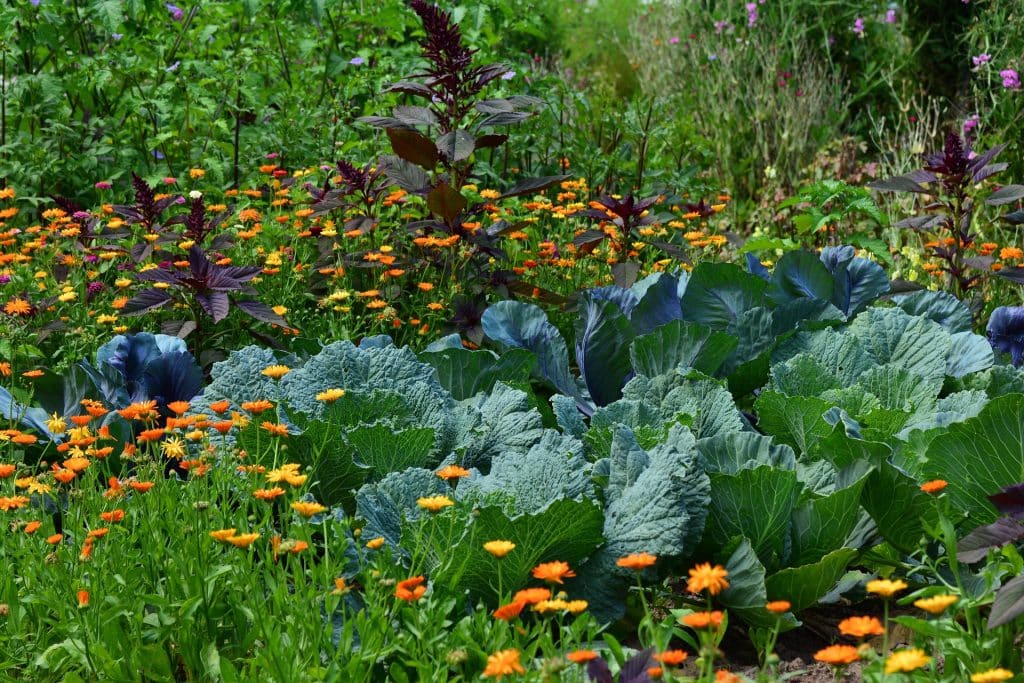
Whether you choose to grow perennials, annuals or a mixture of both, it is important to remember that even if you are the only human gardener of a space, you are not the only one who gardens.
Other plants, animals and fungi around you are also shaping their environment in a range of fascinating ways. And when we work with nature rather than fighting it, ensuring organic production and a nature-friendly approach, we can gain aid from the life around us.
When we welcome in wildlife and ensure that we boost biodiversity wherever we can, we will benefit from this as gardeners, getting greater yields and having to do less work of our own to maintain the healthy ecological systems that evolve.
Make Sure You Maintain Healthy Soil
When trying to grow more food with less work, a lot comes back to the soil. If we take care of the soil in our gardens, it will reward us. We neglect it at our peril.
A healthy soil is a vibrant ecosystem that teems with life, and when the complex web works as it should, plants grow well and we all benefit. So anything we can do to protect and enhance soil ecology is a wonderful thing in any garden, and will help us create a more low-maintenance scheme.
Set Up a Good Composting System
One way to keep soil healthy in a garden is of course to make sure we have systems set up to return nutrients to the soil. A good composting system takes little effort to set up and maintain, and yet having a good quality compost will save us a lot of time, headaches and effort down the road.
There are a number of different methods that we might choose to create our own compost at home, all of which take a little work up front to save hours of effort and increase yields going forwards.
Make the Most of Natural Rainfall
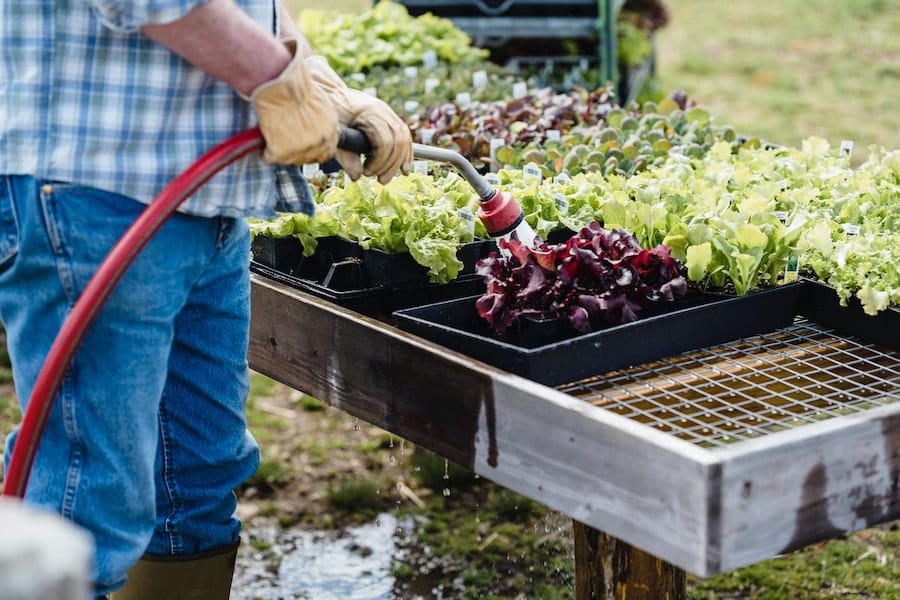
Another thing that you should set up from the beginning if you want to grow more food with less work are good water management systems. We can catch natural rainfall within the landscape, in swales or rain gardens, for example. Or we can catch rainfall from a roof and either store it in butts or barrels, or direct that water to where it is needed.
Setting up the right water management systems can help us make sure our plants get the water they need without us having to spend inordinate amounts of time in irrigation. Setting up sustainable watering or irrigation systems can also help us make sure that we save time and effort down the line.
Co-operate and Collaborate
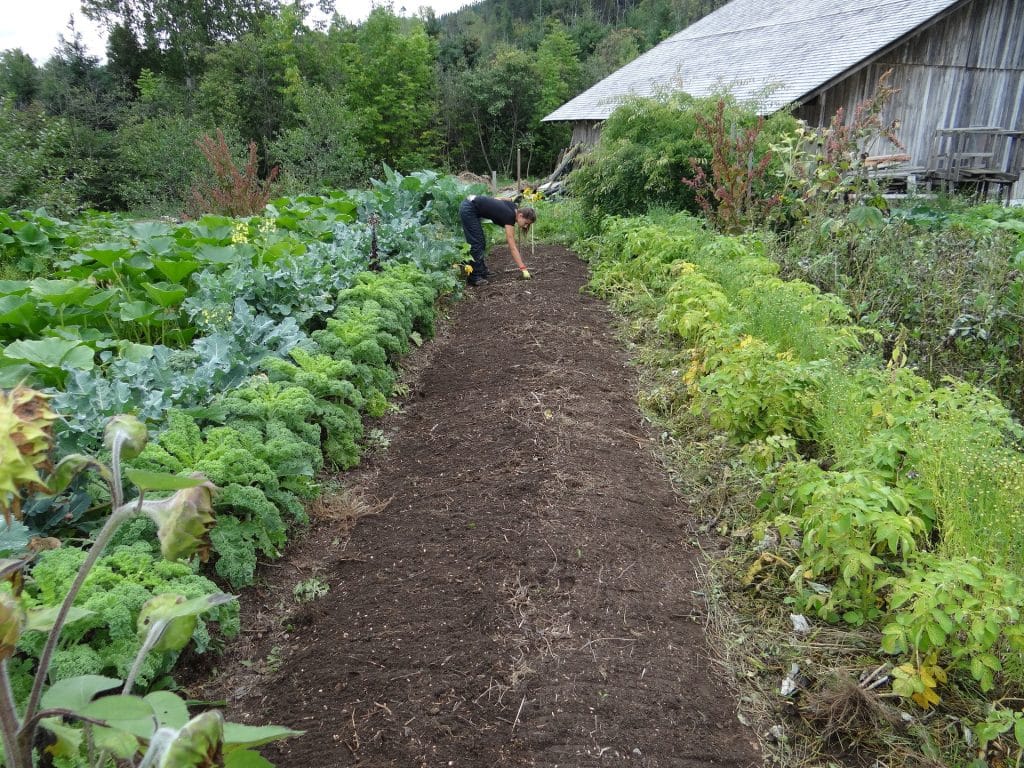
Finally, in a garden, it is often a good idea to remember that we do not necessarily have to go it alone. Getting together with other gardeners, with friends or neighbours, or others in your wider community can mean that you can work together, and, as we all know, many hands make light work.
By working collaboratively with other gardeners, you can potentially greatly increase yields without increasing your gardening workload.
References:
https://ourinspiredroots.com/permaculture-gardening/