

Is a polytunnel the right choice for your Scottish farm or garden? Sustainable growers in the Scottish highlands may find a polytunnel or polytunnels very useful in a holistic site plan towards promoting Scotland agriculture.
Growing in Scotland can obviously come with its challenges. But polytunnels can bring many opportunities, as long as they are chosen and sited correctly, and used in the right ways. Scottish agriculture and horticulture become easier when these useful structures form part of farm or garden plans.
Key Takeaways
- Polytunnels can extend the growing season and make new crops possible in Scotland.
- Siting and orientation are crucial to get the most from your investment.
- Sustainable approaches that respect local biodiversity and conditions are essential.
- Farmers and gardeners alike can benefit—commercially and personally—through improved yields and resilience.
- With climate change reshaping Scottish food systems, polytunnels can help futureproof production.
Sustainable Farming and Gardening Practices in Scotland
Growing food in Scotland, whether on a large farm or in a small garden, always means paying attention to the climate and conditions. The highlands, lowlands, islands, and coastal zones all present very different growing contexts.
Just as it does in other parts of the UK, or anywhere else in the world, sustainable farming and gardening involves making plans that are suited to a specific situation.
Observation is key. Understanding the soil, topography, microclimates, and prevailing winds on your site provides the foundation for successful planning.
Obviously, the strategies and approaches that work best in one part of Scotland will not be as effective nor work as well in another. This is a varied country and one where a localist, bioregional approach is important.
Here are some key sustainable agricultural practices that are particularly relevant for Scotland’s diverse landscapes and climate:
- Agroforestry: Integrating trees with crops and/or livestock to improve biodiversity, sequester carbon, and provide shelter. Trees provide shelter from Scotland’s strong winds and heavy rainfall, while also improving biodiversity and sequestering carbon.
- Pasture-based livestock systems: Rotational grazing and mob grazing help restore soil, reduce compaction, and build resilience to drought and flooding on often wet and compacted Scottish land, while reducing reliance on imported feed.
- Polycultures and crop rotation: Avoiding monocultures by diversifying crops improves soil fertility and reduces pest/disease pressure. Diverse planting systems break pest cycles and protect against the short, variable growing seasons across Scotland.
- Soil regeneration: Practices such as reduced tillage, cover cropping, and compost application build healthy soils and increase organic matter. Building soil organic matter is vital in Scotland’s thin, often degraded soils, increasing fertility and resilience to extreme weather.
- Integrated pest management (IPM): Using natural predators, crop diversity, and biological controls instead of chemical pesticides. Reducing pesticide use protects Scotland’s vulnerable ecosystems and supports healthy populations of pollinators.
- Water management: Riparian buffer planting, wetland restoration, and efficient irrigation systems to conserve water and protect water quality.
- Rewilding measures: Hedgerows, wildflower strips, and habitat creation for pollinators and natural pest predators.
- Low-carbon energy integration: Using renewable energy (solar, wind, small-scale hydro) to power farms and reduce reliance on fossil fuels.
- Local food systems: Direct sales through farmers’ markets, CSAs, and farm shops to strengthen local economies and reduce food miles.
- Agroecological planning: Designing farm systems to work with natural cycles, integrating livestock, crops, and wild habitats for a balanced whole-farm ecosystem.
Polytunnels can potentially play a role in or be integrated with one or more of these practices.
Future-Proofing Scottish Food Production
Scotland aspires to be a Good Food Nation. But to reach that goal, our agriculture and horticulture must adapt. Climate change is already disrupting weather patterns—warmer winters, wetter summers, unpredictable frosts.
We need growing systems that are resilient, adaptable, and less reliant on external inputs. We need to be ready for the challenges that we know climate change will bring over the years to come.
Scottish food production needs to change. Many current practices are contributing to the existential crises we face globally, and productive land is not always used to the benefit of the communities who live nearby.
Farmers and gardeners in Scotland both play a role in this transition. Community food projects, CSA (Community Supported Agriculture) schemes, and small diversified farms can all use polytunnels to boost productivity and provide more reliable harvests to local people.
Extending the Growing Season
One of the biggest benefits of polytunnels is extending the season. In many parts of Scotland, the outdoor growing season can feel frustratingly short—especially in the north and west. A polytunnel makes it possible to start seeds earlier, plant crops sooner, and harvest later into autumn and winter. In some cases, with the right planning, it can even allow yearround growing.
For example, hardy salad greens and brassicas can overwinter in a tunnel. Early potatoes can be planted in March rather than May. Tender crops like tomatoes, cucumbers, or peppers—often considered marginal in Scotland—become much more realistic propositions.
By smoothing the extremes of temperature and sheltering plants from heavy rain, a polytunnel gives both farmers and gardeners far more flexibility.
Choosing and Siting a Polytunnel in Scotland
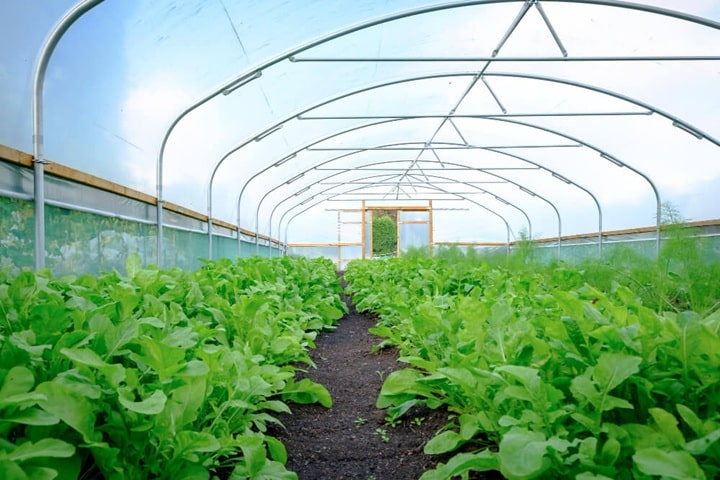
To gain these benefits, you must choose and site your polytunnel carefully. Considerations include:
- Orientation: In Scotland, an east–west orientation is often recommended to maximise light. On sloping land, follow the contour rather than fighting it.
- Shelter: Strong winds can damage structures and crops. Sit your polytunnel in a sheltered spot, or establish windbreaks with hedgerows or fencing.
- Drainage: High rainfall makes good drainage essential. Avoid hollows where water will pool.
- Access: Think about how you will reach your polytunnel yearround. Muddy paths can make winter growing unpleasant if not planned for.
- Size and type: Choose a tunnel size that fits both your ambitions and your site. A small domestic polytunnel may be ideal for a family garden; a larger commercial tunnel may suit a farm business.
Good design at this stage is vital to good results, and to avoid damage to the polytunnel cover and/or structure.
Best Crops for Scottish Farms and Gardens
In a Scottish polytunnel, you can grow far more than outdoors alone. Some excellent options include:
- Leafy greens: Lettuce, spinach, kale, and chard thrive, providing almost year round harvests.
- Brassicas: Early broccoli, spring cabbage, and Asian greens benefit from sheltered growing.
- Root crops: Early carrots, beetroot, and radishes can be sown under cover.
- Legumes: Beans and peas enjoy the extra warmth.
- Tender crops: Tomatoes, cucumbers, peppers, and aubergines are possible with careful management.
- Soft fruit: Strawberries, raspberries, and even blueberries can perform better under cover, reducing losses from rainsplashed fruit.
- Herbs: Basil, coriander, parsley, and dill thrive in a warmer microclimate.
The polytunnel also allows you to experiment with intercropping and successional sowing, maximising productivity throughout the year.
Managing Pests and Diseases
A polytunnel changes the dynamics of pest and disease management. On one hand, many pests are excluded or reduced by the cover. On the other, enclosed environments can favour outbreaks if conditions become unbalanced.
Key considerations include:
- Ventilation: Prevent condensation and mould by ensuring adequate airflow. Rollup sides or regular door opening help.
- Diversity: Grow a mix of crops to reduce pest pressure. Monocultures in tunnels can invite problems.
- Biological controls: Ladybirds, lacewings, and parasitic wasps can be encouraged, or even introduced, to keep pests in check.
- Soil health: Build fertility through compost, green manures, and minimal tillage. Healthy soils support healthy plants.
- Hygiene: Remove diseased plant material promptly to prevent spread.
With good practices, polytunnels can be more resilient than open-field growing.
Wildlife & Rewilding Opportunities
Polytunnels do not need to be sterile environments. On the contrary, they can form part of a wider agroecological system that supports wildlife. Pollinators, predators, and decomposers all play roles even under cover.
Beyond the tunnel itself, consider how its placement interacts with your landscape. Can you plant native hedgerows as windbreaks? Can watercourses be restored or ponds dug to attract amphibians? Can wildflower margins or orchard understories be integrated alongside the productive growing spaces?
Working with nature in this way creates a resilient, balanced Scottish farm or garden.
How to Attract Wildlife to Scotland Agriculture Farms and Gardens

Creating space for wildlife alongside food production is not about a few isolated gestures but about weaving biodiversity into the fabric of your farm or garden.
Hedgerows, for example, can serve as both windbreaks for your polytunnel and as vital corridors for birds and insects. Planting them with a mix of native species such as hawthorn, blackthorn, hazel, and elder will support pollinators and provide food and shelter for a wide range of creatures.
Wildflower buffer strips along the edges of fields or garden beds offer nectar and pollen throughout the season, while also creating refuge for beneficial insects.
Riparian planting along burns, streams, and rivers can stabilise banks, improve water quality, and create vital habitat for aquatic and terrestrial species.
Wetland schemes—whether small ponds or larger rewilded areas—encourage amphibians, dragonflies, and countless other forms of life while also enhancing the resilience of the land to flooding.
Woodland restoration, even on a small scale, can provide long-term ecological benefits. Planting shelterbelts of native trees not only attracts wildlife but also provides microclimate moderation, firewood, and other useful yields.
Leaving some areas intentionally untidy—piles of logs, leaf litter, or rough grassland—offers havens for hedgehogs, invertebrates, and fungi. Adding bird boxes, bat roosts, and bug hotels can further diversify the range of species present.
Even with a strong focus on productive growing, these measures enrich the landscape, making it more resilient, ecologically balanced, and ultimately more beautiful. In time, farms and gardens that actively support wildlife will find themselves benefiting from natural pest control, improved pollination, and healthier, more vibrant ecosystems.
Commercial Opportunities for Scottish Farmers or Market Gardeners

For commercial growers, polytunnels open up new possibilities. The ability to produce crops earlier and later in the year means you can access markets when supply is limited—and prices are higher. Crops like salad leaves, tomatoes, and soft fruit can command strong returns when produced locally and sustainably.
Polytunnels also allow diversification. A small farm can experiment with niche crops for local restaurants, or establish a CSA with reliable weekly harvests. Community groups can use them to grow food year-round for schools, hospitals, or other community schemes.
Importantly, tunnels can reduce dependence on imported food, strengthening local economies and food security. But beyond food production, they might also allow for further diversification of income. For example, a polytunnel might be a pop-up cafe in summer, an event venue, or a range of different guest-facing spaces.
n Scotland’s often challenging growing conditions, polytunnels offer growers—whether farmers, community groups, or home gardeners—a practical and versatile way to build resilience. They make it possible to extend the season, diversify crops, and shelter plants from unpredictable weather, while also creating new opportunities for sustainable livelihoods.
Yet their true value comes when they are not used in isolation, but instead form part of a wider, holistic, and regenerative approach to land use.
FAQs
Can I grow Mediterranean crops in a Scottish polytunnel?
Yes—within reason. Tomatoes, peppers, and aubergines are realistic, though they may need extra care with ventilation and feeding. Citrus trees and olives are less practical, though dwarf varieties may survive in heated tunnels.
How do I deal with condensation and mould in a polytunnel?
Ventilation is crucial. Keep doors open when conditions allow, use mesh to keep pests out, and consider roll-up sides. Avoid overwatering, and space plants adequately.
Sources
NBC Environment/Orkin. (2023) Top 5 Pests in Scotland. [online] Available at: https://www.nbcenvironment.co.uk/about-us/articles/top-5-pests-in-scotland/