


Pollinators are quietly hard-at-work all around us, yet many gardens don’t do enough to support them. If you have a garden or polytunnel and want to bring in more bees, butterflies, hoverflies and other valuable insects, the right flower choices and planting strategy will make a real difference.
In what follows I will show you how to think about pollinators, what makes a plant “good for pollinators”, the best flowers for attracting pollinators, how to design for them, how to maintain the planting, avoid common mistakes, then I’ll include a quick checklist and some FAQs to help you get going.
KEY TAKEAWAYS
- Pollinators (bees, butterflies, hoverflies, other insects) are vitally important for garden health, for wildflowers and for the food we grow.
- A plant that is “good for pollinators” will supply accessible nectar and/or pollen, bloom at the right time, and be integrated with habitat and access for the insects.
- Choose a planting plan that ensures nectar & pollen through the season, from early spring to late autumn.
- Using a mix of flower shapes, colours (especially in the blue and purple spectrum) and bloom times increases success.
- Design your flower planting so it’s easy to maintain, visible, and accessible both to you and to insects (for example in a polytunnel or garden border).
What Are Pollinators & Why They Matter
In simple terms, pollinators are creatures (mostly insects in our UK gardens) that carry pollen from one flower to another, enabling fertilisation, seed formation and many fruits and vegetables. According to the research, roughly 84% of wildflower species and up to 80% of food crops in Europe depend on animal (insect) pollinators.
In a garden context they matter for several reasons:
- If you grow fruit‐ or seed‐producing plants, good pollinator activity can boost yield and quality.
- They help maintain wider biodiversity: the presence of bees, hoverflies and other insects is part of a healthy ecosystem. So many other creatures depend on healthy insect populations.
- Flowers that attract pollinators also tend to be beautiful, scented and beneficial for other reasons (for example herbaceous plants used for herbs or cut flowers).
In a controlled environment such as a polytunnel, thinking about pollinators becomes more important because you may unintentionally limit insect access through your actions. So pollination can be even more important for polytunnel gardeners to consider.
So when you design for pollinators, you are designing both for nature and for your garden’s productivity and beauty. You are playing a role in helping to fight against biodiversity loss here in the British Isles.
What Makes a Plant “Good for Pollinators”
Not all flowering plants are equally useful to pollinators. Some features differentiate the good ones from the less useful. Here are the key factors to consider:
Accessible nectar or pollen
Flowers with open shapes, simple blooms, and visible anthers are far more useful plants for bees and other pollinators than highly complex, double‐petalled cultivars that may look ornamental but offer little nectar. The First Tunnels blog points out that simple, open forms such as lavender, calendula and borage perform particularly well.
Bloom time and succession
It’s not enough to have a handful of flowers in mid-summer. Good pollinator planting provides food sources from early spring, through summer, right into late autumn when fewer options remain. The site recommends choosing early‐bloomers (like primroses, crocus), mid‐season staples (like cosmos, borage), and late‐autumn flowers (like asters, sedum) to maintain continuity.
Colour and flower shape
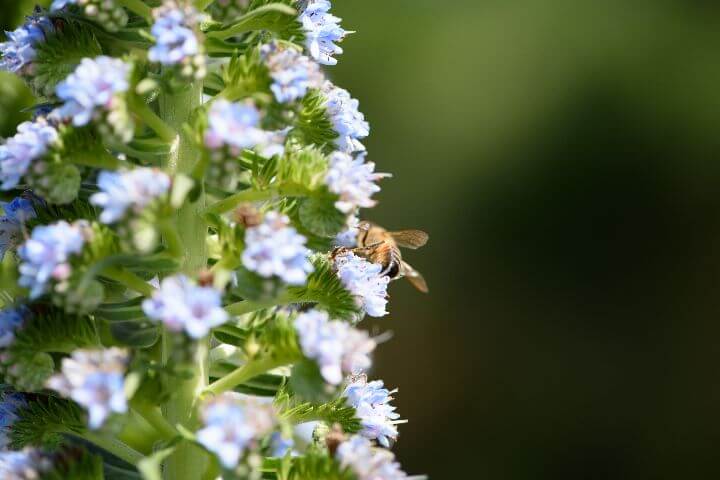
Insects have preferences: many bees, for example, are drawn to blue, violet and white colours, and can more easily navigate open flowers.
Habitat and structure
Flowering plants are part of a wider habitat. Insect access, nesting sites (e.g. solitary bee hotels), water sources, undisturbed ground and organic management all support pollinator populations. The blog emphasises creating bee hotels and keeping tunnel doors open for access.
Avoiding Harmful Practices
Use of broad‐spectrum pesticides, over‐tidy lawns or removal of all “weeds” reduces insect food and habitat. The First Tunnels article stresses the importance of organic practices and providing water safely.
Thus, a good pollinator plant is one in the right place, with the right shape, right timing, part of a welcoming environment for insects.
Best Flowers for Attracting Pollinators
When creating a garden that supports pollinators, variety is key. Different species flower at different times, offering nectar and pollen throughout the seasons. Below is a guide to the best pollinator-friendly plants in four main categories — trees, shrubs, climbers, and herbaceous plants — all well suited to the UK climate.
Trees
Trees are an excellent backbone for a pollinator garden, offering early-season forage and shelter. Even a small tree can make a big difference.
- Crab Apple (Malus sylvestris) — Spring: Abundant pink or white blossoms provide early nectar for bees.
- Rowan (Sorbus aucuparia) — Late Spring to Early Summer: Clusters of creamy flowers attract bees and hoverflies.
- Willow (Salix caprea – Goat Willow) — Late Winter to Early Spring: One of the first sources of pollen for emerging bees.
- Hawthorn (Crataegus monogyna) — May to June: Dense blossoms loved by hoverflies, bees, and moths.
- Cherry (Prunus avium) — April to May: Masses of white or pink flowers that attract honeybees and solitary bees.
Shrubs
Flowering shrubs provide structure and seasonal interest while supplying valuable nectar and nesting opportunities.
- Lavender (Lavandula angustifolia) — Summer: Rich in nectar; bumblebees and butterflies are frequent visitors.
- Buddleja (Buddleja davidii) — Mid to Late Summer: Known as the “butterfly bush” for good reason; attracts a wide range of pollinators.
- Mahonia (Mahonia aquifolium) — Late Winter to Early Spring: Spikes of yellow flowers sustain bees before spring fully arrives.
- Heavenly Bamboo (Nandina domestica) — Summer: Small white blooms attract bees and hoverflies.
- Fuchsia (Fuchsia magellanica) — Summer to Autumn: Pendulous flowers supply nectar late in the season.
Climbers
Climbing plants can make vertical spaces productive for pollinators, especially around fences, arches, and walls.
- Honeysuckle (Lonicera periclymenum) — Summer to Early Autumn: Sweetly scented flowers draw in moths and long-tongued bees.
- Clematis (Clematis viticella, C. montana) — Spring to Summer: Open-faced varieties are best for pollinators.
- Ivy (Hedera helix) — Autumn: One of the final nectar sources of the year; vital for late-flying bees and hoverflies.
- Climbing Rose (Rosa ‘Rambling Rector’, ‘Kew Rambler’) — Summer: Simple, single flowers are more accessible to pollinators than double blooms.
- Jasmine (Jasminum officinale) — Summer: Fragrant white flowers attract nocturnal moths.
Herbaceous Perennials
Herbaceous perennials and biennials can be interplanted for long-lasting colour and pollinator support from spring through autumn.
- Foxglove (Digitalis purpurea) — Early to Mid-Summer: A bumblebee favourite for its tubular blooms.
- Echinacea (Echinacea purpurea) — Late Summer to Early Autumn: Rich, open flower heads for butterflies and bees.
- Verbena bonariensis — Summer to Autumn: Tall and airy, providing a nectar source well into late season.
- Sedum (Hylotelephium spectabile) — Late Summer to Autumn: Dense flower heads covered with bees and hoverflies.
- Wild Marjoram (Origanum vulgare) — Summer to Early Autumn: Dual use – edible and pollinator-friendly.
- Bluebells (Hyacinthoides non-scripta) — Spring: Carpet woodlands and attract early solitary bees.
- Scabious (Scabiosa columbaria) — Summer to Autumn: Long flowering and highly attractive to butterflies.
- Alliums (Allium species) — Late Spring to Early Summer: Spherical blooms beloved by bees.
Key Annuals for Pollinators
Annuals bring bursts of colour and quick returns, providing essential nectar sources for pollinators throughout the main growing season. They’re especially valuable in newly planted gardens or polytunnels where perennials are still establishing.
- Calendula (Calendula officinalis – Pot Marigold) — Spring to Autumn: Easy to grow; bright orange blooms attract bees and hoverflies.
- Cosmos (Cosmos bipinnatus) — Summer to Autumn: Open daisy-like flowers popular with butterflies and bees.
- Cornflower (Centaurea cyanus) — Summer: A native wildflower loved by bees and hoverflies; great for meadow-style planting.
- Nigella (Nigella damascena – Love-in-a-Mist) — Summer: Delicate flowers providing pollen for solitary bees.
- Sunflower (Helianthus annuus) — Summer to Early Autumn: A magnet for bumblebees; seed heads later feed birds.
- Zinnia (Zinnia elegans) — Summer to Early Autumn: Bright colours and accessible blooms ideal for butterflies.
- Sweet Alyssum (Lobularia maritima) — Spring to Autumn: Low-growing annual covered in tiny white flowers that attract hoverflies.
- Borage (Borago officinalis) — Summer: Star-shaped blue flowers replenish nectar quickly, perfect for bees.
- Phacelia (Phacelia tanacetifolia) — Summer: Known as a “green manure” and exceptional bee plant.
For gardeners with a polytunnel or sheltered growing space, the microclimate can allow extended bloom and earlier/longer flowering advantage. Some plants that work particularly well under cover: lavender, calendula, borage, cosmos (see above); and don’t forget to let some edible crops go to flower (lettuce, kale, peas) as these also help pollinators to thrive.
Designing Your Garden for Pollinators
Having chosen good plants is just the first step. The way you design the garden or polytunnel matters.
Rather than scattering single plants, group several of the same species together in “blocks” or drifts. This is more visible to insects and makes for better foraging. Colour zones help bees move between blooms.
Use rising heights (tall perennials at the back, shorter in front), edging herbs, creeping ground-covers, and trellises or climbing plants. In a polytunnel, you might run a trellis across one side with honeysuckle or wild marjoram climbing, offering nectar and height.
Pollinators need more than flowers. Provide:
- Bee hotels or solitary bee nesting tubes (bamboo canes, drilled logs) close to flowering plants.
- A shallow dish of water with stones or pebbles so insects can safely drink.
- Undisturbed patches of ground or low vegetation for ground-nesting bees.
- Avoiding pesticide sprays and keeping the garden organic.
Remember, your pollinator planting doesn’t need to look wild or chaotic — it can blend with ornamental garden design. Choose plants that you enjoy, that match your colour palette, textures and sense of place. Use pots, borders, planting beneath fruit trees or even within vegetable beds. As you design, think of pollinators as guests you are inviting — treat them with welcome and structure.
Seasonal Planting & Maintenance Tips
- Early Spring: Light tidy; plant early bloomers; prep beds; check polytunnel ventilation.
- Late Spring–Summer: Plant and succession-sow; dead-head selectively; manage pests naturally.
- Late Summer–Autumn: Add late flowers; let some crops bolt; reduce watering; leave stems for shelter.
- Year-Round: Provide water; maintain sunlight; avoid over-fertilising; observe and adjust planting.
Common Mistakes & How to Avoid Them
- Choosing double-flowered or highly ornamental cultivars: Many double blooms (double petal forms) look attractive but hide nectaries or make it hard for insects to reach pollen. Stick to single forms.
- Planting only in mid-summer: If you skip early or late bloomers, you create “food gaps” when insects struggle. Always include early and late flowering species.
- Using pesticides: Even insecticides targeting “pests” can harm pollinators or their larvae. Use biological methods instead, and ensure your approach is insect-friendly.
- Over-tidying the garden: Removing all dead stems, seed heads, leaf litter and unmown areas removes insect habitat. Leave some structure and organic matter.
- Poor insect access in polytunnels: If your tunnel is sealed shut, insects may struggle to enter. Keep doors open during flowering, ensure airflow.
- Too much fertiliser or high-nitrogen compost: This can promote lush green growth at the expense of flowers and nectar. Use moderate fertility.
- Planting in isolation: A single pot of nectar-rich flowers is less effective than a block or border of them. Think in terms of groupings and planting zones.
Quick Checklist
- Include early, mid-season and late flowering plants.
- Use open-shaped, single blooms rather than double, heavily petalled varieties.
- Choose colours attractive to pollinators (blue, violet, white, purple, nectar-rich shades).
- Group plants in blocks rather than singles scattered.
- Provide a shallow water source with stones/pebbles.
- Offer nesting habitat: bee hotels, undisturbed ground, hollow stems.
- Avoid chemical sprays; choose organic methods and encourage beneficial insects.
- Leave some seed heads, stems and leaf litter through winter.
- In a polytunnel: ensure ventilation, insect access (doors open), and plant some flowers alongside crops.
- Review each year: note which plants had insects, which did not; adjust accordingly.
FAQs
What are the best plants to attract bees in the UK?
Some of the best plants to attract bees include lavender, borage, calendula, chives, echinacea, wild marjoram and asters. Each has strong nectar or pollen yield, long bloom periods, and proven attractiveness to bees in UK conditions.
Do pollinators prefer native plants?
Native plants are certainly very valuable for local ecosystems, and many bees are adapted to them. However, non‐native species can also provide excellent nectar and pollen — what matters most is bloom time, flower shape, nectar availability and accessibility. In many UK gardens and polytunnels, a mix of native and non-native species gives the greatest benefit.
How can I create a pollinator-friendly garden in a small space?
Even a small space can support pollinators. Choose compact varieties of nectar-rich flowers, plant in containers or raised beds, group plants densely, avoid chemicals, provide a small water dish and nesting habitat (e.g., a bee hotel on a wall). Make sure the small space still has blooms from early spring to late autumn. Use vertical planting or trellises if floor space is limited.
What flowers bloom early in spring to support pollinators?
Good early-blooming flowers include snowdrops, crocus (especially purple/blue), primrose, pulmonaria and early bulbs such as tulips or lesser‐known bulbs that supply nectar. These early flowers are critical for emerging bumblebee queens and solitary bees.
Which plants provide nectar in late autumn?
Late in the season you can rely on echinacea, asters (Michaelmas daisies), sedum ‘Autumn Joy’, goldenrod, ivy, and even late summer herbs such as sage and marjoram that persist into autumn. These provide much‐needed food when other blooms are waning.