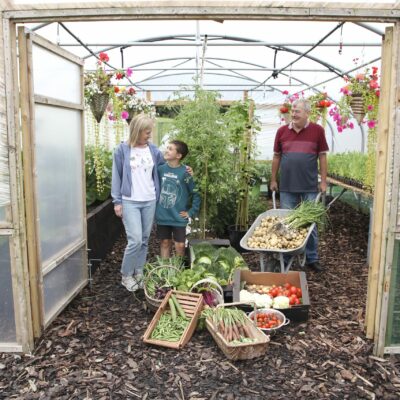


One of the great things about growing your own in a polytunnel is the fact that it can make it easier to eat more healthily. One of the healthiest diets is said to be the Mediterranean diet. The Mediterranean diet is rich in fresh, seasonal fruits and vegetables, as well as healthy fats and grains. Many of the components that you will often find in this diet can be grown in a polythene tunnel here in the UK. Read on to learn more about this diet, why you should eat it, and the polytunnel planting plans you could implement for a Mediterranean diet.
What is a Mediterranean Diet?
The term Mediterranean diet is broadly applied to a healthy dietary scheme that is based on the typical diets of a number of nations around the Mediterranean sea – including Spain, Italy and Greece.
On this diet, it is the norm to eat primarily plant-based food, along with legumes, whole grains and nuts. Herbs are used to flavour food rather than excessive salt, and butter is replaced with healthier fats such as olive oil.
Red meat consumption, if the person on the diet is a meat-eater, is limited to no more than a couple of times a month. Lean meats such as chicken and fish are sometimes eaten, though this diet also lends itself well to a vegetarian or vegan diet.
Why Eat a Mediterranean Diet?
The Mediterranean diet is compatible with the NHS guidelines for a healthy diet. It can help to keep your heart and brain healthy, keep all the body’s systems functioning well, and reduce your chance of cancer, or other forms of ill-health. A diet high in fruits, vegetables, whole grains,legumes and healthy fats has been shown to be extremely beneficial to our health in a wide range of different ways.
In addition to keeping you healthy, adopting the Mediterranean diet can also help you to become more self-reliant. As your diet will be high in seasonal fruits and vegetables, it will be easier for you to grow a higher proportion of your own food – even if you only have a relatively small amount of growing space available to you.
It is also worth considering is that eating less (or no) meat (especially red meat) is an environmentally friendly choice. Switching to a vegetarian or vegan Mediterranean diet would not only allow you to grow much more of the food you need in your very own polytunnel, it would also allow you to make a choice that would be kind on our planet. The less red meat you eat, the lower your carbon footprint will be and the less harm you will be doing to our planet and its people.
Mediterranean Fruits & Vegetables
A Mediterranean diet is rich in a variety of different fruits and vegetables. Common inclusions in Mediterranean recipes include:
- Tomatoes
- Peppers
- Aubergines
- Potatoes
- Broccoli/ cabbage etc.
- Carrots
- Lettuces
- Beans
- Courgettes
- Onions
- Garlic
All of these things can be ideal for polytunnel growing, as can many other fruits and vegetables commonly included in a Mediterranean diet. On a Mediterranean diet, the important thing is to eat fresh produce while it is in season wherever possible. A polytunnel makes that easier, prolonging the natural season length which is obviously shorter here in the UK than it is further south, and making it possible to grow your own food all year round.
A Polytunnel Planting Plan for Mediterranean Fruits & Vegetables
When creating polytunnel planting plans for a Mediterranean diet, these crops will often form the basis for the scheme, and take up a lot of the space within the structure.
One example of a planting scheme involves growing tomatoes and other members of that family in one bed, beans and courgettes in a second, and carrots, onions and lettuce in a third during the summer, then switching to growing winter beans, brassicas and winter onions and garlic over the winter months.
A crop rotation plan is then implemented that ensures that certain crops are not grown in the same growing area year after year. It is especially important to make sure that you do not grow members of the tomato family, brassicas or alliums in the same beds for year after year. Rotating your nitrogen fixing legumes between the different growing areas can also help you to make sure that the fertility of each of these spaces is maintained.
Companion Planting: Mediterranean Herbs
A Mediterranean diet also includes a range of fresh an dried herbs throughout the year. Fortunately, there are plenty of herbs used in Mediterranean cooking that are also relatively easy to grow in your polytunnel. The great thing about growing herbs is that they will not only provide an additional edible yield, but can also be good companion plants to improve the yield you get from your other polytunnel plants, attract beneficial wildlife and repel or distract a range of pests.
When we think of Mediterranean herbs, we tend to think of those herbs that love the dry, sunny and warm conditions of the Mediterranean. These include:
- Oregano
- Marjoram
- Rosemary
- Sage
- Tarragon
- Lavender
- Winter Savory
All of these are ideally suited to growing in a polytunnel. They can survive without much water, and will enjoy the additional heat that a polytunnel can provide. These perennial plants can be great when placed in pots around other growing areas, or when given their own space in a perennial polytunnel bed.
But in addition to the above, there are also a range of other delicious herbs that are native to the Mediterranean region and which are used in a range of different Mediterranean cuisines. These include:
- Basil
- Parsley
- Mint
- Chives
- Coriander
- Dill
- Fennel
While fennel is not great as a companion plant in most instances, many of the others in this latter list are ideal for placing as companions amongst your other Mediterranean plants.
Basil, for example, is often said to be excellent companion plants for tomatoes.
Growing Mediterranean Trees in a Polytunnel
In addition to growing common annual fruit and vegetable crops and herbs from the Mediterranean diet in your polytunnel, you could also consider implementing a perennial polytunnel planting plan and including some Mediterranean trees in your polytunnel beds.
These could be underplanted with some perennial plants, perhaps, and, outside the area of shade they cast, some of the perennial or annual herbs of the Mediterranean region described above – many of which are excellent companion plants for fruit trees. Of course, you could also simply include trees in containers between your other annual growing areas.
Trees that you might wish to consider growing in your Mediterranean-themed polytunnel include:
- Olive Trees
- Fig Trees
- Peach Trees
- Apricot Trees
- Citrus Trees
You can find out more about growing various fruit trees in our polytunnel grow guides. Dwarf trees can be an excellent option for even smaller polytunnels.
Do you include elements of the Mediterranean diet in the things that you eat? Do the diets found in the Mediterranean region inspire you to eat more healthily? With a polytunnel, it is easier than ever to do the right thing – both for your own health and for the planet.
Feel free to share your own tips and suggestions for a Mediterranean diet, or for growing Mediterranean plants in your polytunnel, in the comments below.