


Liquorice, known for its sweet flavour, is a perennial herb native to parts of Asia and the Mediterranean. The plant’s roots contain glycyrrhizin, a compound significantly sweeter than sugar, making liquorice a popular ingredient in sweets, teas, and traditional medicines.
This guide provides an in-depth look at how to grow a liquorice plant in the UK, covering everything from its flavour and characteristics to its location requirements and care.
Flavour, Origin and Characteristics of Liquorice (Key Facts)
- Liquorice (Glycyrrhiza glabra) is renowned for its unique sweet taste.
- The taste comes from glycyrrhizin, a compound found in the plant’s roots.
- This plant originates in southern Europe and parts of Asia.
- It has been used for thousands of years in both culinary and medicinal contexts.
- Liquorice grows to 1-2 meters in height.
- It has pinnate leaves and pale blue to violet flowers that bloom in summer.
- Roots are ready to be harvested after 3-4 years of growth.
Growing Liquorice: Location, Soil and Care
If you would like to grow licorice, it is important to think about the growing requirements and find a suitable location, and to care for your plants correctly.
Liquorice Location Requirements
Liquorice plants thrive in full sun but can tolerate partial shade. They require a warm location that is sheltered from strong winds, making a south-facing garden bed or a polytunnel ideal.
The plants prefer long, hot summers, which can be challenging to replicate in the UK. However, with proper care and the right conditions, successful cultivation is possible.
Soil Requirements
Liquorice plants need well-draining soil with a neutral to slightly alkaline pH (6.5-8). Sandy loam or clay loam soils are ideal. It’s important to avoid waterlogged conditions, as the roots are susceptible to rot.
If your garden soil is heavy clay, consider improving drainage by adding sand or organic matter such as compost or leaf mould to the site.
How to Grow Your Own Liquorice

Growing liquorice from seed is a common method, but you can also grow liquorice from cuttings too.
Growing From Seed
Liquorice seeds have a hard outer shell that can benefit from scarification. Gently nick the seed coat with a file or soak the seeds in warm water for 24 hours before planting. This helps to improve germination rates.
Sow the seeds in pots or seed trays filled with a well-draining seed-starting mix. Plant the seeds about 1 cm deep and cover lightly with soil. Keep the soil moist but not waterlogged.
Place the pots in a warm, sunny location or use a heat mat to maintain a temperature of around 20-25°C. Germination can take anywhere from two to three weeks. Ensure the seedlings receive plenty of light to prevent them from becoming leggy.
Once the seedlings have developed two sets of true leaves and are large enough to handle, they can be transplanted into larger pots or directly into the garden.
Growing from Root Cuttings
In late winter, take root cuttings from an established liquorice plant. Cut 10-15 cm sections of healthy root and plant them horizontally in pots filled with a well-draining potting mix.
Bury the cuttings about 5 cm deep and keep the soil moist. Place the pots in a warm, bright location. Root cuttings typically take a few weeks to establish and show new growth.
Once the cuttings have established roots and new shoots, they can be transplanted into the garden.
Planting Out Liquorice
Liquorice plants thrive in full sun but can tolerate partial shade. Select a warm, sheltered spot in your garden, preferably south-facing, to provide the plants with ample sunlight.
Liquorice prefers well-draining soil with a neutral to slightly alkaline pH (6.5-8). Sandy loam or clay loam soils are ideal. If your soil is heavy clay, improve drainage by adding sand or organic matter such as compost.
Space the plants about 60-90 cm apart to allow for their extensive root systems to develop. Dig a hole slightly larger than the root ball, place the seedling in the hole, and backfill with soil. Water thoroughly to help the plants establish and mulch around the base of the plant with organic matter.
Liquorice Plant Care
Liquorice plants require regular watering, especially during dry periods, to keep the soil consistently moist but not waterlogged.
Mulch around the base of the plants can help retain moisture and suppress weeds. It can also be a good idea to fertilize the plants in early spring with a balanced, all-purpose organic fertilizer to promote healthy growth.
Regular weeding is necessary to prevent competition for nutrients and water.
Prune back any dead or diseased stems and occasionally trim the plants to encourage bushier growth. This also helps in maintaining plant health and preventing diseases.
In the UK, liquorice plants can be left in the ground over winter in milder regions. Apply a thick layer of mulch to protect the roots from frost. For plants grown in pots, move them to a frost-free location, such as a greenhouse or cold frame, during the winter months.
How to Harvest Liquorice
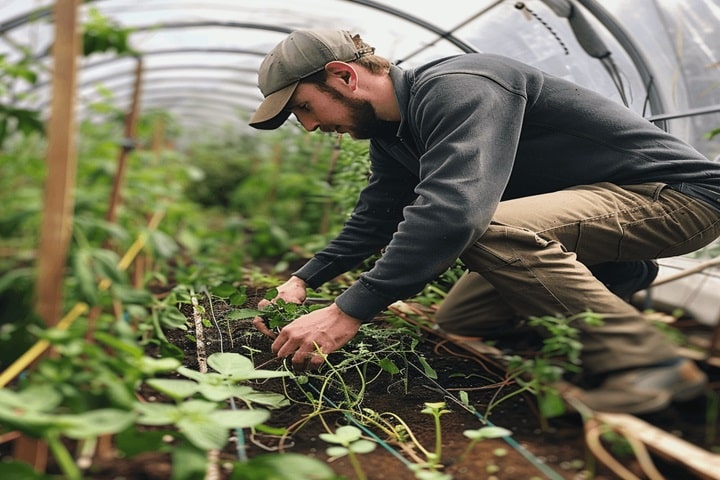
Harvesting liquorice in the UK requires patience and careful timing, as the roots need three to four years to mature fully. Here is a step-by-step guide to ensure a successful harvest:
Timing the Harvest
Liquorice roots are best harvested in the autumn, typically in the third or fourth year after planting. The timing is crucial because it allows the plant to store nutrients in the roots over the growing seasons, leading to a sweeter and more robust flavour.
Preparing for Harvest
- Water the Plants: A few days before harvesting, water the plants thoroughly. This softens the soil, making it easier to dig up the roots without damaging them.
- Gather Tools: You will need a spade or garden fork, pruning shears, and a bucket or wheelbarrow to collect the roots.
Digging Up the Roots
- Choose a Dry Day: Harvest on a dry day to prevent the roots from becoming overly muddy and to ease the cleaning process.
- Loosen the Soil: Use a spade or garden fork to carefully loosen the soil around the base of the plant, starting about 30-40 cm away from the main stem to avoid damaging the roots.
- Lift the Roots: Gently lift the roots from the soil. Liquorice roots can be extensive, so take your time to ensure you extract the entire root system.
Cleaning and Preparing the Roots
- Trim Excess Foliage: Cut back the stems and foliage, leaving just a small portion attached to the roots for easier handling.
- Wash the Roots: Rinse the roots thoroughly under running water to remove all soil. You can use a brush to scrub away any stubborn dirt.
- Cut into Pieces: Cut the roots into manageable pieces. Smaller sections will dry more evenly if you plan to store them.
Drying and Storing
- Dry the Roots: Spread the cleaned root pieces on a drying rack or screen in a warm, well-ventilated area. Alternatively, use a dehydrator set to a low temperature. The roots should dry until they are hard and brittle, which may take several days to a week.
- Store Properly: Store the dried roots in an airtight container in a cool, dark place. Properly dried and stored liquorice roots can last for several months.
Tips for Successful Harvesting
- Patience is Key: Ensure your liquorice plants have matured for at least three years before attempting to harvest. Younger roots may not have developed the full sweetness and medicinal properties.
- Regular Maintenance: Throughout the growing period, keep the plants healthy with regular watering, mulching, and feeding to ensure a bountiful and high-quality root harvest.
Benefits and Uses of Liquorice Root

Liquorice root has numerous benefits and uses.
In the garden, liquorice is what is sometimes referred to as a ‘dynamic accumulator’ and a nitrogen fixing plant. It is good at absorbing certain nutrients and storing them in bio-available form, and has a relationship with bacteria that fix atmospheric nitrogen. So it can be useful for composting, liquid plant feeds and for chopping and dropping or use as a mulch.
Culinarily, liquorice root is used to flavour sweets, teas, and beverages. It is also used in some savoury dishes, particularly in Chinese and Middle Eastern cuisines. There are a number of liquorice recipes to consider. Additionally, liquorice extract is used as a natural sweetener and flavouring agent in various food products.
Medicinally, it has been used to treat digestive issues, respiratory problems, and inflammatory conditions. The glycyrrhizin in liquorice root has anti-inflammatory, antiviral, and antimicrobial properties.
Types of Liquorice Plant
There are several species of liquorice plant, each with unique characteristics:
- Glycyrrhiza glabra: The most commonly cultivated species, known for its sweet roots.
- Glycyrrhiza uralensis: Also known as Chinese liquorice, this type is used in traditional Chinese medicine.
- Glycyrrhiza lepidota: Native to North America, known as American wild liquorice.
Each species has slightly different growing requirements and taste subtly different, but they all share the characteristic sweetness of liquorice root.
Licorice Plant Companion Plants
Liquorice plants can benefit from companion planting with other herbs and vegetables. Suitable companions include:
- Chamomile: Enhances the growth and flavour of liquorice.
- Basil: Helps deter pests and attracts beneficial insects.
- Mint: Provides ground cover and helps retain soil moisture.
Licorice is also beneficial to a range of crops – especially to leafy greens like Brassicas, or cabbage family crops, which can benefit from liquorice’s nitrogen fixation.
Can You Grow A Liquorice Plant In A UK Polytunnel?
Yes, growing liquorice in a UK polytunnel is an excellent way to provide the warm, sheltered conditions that the plant prefers.
A polytunnel can extend the growing season and protect the plants from adverse weather conditions. Just make sure that the polytunnel has good ventilation to prevent humidity buildup, which can lead to fungal diseases.
Growing liquorice in the UK can be a rewarding experience, offering both culinary and medicinal benefits. By understanding the plant’s origin, characteristics, and requirements, gardeners can successfully cultivate and harvest their own liquorice roots.
Whether grown in a garden bed, container, or domestic polytunnel, liquorice plants can thrive with the right care and attention.
FAQs
Is liquorice easy to grow?
Liquorice can be relatively easy to grow if provided with the right conditions. It requires full sun, well-draining soil, and regular watering. While it may take a few years to establish and produce a harvestable root, the plant is generally low-maintenance once established.
Do liquorice plants like sun or shade?
Liquorice plants prefer full sun but can tolerate partial shade. For optimal growth and root development, provide at least six hours of direct sunlight per day. In shadier conditions, the plants may grow more slowly and produce fewer roots.
Sources
Great British Chefs. (2021) Liquorice Recipes. [online] Available at: https://www.greatbritishchefs.com/collections/liquorice-recipes [accessed 22/07/24]