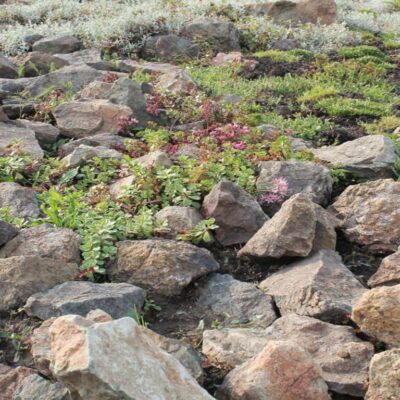


With raised beds, you don’t need to spend a fortune to create new growing areas for your garden. Raised garden beds can be sustainable and affordable as long as you use what you already have, and adopt the right strategy for your particular situation. Here’s how to fill raised beds.
Raised garden bed design is all about developing a deeper understanding of your own needs and wishes, and of the situation in which you are gardening.
Whether you are building beds for a new kitchen garden outside, or in a greenhouse or polytunnel – a little thought and planning can go a long way and help you to achieve the right results without spending a fortune in the process.
There is not really a ‘one size fits all’ solution when it comes to filling raised beds, so adapting techniques to suit your own circumstances is key.
Key Takeaways:
- You don’t need to fill raised beds entirely with soil – most plants only require the top 20–30cm of nutrient-rich growing medium. Below that, you can layer organic and reclaimed materials to build structure and fertility over time.
- Use what you already have – from prunings and cardboard to kitchen scraps and garden waste, many common materials can be diverted from the waste stream to help fill your raised beds sustainably.
- Integrate with other projects – building raised beds complements pruning, composting, and general garden clearance. Think circularly and use waste from one task to enrich another.
- Layer naturally sourced materials – logs, twigs, leaf mould, straw, and cardboard all make excellent base layers. They encourage microbial activity, aeration, and long-term soil health.
- Reclaimed materials are your allies – old pallets, untreated timber, natural fibre textiles, and containers can form both the structure and internal layers of your raised beds.
- Mesh is optional – a galvanised mesh base is useful in areas prone to burrowing pests but not necessary in all settings.
- Avoid gravel as a base – it can impede drainage and root growth rather than improving it. Stick with organic layering methods.
- Cardboard is excellent at suppressing weeds – particularly when building beds on grass or rough ground. Always wet it well and remove plastic tape or glossy coatings.
- Wood chips are better used on the surface or between beds – they can lock up nitrogen when buried but make a great mulch. If used at the base, balance with nitrogen-rich ‘green’ materials like fresh grass clippings or food scraps.
- Try hugelkultur for woody waste – burying logs and branches beneath the bed mimics forest-floor ecology, holding moisture and breaking down slowly to feed the soil.
- Lasagna gardening is ideal for layering compostables – alternate browns and greens to encourage decomposition and soil enrichment directly in the bed.
- Straw bale beds are perfect for temporary or low-cost setups – the bales form both the bed walls and growing medium as they break down.
Should You Fill a Raised Garden Bed Completely with Soil?
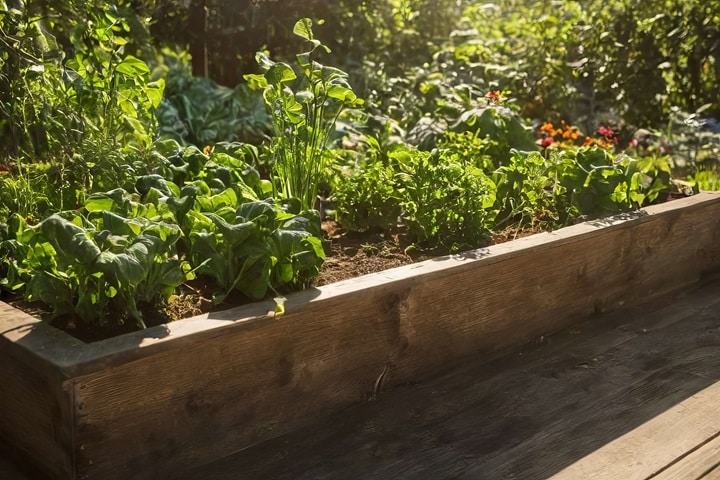
When most people start to create a raised bed, they will often plan on filling the new growing area with soil. But it is important to understand that using a good quality topsoil or loam to fill the whole bed is only one option.
Filling a raised bed entirely with high-quality soil can be costly and is not always necessary, especially if the bed is quite deep. Most plants do not require more than 20-30cm of rich topsoil to thrive. Beneath that, you might use a range of organic and reclaimed materials can help build structure, promote drainage, and feed the soil life over time.
Save Money by Adding What You Already Have
When approaching your raised bed, look first to what is already available in your garden or home. Many people will use what they have already when thinking about the edging for a raised bed, but do not consider using what they have already to fill the raised bed too.
Kitchen scraps, prunings, old newspapers, and other biodegradable household waste can all potentially be put to use.
Grass clippings, autumn leaves, or even cardboard boxes from deliveries can all be pressed into service. The goal is to divert waste from landfill and transform it into something valuable to you and your family.
The best way to save money in your garden is always to make full use of resources at your disposal for free before you buy anything at all.
Integrating Different Garden Projects
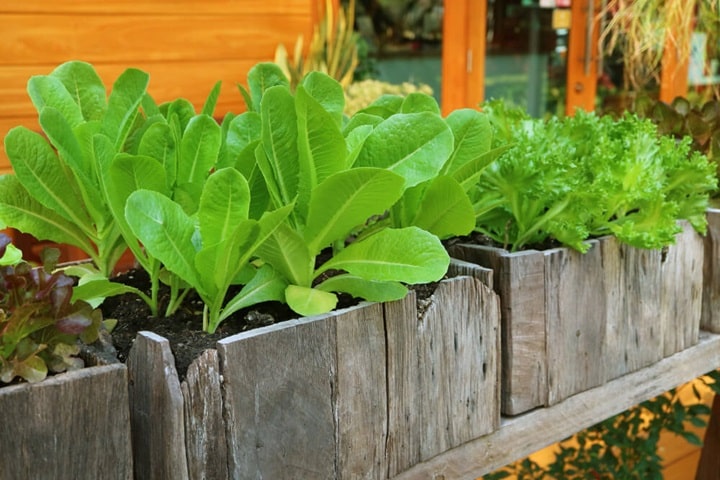
This process of bed-building can align seamlessly with other efforts in the garden. Composting, mulching, pruning, and even clearing out old sheds or storage areas can yield useful materials to build up raised beds.
If you’re trimming back a hedge or felling a tree, the branches and logs can serve as the foundation layer for hugelkultur-style beds. If you are digging a wildlife pond, creating new patio areas or paths through an existing lawn, turf and topsoil from the area might be used to make a raised bed elsewhere in your garden.
Sustainable garden design is all about circularity, with outputs from one area feeding another. And using the output of one job as an input for another can save you a lot of money too.
Using Natural Materials
Nature offers a bounty of resources that can be gathered and reused. Twigs, rotting logs, and fallen leaves are abundant in many gardens or local wild spaces (be sure to forage ethically and responsibly). They can be layered at the bottom of beds to improve aeration and mimic forest-floor systems that are rich in microbial life.
Using Reclaimed Materials
Old clothes made of natural fibres, such as wool or cotton, can be composted into the bed’s deeper layers, slowly breaking down and contributing to long-term soil health. Cardboard might also be used in the base of the bed.
Other reclaimed materials might also be used to reduce the use of virgin materials and to create new raised beds more sustainably and affordably.
Options For The Base Layer of a Raised Bed
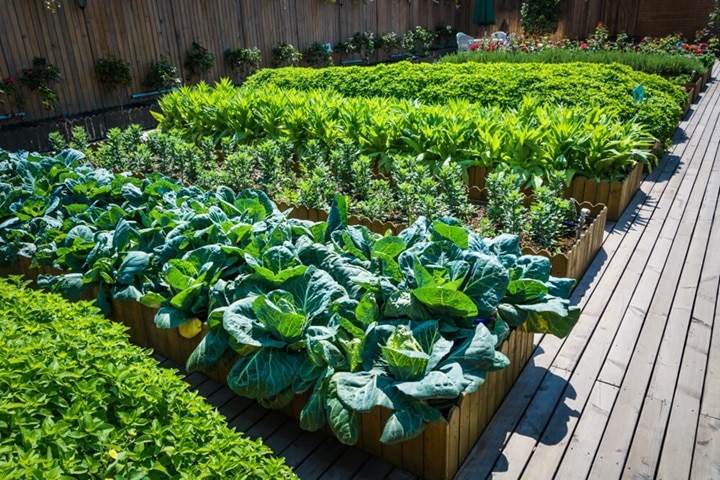
Your base layer is all about structure, and finding the right balance between water retention and drainage. A layer at the base of the bed can also help reduce the chances of grass or weeds growing up through and may also be involved in pest control.
Choosing the right options for where you live and the plants you want to grow can make a big difference to your success, and to the health and happiness of your plants.
Do You Need a Mesh Base?
If burrowing pests are a problem—moles, voles, or rabbits—a mesh base might be worth installing. Galvanised hardware cloth is best, as it is durable and resistant to rust.
However, you might be able to find reclaimed mesh to use, and in any case, this isn’t essential in all gardens and can be skipped if you’ve not had issues.
Is Gravel a Good Idea for the Bottom of a Raised Bed?
Gravel is sometimes suggested for drainage, but in most cases, it’s unnecessary and can even create a barrier that impedes water flow. That said, it may be beneficial where a new raised bed is placed on concrete, paving, or other hard, impermeable surfaces.
You might also have gravel at the base of a raised bed if you are creating a specialist growing area – such as a wicking bed. Wicking beds use gravel to create a reservoir of water at the base. These are a great choice in low-rainfall areas.
Should You Put Cardboard Down as a Base for a Raised Bed?
This can be a very good idea, especially if you’re installing a bed over grass or weeds. Cardboard acts as a temporary weed suppressant and encourages worm activity. Ensure it is untreated and remove any plastic tape or labels. Water it well before layering other materials on top.
Some people will instead use a landscaping fabric or similar. But this is not at all a good idea. Cardboard can help stop weeds or grass growing through until the bed is established, but will break down over time connecting the bed with the wider soil web. This connection can bring a range of benefits for this part of your garden.
Are Wood Chips a Good Base Layer?
Whether or not you should use a lot of wood chips in a raised bed depends in part on what you plan to grow in that bed.
If you are growing woody plants – trees or shrubs, using wood chips in the layered bed interior and mulching the top with wood chip can be a good idea.
If you are growing typical annual and biennial crops in your raised beds, wood chips are best not used excessively, since they can tie up nitrogen as they decompose.
However, they can be included sparingly or near the base of the bed as long as you also include plenty of nitrogen rich materials to counteract the effect of the nitrogen lockup that occurs as they decompose.
Wood chips can also be used in walkways between beds to suppress weeds and when this breaks down, you can simply scoop the decomposed wood chip onto the beds as mulch, and replenish the pathways with more wood chips.
Investing in a garden shredder can save money on materials down the road – allowing you to make the most of woody prunings from your garden to replenish pathways and for other uses over time.
Incorporating Organic Matter
Once your structural layer is in place, begin to add organic matter. Kitchen waste (excluding meat or dairy), grass clippings, aged manure, leaf mould, and garden compost all build fertility. Alternate green (nitrogen-rich) and brown (carbon-rich) materials in layers to encourage microbial balance. Think of it as composting in place—letting nature do the work over time.
Hugelkultur Raised Beds
Hugelkultur is an age-old German technique that uses logs, branches, and other woody debris as the foundation for a raised bed. These materials retain water like a sponge, improve soil structure, and decompose slowly, releasing nutrients over time. They are ideal in areas with low rainfall or poor soil, and are a perfect solution if you have woody waste to repurpose.
Lasagna Gardening Raised Beds
Lasagna gardening, or sheet composting, involves building up alternating layers of carbon-rich (browns) and nitrogen-rich (greens) materials. Think cardboard, leaves, straw, and newspaper paired with compost, food scraps, or fresh grass clippings. This method works well in standard raised beds and is particularly helpful when converting lawn or poor soil into fertile growing space.
Building Raised Beds from Straw Bales
Another budget-friendly option involves using straw bales as both the frame and growing medium. Over a few weeks, the bales break down into a rich compost. This method is particularly useful for renters or those with very poor soil, as the beds can be installed and removed with minimal disruption. If you live near a farm, local farmers may have a bale or two to spare, or be able to sell them to you at minimal cost.
Sustainable and Affordable Raised Beds for a Polytunnel
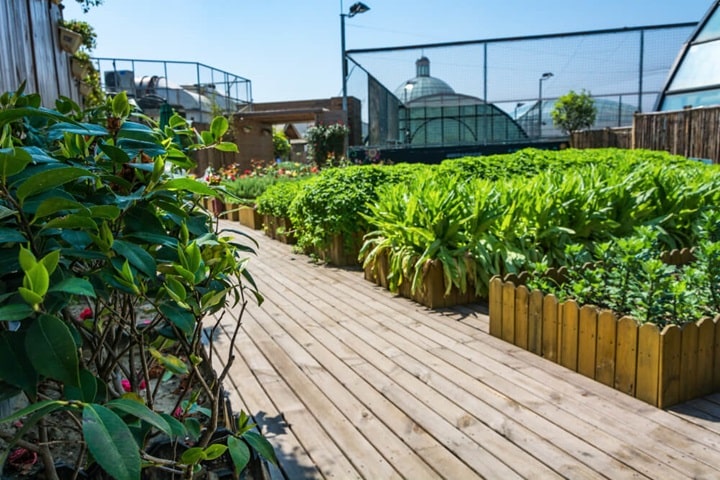
In a polytunnel, the microclimate is different—warmer, more humid, and often with better control over soil moisture. Raised beds can be filled using the same strategies, but materials may break down faster. Reclaimed wood, straw, and compost all work well here. If building directly onto hard standing, use deeper beds with a mix of soil and organic matter to give plants the depth they need.
FAQs
What can I put at the bottom of a raised garden bed to keep animals out?
Use galvanised mesh or hardware cloth at the base if you’re concerned about animals like moles, voles, or rabbits digging up into your bed. Ensure it is securely attached to the sides of your frame.
What can I put at the bottom of a raised garden bed to prevent weeds?
A thick layer of cardboard or several sheets of newspaper will block weeds while encouraging worms. Avoid synthetic weed barrier fabrics, which can interfere with soil health.
What should I do if I’ve got ants in my raised garden bed?
cinnamon, coffee grounds, or citrus peel to deter them. Avoid chemical treatments, as they may harm beneficial insects and microbes.
If there is no water shortage, watering your bed a little more liberally may encourage ants to move elsewhere.
Sources
Lovejoy, D., (2024) What is hugelkultur gardening? Try something new in your raised beds this year. Homes & Gardens. [online] Available at: https://www.homesandgardens.com/gardens/what-is-hugelkultur-gardening [accessed 19/05/2025]