

Edging plants can be very useful in a garden. They can define the boundaries between different areas or zones, soften the edges of patio or decking, and line pathways through the space.
It can often be a good idea to opt for living edging rather than introducing more man-made materials, to ensure that your garden retains a more organic and natural look.
Different edging plants are suited to different settings and locations of course. In this guide, we will talk about some of the options for different situations here in the UK.
What Is Garden Edging?
Before we start to look at individual options, it might be useful to define what we mean by garden edging, and delve a little into how exactly edging plants are used.
Edging plants are simply plants used along the edges of beds or borders, plants that line the sides of pathways or patio spaces, and which define the point where two different areas meet.
How to Use Edging Plants
Edge plants define the margins of a space, sometimes stopping grass or weeds from encroaching into growing areas by providing good ground cover, sometimes relaxed and spilling over, sometimes more upright and formal, creating a more formal boundary.
Choosing the right edging plants or other bed edging can help us to define zones within overall garden schemes. It can help us to make the most of the edge spaces – remembering that edge spaces between different environments can be the most productive areas of all.
Choosing Edging Plants
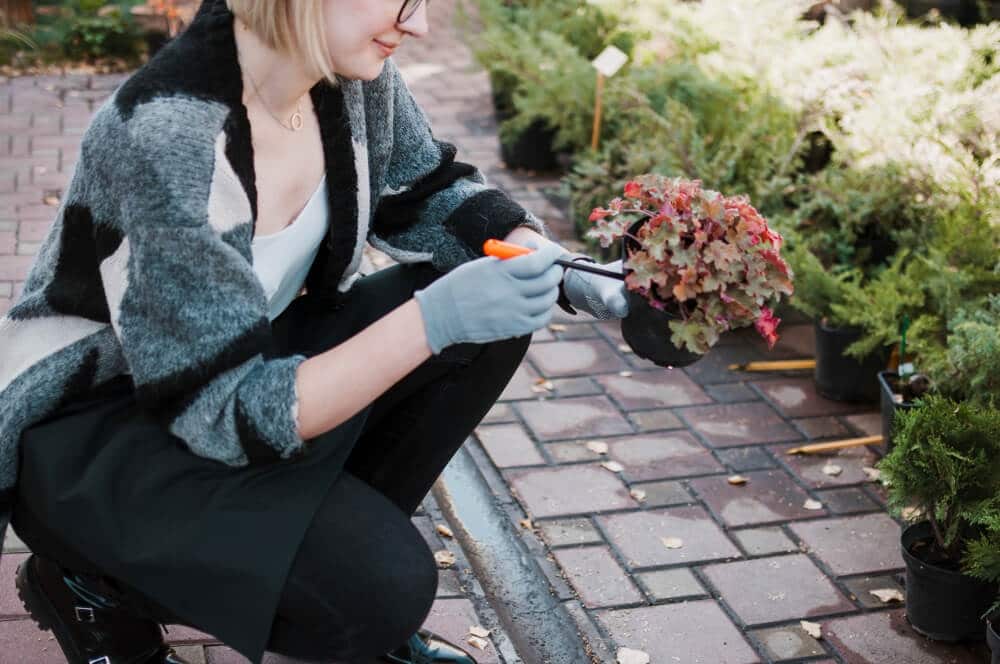
Evaluate Your Light Level and Other Environmental Conditions
Of course, before we can choose the right edge plants for a particular location, we need to think about the environmental conditions that area provides. We need to look at sunlight and shade, wind and water, and the soil and its characteristics in order to find the right edging plants for the right places.
Make Sure to Consider Mature Size
We also need to think about the size to which the edging plant will eventually be expected to grow, in terms of both its height and its spread. We need to look at its growth habits to determine whether or not a particular plant will be well-suited to a particular location and use.
Think About What You Need the Edging Plant to Do
Another important factor when choosing edge plants is their purpose. Thinking about the function or functions you would like the plant to fulfil can also help you to make the right choices.
For example, do you want the edging plant to soften the edges of hard paved areas? Do you want it to stop people or animals from walking onto a bed or border in a certain spot? Do you want it to reduce the spread of grass and/or weeds into an area? Do you want the plant to provide food or other yields as well as serving as bed edging?
Make sure you define your needs and goals before you decide which edging plant or plants is or are right for you.
Edging Plants to Consider
Here, then, are some edging plants that you might like to consider:
Astilbe
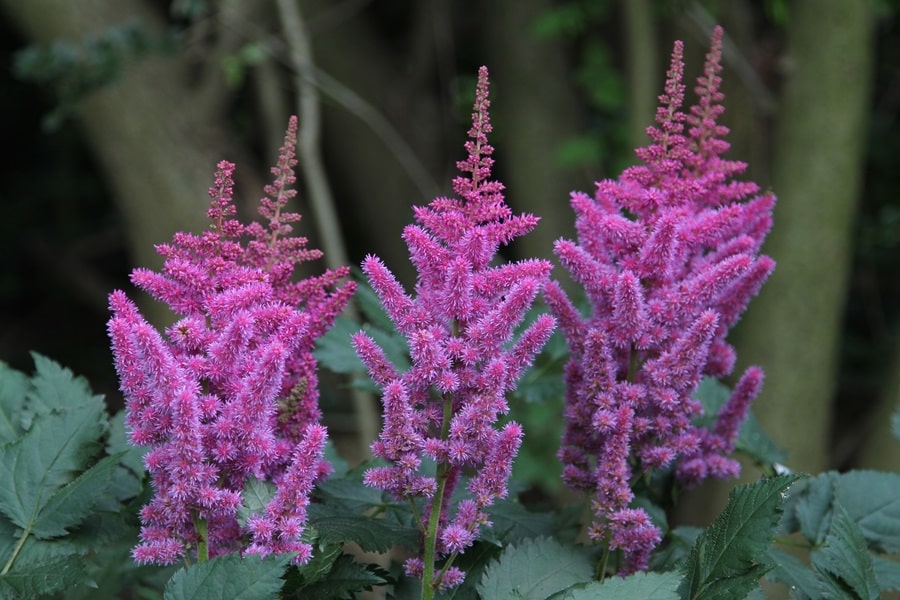
Astilbes generally prefer partial to full shade nut they can tolerate some morning sun if provided with adequate moisture. Compact varieties like Astilbe chinensis ‘Pumila’ or ‘Sprite’ can work well as edging plants in areas that are somewhat shaded.
Astilbes thrive in moist, well-drained soil rich in organic matter and will grow together to form a continuous ground cover when planted (depending on variety) around 30-40 cm apart.
Box
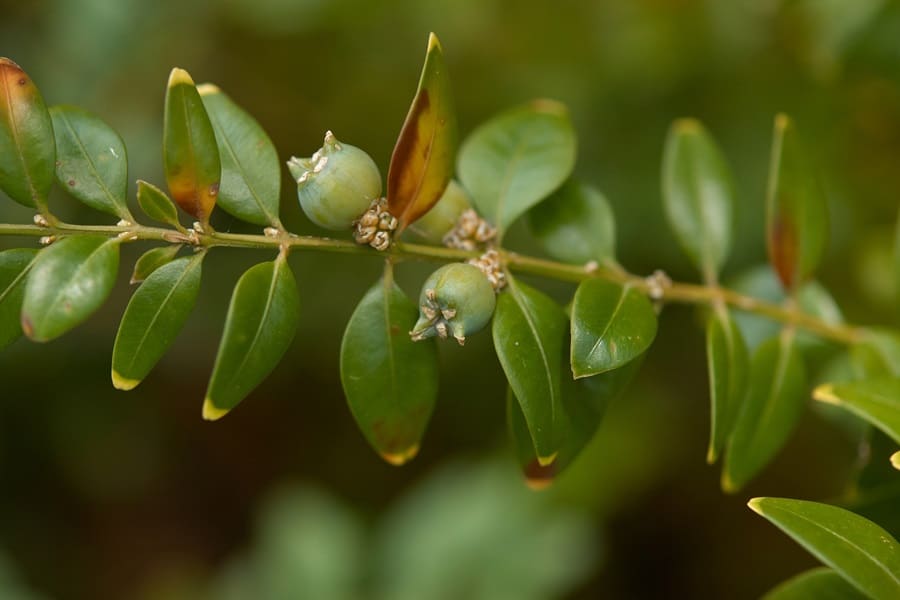
Box (Buxus sempervirens) is a classic choice for edging plants, valued for its evergreen foliage and compact growth habit. It is used to form low hedges or in topiary forms to line beds or borders.
For edging, look for compact cultivars like Buxus sempervirens ‘Suffruticosa’ (English Boxwood) or Buxus microphylla ‘Compacta’ (Kingsville Boxwood) that maintain a tidy, low-growing habit.
Consider using low-growing ground covers, such as creeping thyme or ajuga, to fill in gaps between the box plants and add texture and colour to the bed edging.
Bugleweed
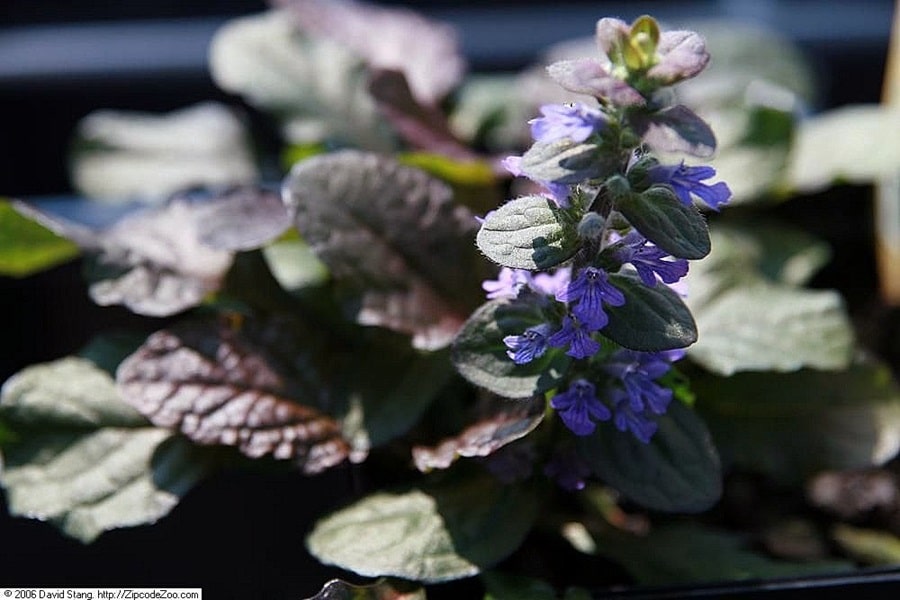
Bugleweed (Ajuga reptans) is a low-growing perennial ground cover with attractive foliage and flowers. It can be an excellent choice for edging beds, providing a carpet-like effect along the border.
Bugleweed prefers moist, well-drained soil rich in organic matter, and thrives in partial shade in a sheltered spot. Combined with other edging plants for shade, it can make a dynamic and visually interesting border and will help to attract bees and other beneficial insects to your garden.
Catmints
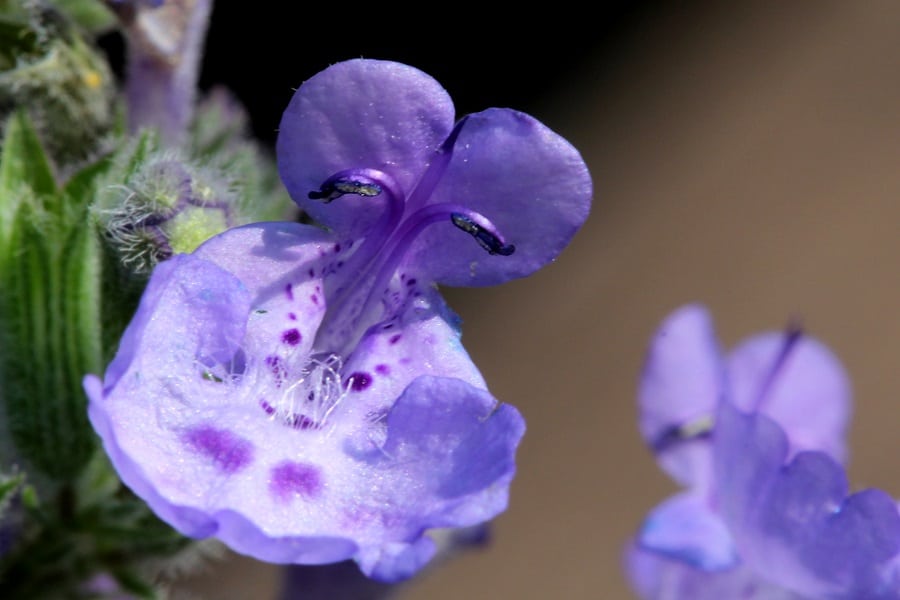
Catmints, which are plants in the Nepeta genus, are delightful perennial plants known for their aromatic foliage and clusters of small, lavender-blue flowers. These make a wonderful edging plant for visual appeal from the beautiful blooms throughout the summer months. These plants look a little like lavender but die back in winter.
Nepeta ssp. are perfect for well-drained soil with moderate fertility, in full sun or light, partial shade. This is an excellent choice for those who struggle to grow lavender successfully since it is a little more tolerant of wetter soils.
Chives
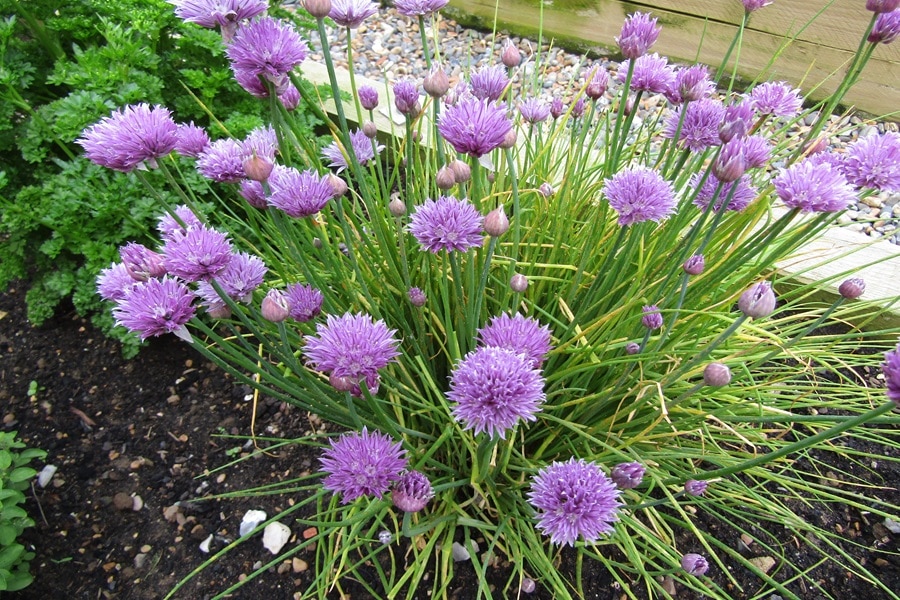
Using chives (Allium schoenoprasum) as edging plants is a great choice for those who wish to maximise food production in their gardens. Whether you use chives to edge perennial edible planting areas, fruit tree guilds, or annual vegetable beds, or as part of largely ornamental planting schemes, they can be an excellent choice.
Not only do chives look good, and taste good too, they also help to confuse, distract or repel certain pest species, like other members of the onion family. They will do well wherever they can receive at least 6 hours of sunlight per day.
Coral Bells
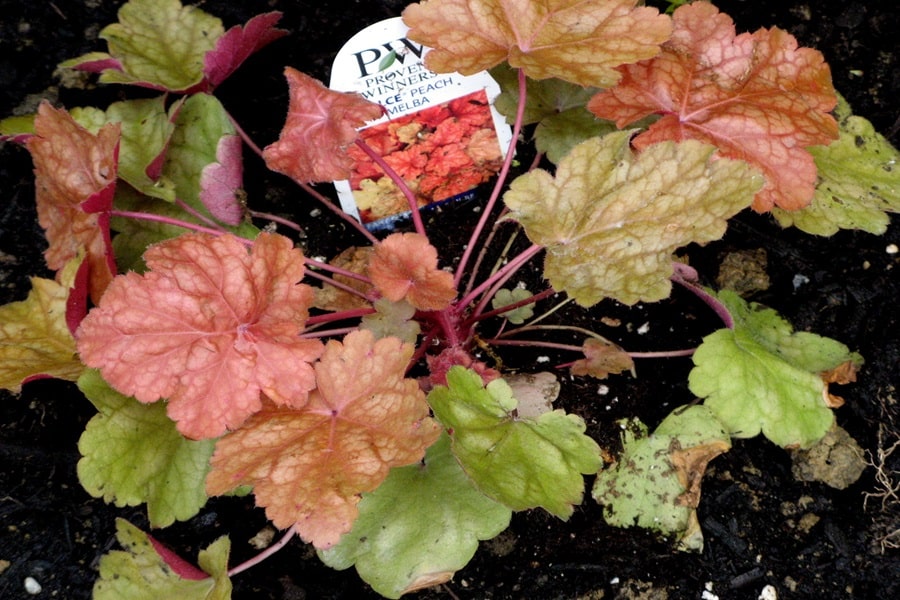
Coral bells, scientifically known as Heuchera, are grown for both their foliage and flowers. They are a good choice where edge plants are required in a partially or even fully shaded location.
Coral bells thrive in well-drained soil with good organic content. And in the right conditions they are very low-maintenance plants.
Dianthus
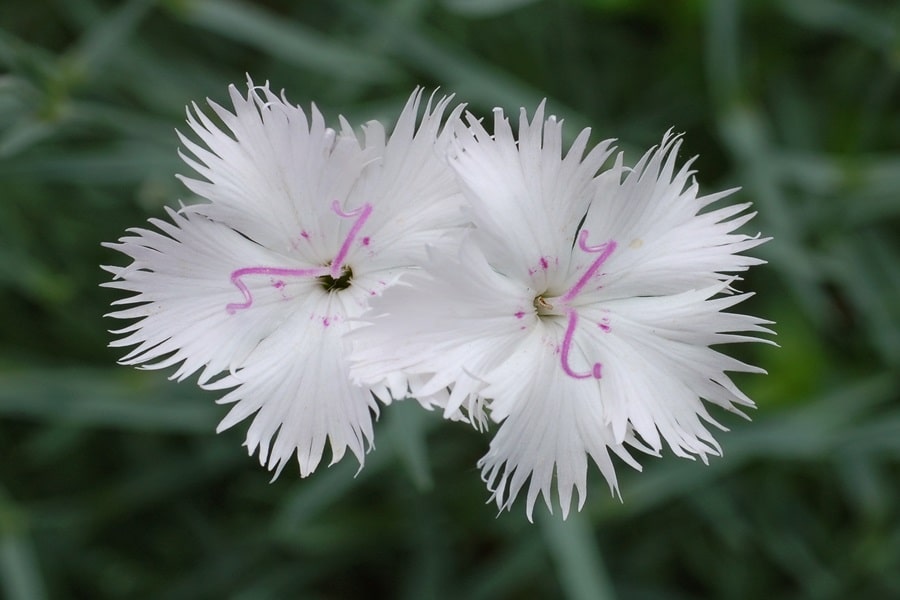
Dianthus, also known as pinks or carnations, are low-growing perennials with attractive foliage and fragrant flowers. They can work well as bed edging in a sunny spot in well-drained soil.
Some popular varieties for edging include Dianthus gratianopolitanus (Cheddar pinks) and Dianthus deltoides (Maiden pinks), though there are also a number of other options to consider.
Elephant’s Ears
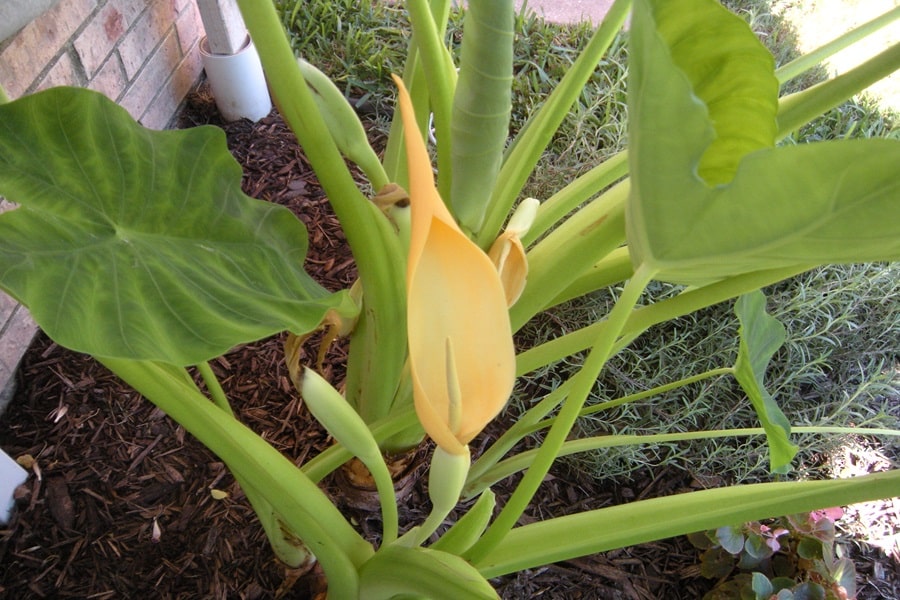
These are hardy perennial plants with large, leathery leaves which bear clusters of colourful flowers in spring.
They are prized for their foliage and make great groundcover for the front of a shaded or partially shaded bed or border where the soil is moist but well drained.
Geraniums
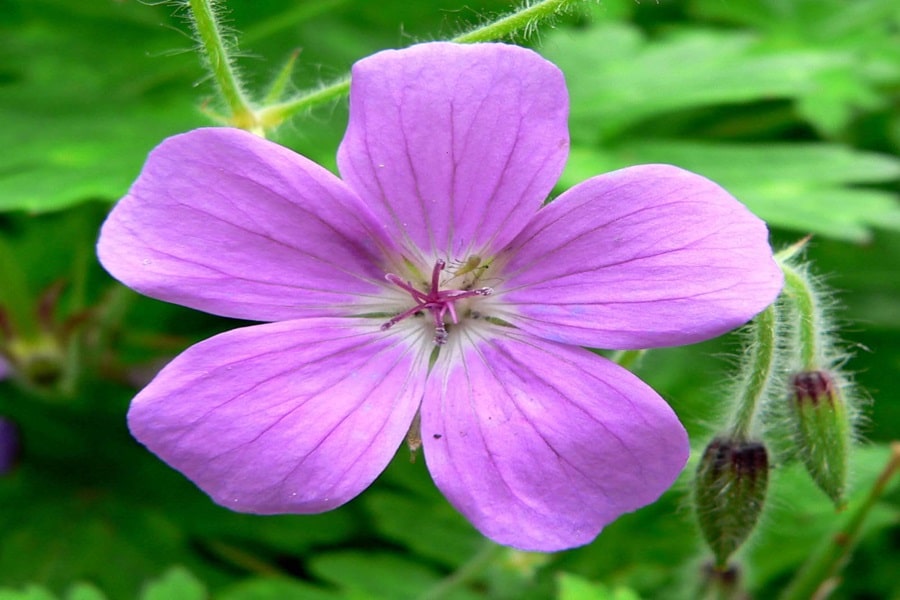
Using hardy geraniums (Geranium spp.), also known as cranesbills, as edging plants in the UK is another excellent and popular option. Some popular varieties include Geranium sanguineum, Geranium macrorrhizum, and Geranium ‘Rozanne’.
Hardy geraniums prefer moist, well-drained soil but can tolerate a wide range of soil types, and can do well in a range of conditions from full sun to partial or dappled shade.
Hostas
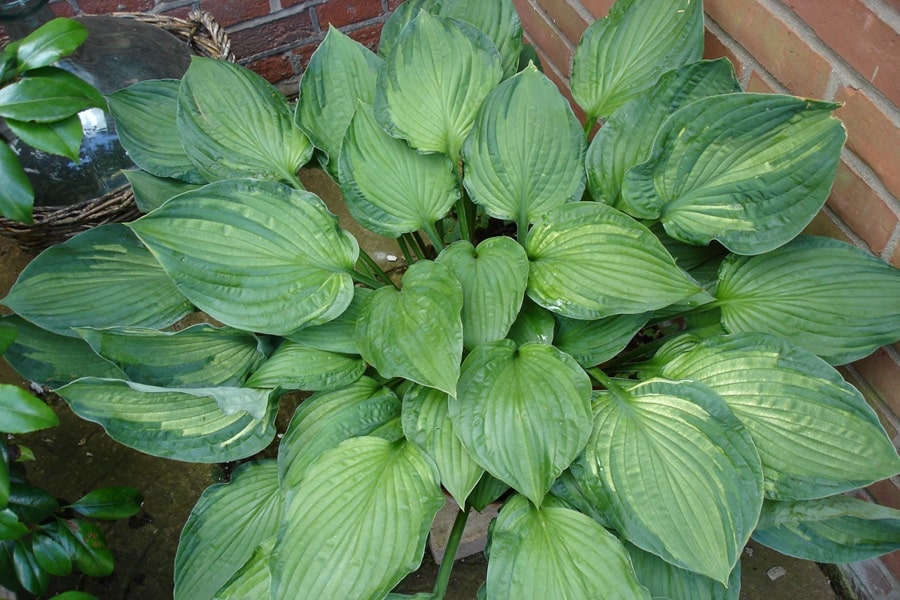
Hostas are prized for their attractive foliage, which comes in a variety of colours, textures, and sizes. They can work well at the front edge of a shady border alongside other species that like a shaded position.
Not only are hostas an attractive ornamental foliage plant, they also provide edible yields, and make a great leaf vegetable. So they are great for edible planting or edible and ornamental plantings.
Junipers
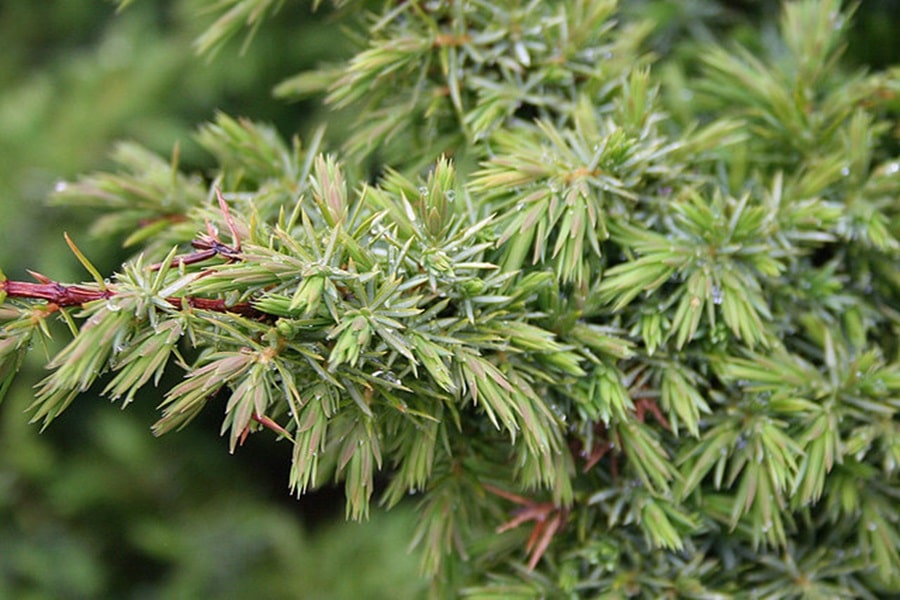
Using creeping or prostrate junipers as edging plants is one excellent option for those who want evergreen edging in full sun sites with free-draining soil. Creeping junipers, also known as groundcover junipers, are evergreen shrubs with trailing or spreading growth habits.
Choose varieties that are low-growing and well-suited for edging purposes. Some popular options include Juniperus horizontalis ‘Blue Chip’, Juniperus horizontalis ‘Wiltonii’ (Blue Rug Juniper), and Juniperus squamata ‘Blue Star’.
Lady’s Mantle
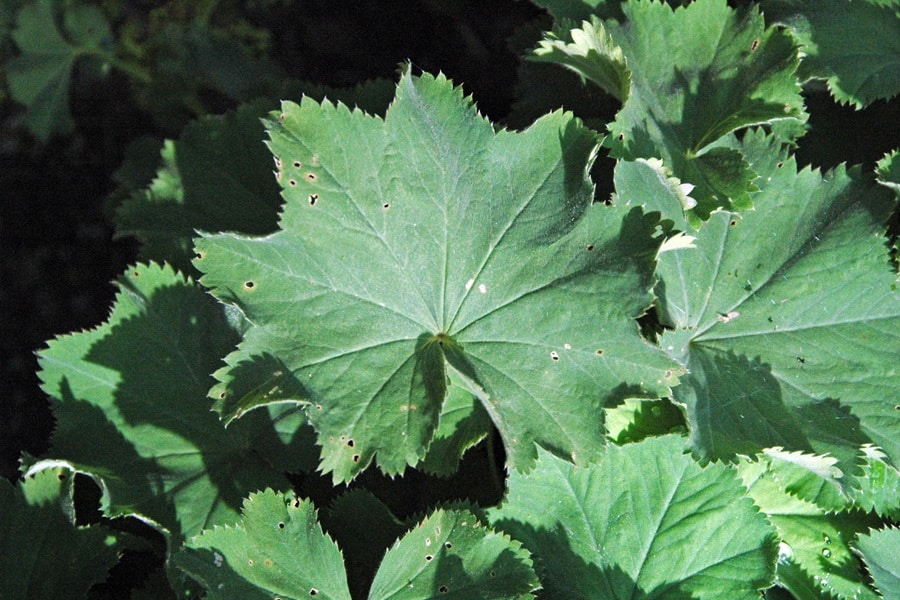
Lady’s Mantle (Alchemilla mollis) can add a soft and delicate touch to garden borders while providing texture and interest. It can do well as an edging plant where it will receive dappled sunlight or partial shade.
Lady’s Mantle prefers moist, humus-rich soil but can tolerate a wide range of soil types. In the right situation it is an incredibly low maintenance plant.
Lamb’s Ears
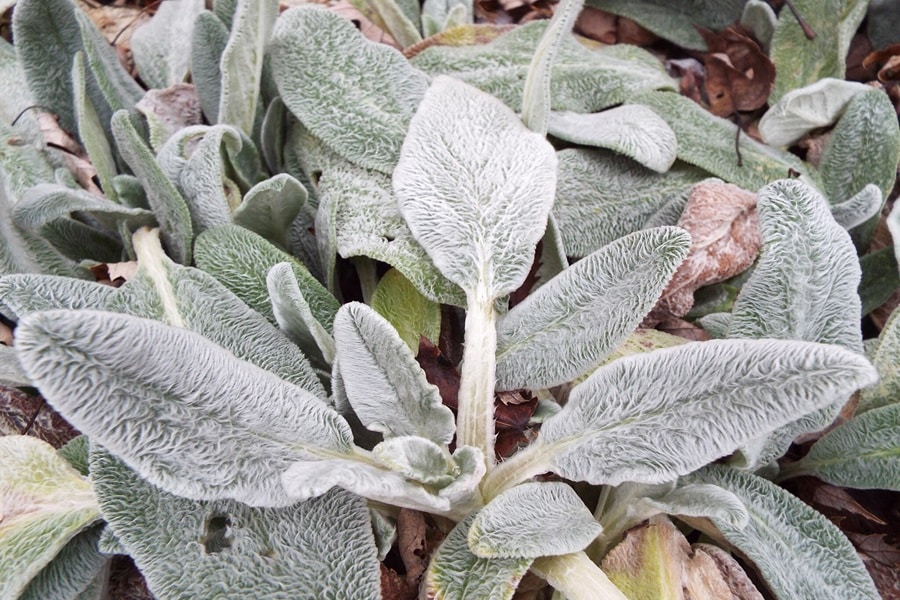
Lamb’s Ears (Stachys byzantina) is a good choice for a sensory garden or one for children to enjoy. These perennial plants are known for their soft, fuzzy foliage and low-growing habit, and these things make them great for edging beds or borders.
Lamb’s Ears prefer a sunny spot, in sandy or loamy soil that drains well and does not become waterlogged. They work well in schemes that include other sun-loving perennials.
Lavender

One sun-loving perennial that many looking for bed edging will consider is of course lavender – a firm favourite for areas of sun where the soil is relatively free-draining.
Lavender attracts pollinators and repels pests, making it a beneficial addition to the garden. It is generally low maintenance but will need to be pruned in order to keep it compact and looking good.
Lettuce and other Leafy Greens
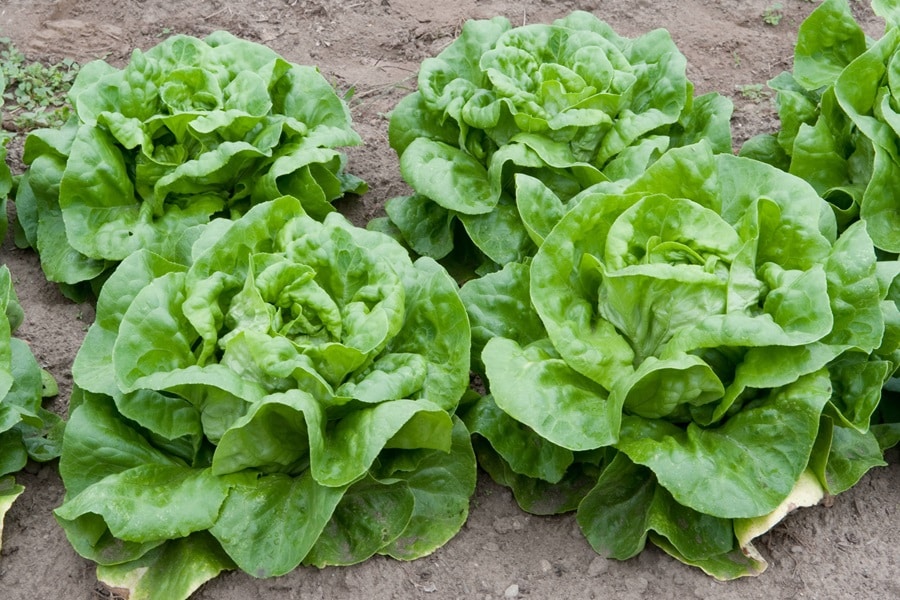
Many might not consider using edibles as edging plants, but for short-term edging for a bed or border, it can make sense to sow lettuce, or other quick cropping leafy greens, to make the most of marginal spaces.
Sowing summer edibles along the edges of a patio or other garden area can give you easy access for a salad when you want one, perhaps close to your kitchen door.
Phlox
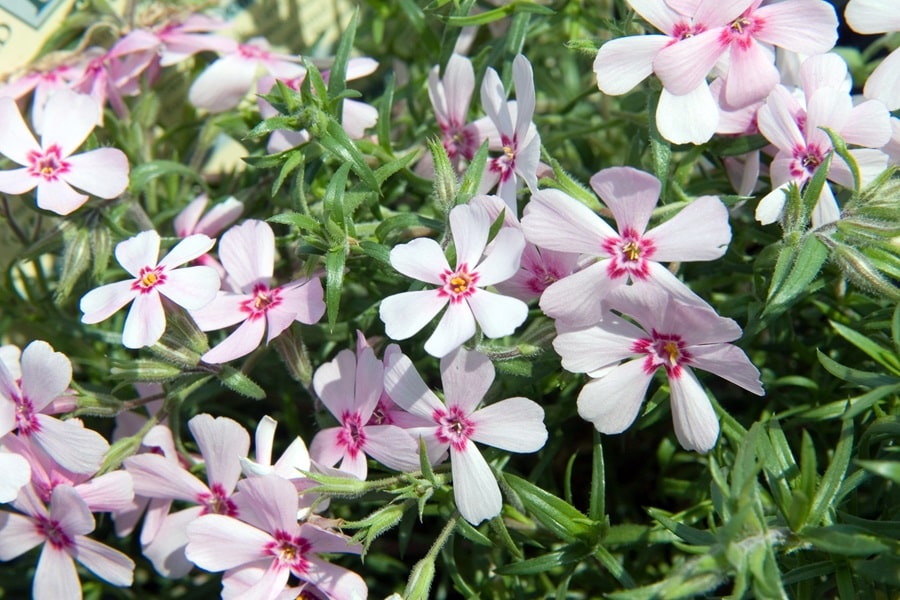
Phlox subulata, commonly known as creeping phlox or moss phlox, is an excellent choice for edging due to its spreading habit and colourful flowers.
Phlox thrives in full sun to partial shade and well-drained soil. Varieties like ‘Emerald Blue’, ‘Candy Stripe’, and ‘Scarlet Flame’ are popular options.
Sedums
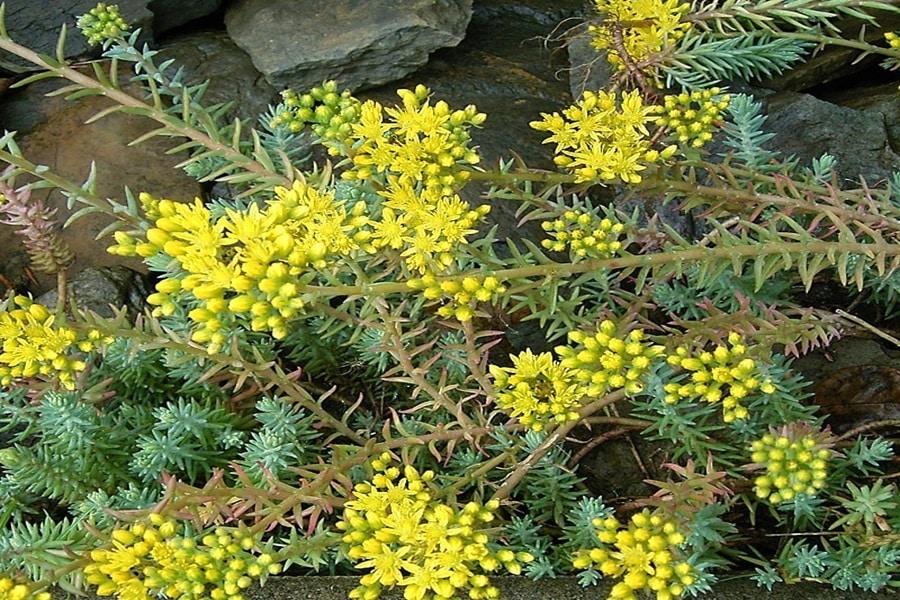
Sedums, also known as stonecrops, are drought-tolerant succulent plants that thrive in sunny locations with well-drained soil.
Sedum spurium, Sedum kamtschaticum, and Sedum cauticola are popular choices for edging due to their spreading habit and attractive foliage., though there are also plenty of other sedums to consider.
Strawberries
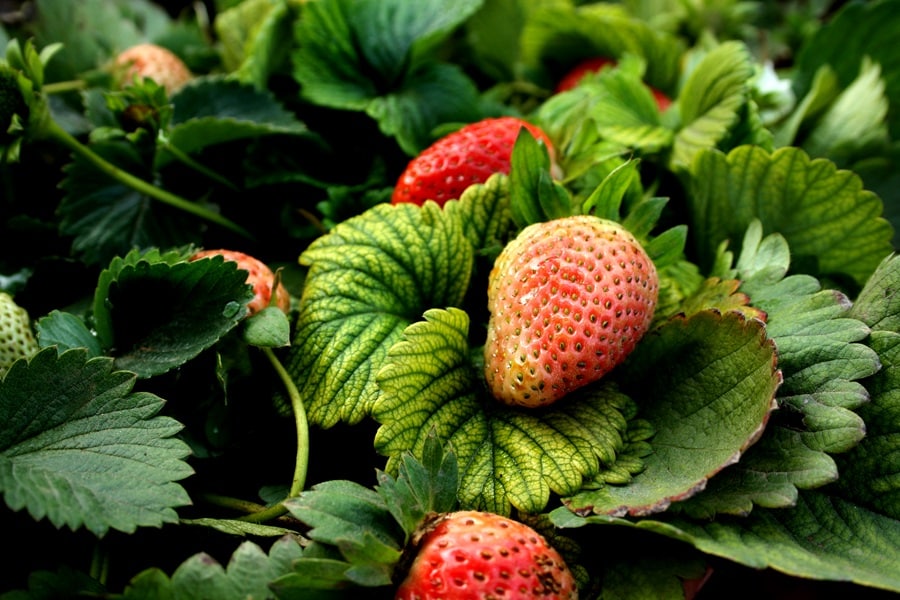
Strawberries are another edible that work extremely well as edging plants in a range of settings.
Choose garden strawberries for a sunny location in moist but free-draining soil, or alpine strawberries (Fragraria vesca) for a partially shaded spot.
Thrift
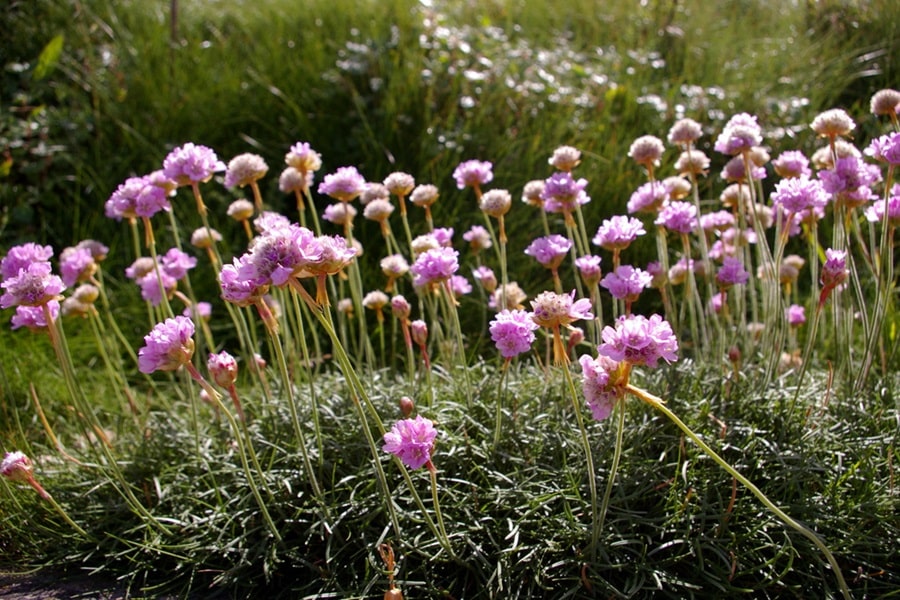
Thrift, also known as sea thrift or sea pink, is a hardy perennial plant also good for edging in full sun in a spot with free-draining soil, native to coastal regions.
Armeria maritima ‘Splendens’ and Armeria maritima ‘Alba’ are popular choices for edging due to their low-growing habits.
Thyme
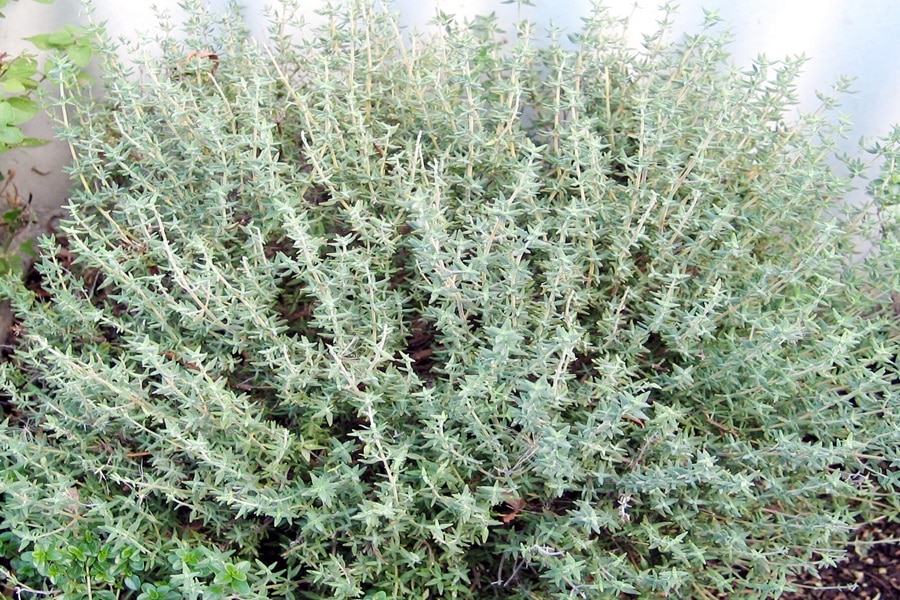
Thyme is a versatile herbaceous perennial known for its aromatic foliage, low-growing habit, and tolerance to sunny and dry conditions. Members of the Thymus genus can make excellent edging plants for a range of settings.
Thymus vulgaris ‘Compacta’, Thymus serpyllum (creeping thyme), and Thymus praecox (mother-of-thyme) are popular choices for edging due to their spreading habit and aromatic foliage.
Of course, the above options are just some of the many plants that you might use as edging plants in your garden.
FAQs
What are the best low maintenance border plants?
If you choose a plant suited to the environmental conditions in a particular spot, then it will be far easier to maintain and will take a lot less work. So make sure that any border plant is suited to the particular growing conditions you can provide.
What plant is good for edging?
Remember, many plants make good edging, but you need to take the specific environmental conditions into account, as well as the growth habit, size and spread of the plants in question, and your own needs to make the right choices. Good groundcover plants tend to be good for edging, whether these are prostrate shrubs, subshrubs or herbaceous perennials.
How do you edge a garden path?
Depending on the specifics of the site and your situation, a garden path can potentially be edged in a range of different ways. For a sustainable garden, edging with living plants is a wonderful idea. You might also utilise a range of natural or reclaimed materials.
What is the best and easiest landscape edging?
Flexible metal edging can be easy to use and practical. But using plants to define edges can be the most sustainable and eco-friendly choice, and by using plants you can get many benefits that a man-made solution for edging will not give you.
Sources
Bourne, M., (2024) 4 Landscape Edging Ideas Designers Swear by (That Will Cut Down on Weeding Too). Living Etc. [online] Available at: https://www.livingetc.com/ideas/landscape-edging-ideas [accessed 21/05/24]