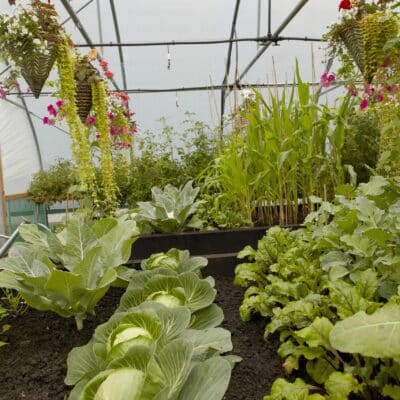


It may sound a little odd to say double glaze a polytunnel, but when we say double glaze your polytunnel, what we really mean is doubling up on the protection and putting one polytunnel inside another. In cold climates, a double layer of plastic on the polytunnel frame will help keep the structure warm enough to grow food all year round. In the UK, it is usually unnecessary to include a double cover, but it can be a good idea to use a mini polytunnel to provide a moveable layer of extra protection for your plants over the winter months.
Why Double Glaze Your Polytunnel?
A polytunnel can already significantly increase the quantities and variety of food that you can grow, and can make it far easier to grow food throughout the year. Inside an unheated polytunnel, the temperature will be a few degrees higher than it is outside. This is usually enough to keep off the frost and avoid freezing temperatures in most of the UK – but if the winter temperatures drop significantly, it can be close to the ‘danger zone’ for more tender plants. A mini polytunnel can provide an extra layer of protection for winter plants in a polytunnel, making it possible to grow an even wider variety of crops without heating the whole space.
Adding Additional Winter Protection
If you are growing particularly tender, exotic or even tropical plants in your polytunnel, then winter heating would usually be essential. If you use a mini polytunnel within your larger one, however, you could still grow some of these exotic, heat-loving plants without having to go to the expense of heating the whole space. By simply heating an area below a mini polytunnel, you can significantly reduce the energy needed to grow the things you wish to grow.
As an extra layer of insulation, a mini polytunnel can make sustainable heating methods work better than they would do in a larger, more open structure. Options for sustainably raising the temperature under a mini polytunnel include:
- Using decomposing straw, compost and manure to create a hot bed.
(As the materials break down, heat is released, warming plants grown above. If that heat is then contained by a mini polytunnel, the temperature increase can be even more pronounced.)
- Using a tea light under a ceramic plant pot.
(A tea light placed under a ceramic plant pot can serve as a small heater. The ceramic pot acts like a storage heater, soaking up heat and gradually releasing it later, to the benefit of surrounding plants.)
- A propagator heat mat or other small heater.
(When powered with renewables, electric heaters can be a sustainable choice. Using a mini polytunnel can increase the efficiency and efficacy of such devices.)
Using A Mini Polytunnel To Protect Growing Areas From Pests/ Disease
A mini polytunnel can serve not only as an extra layer of protection against the cold, but also as an added layer of protection against pests and/or disease. If you find that you get slugs in your polytunnel, for example, then a mini polytunnel could help to protect more vulnerable young crops.
Using a Mini Polytunnel To Allow Seeds to Be Sown Earlier in the Spring
A mini polytunnel will allow you to sow sooner in your polytunnel growing areas, as it will have helped to warm the soil below it. What is more, the seeds or young seedlings will be protected from surprising late frosts and from being eaten by mice, voles or other polytunnel pests.
Creating Unique Microclimates with Mini Polytunnels
Another intriguing thing to think about is that mini polytunnels can be used within a larger polytunnel structure to create unique microclimates to suit the differing needs of different plants. The microclimate under the mini polytunnel might differ not only in temperature but also in soil moisture and humidity levels. When you have a polytunnel within a polytunnel, and double glaze your polytunnel, the options for varying microclimatic conditions are almost endless.
What to Do With Your Mini Polytunnel in Summer
Once the weather warms in the summer, you may find that your mini polytunnel is no longer needed within the larger polytunnel. But a mini polytunnel can easily be moved to outside growing areas and can come in handy in an outside garden too. It could:
- Cover a strawberry patch to give earlier strawberries.
- Protect brassicas from cabbage white butterflies or from pigeons or other pests.
- Protect any crops from very heavy rain or other bad weather conditions.
- Reduce the chances of blight on your outside grown tomatoes.
- Increase protected growing area for heat-loving summer crops.