

Taking on an allotment is both exciting and slightly daunting. Whether you are a first time plot holder or someone returning after years away, the moment you stand looking over an empty or overgrown patch, you are faced with decisions. These choices shape not only how productive your allotment becomes but also how enjoyable it is to work in.
Good allotment layout ideas makes life easier. It reduces unnecessary labour, supports healthy soil, maximises yield and allows you to grow food in a more sustainable, low impact way. Allotments across the UK vary in shape, aspect, soil quality and exposure, but many principles remain constant regardless of size or setting.
This guide explores how to plan your allotment from the ground up, with layout ideas, examples and advice drawn from practical experience. Whether you prefer structured beds, flexible zones or a more naturalistic approach, there is a method that will work for your plot.
KEY TAKEAWAYS
- A thoughtful layout saves time, increases productivity and reduces physical strain.
- Understanding your site is the essential first step.
- Most UK allotments are 5 to 10 rods in size, but good design principles work at any scale.
- Raised beds, traditional rows, zone based layouts and polytunnel centred designs are all effective.
- Crop rotation and seasonal planning help maintain soil health and consistent harvests.
- Including perennials stabilises your system and supports biodiversity.
- Well planned paths and water management systems reduce effort significantly.
- Composting areas and storage spaces keep the plot organised and functional.
- Avoid common mistakes such as poor access, overcrowding plants and neglecting soil structure.
Where to Start With Your Allotment Plan
The most important first step is to observe your plot carefully. Try to spend time on site before making any big decisions. Notice where the sunlight falls at different times of day, where shadows creep in during winter and how wind moves across the space. Track water flow after heavy rain to understand drainage issues. If the site already has weeds or old crops, these can tell you a lot about the soil.
Make a simple sketch or rough map of your plot. Note boundaries, neighbouring structures, water points, hedges, trees, slopes and any existing beds or compost heaps. All of these influence where you place new features. A rough drawing also helps you brainstorm without committing to anything too early.
If the plot is heavily overgrown, take a section by section approach. Clear, cover or sheet mulch areas methodically, creating manageable working zones. It is easy to lose motivation if you try to tackle everything at once. Start small and build from there.
Key Info
Typical Allotment Sizes
Most UK allotments are between 5 and 10 rods, equivalent to roughly 125 to 250 square metres. However, plot sizes vary widely between councils and private associations. Fortunately, layout principles apply to any scale. Whether you have a strip of land or a generous rectangle, good design is about thoughtful organisation rather than size.
Allotment Layout Ideas
There is no single perfect layout. Instead, consider how you like to work, your physical needs and the level of time you can commit. Below are several effective layout styles you can adapt and merge.
Raised Bed Layout
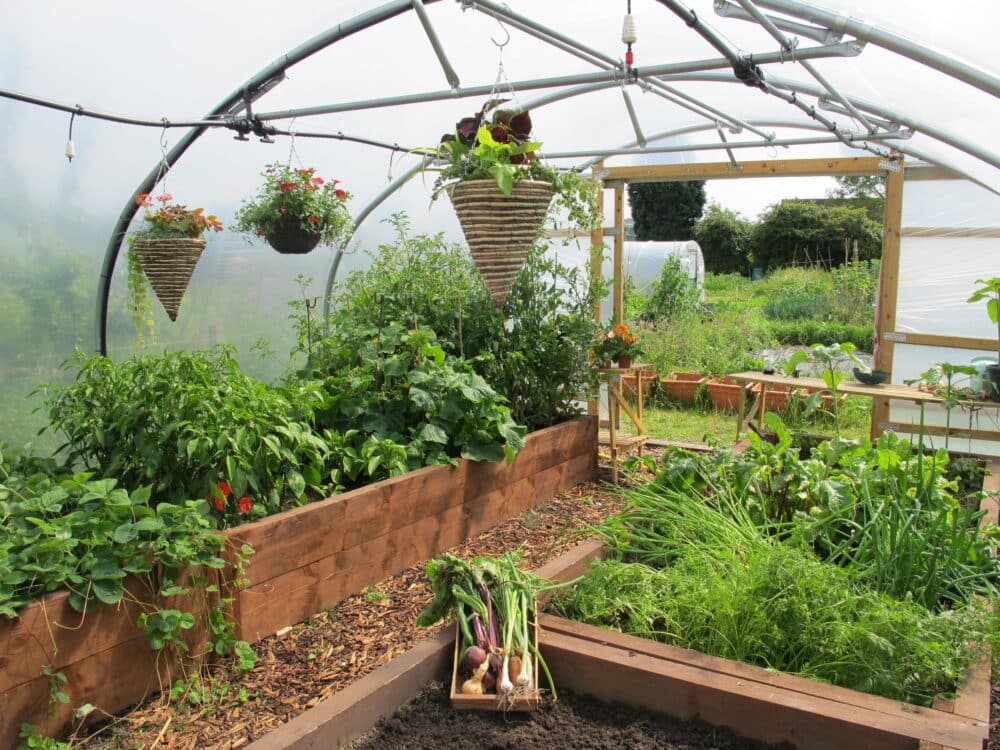
Raised beds create defined spaces that are easy to manage and excellent for poorly drained, compacted or heavy clay soils. They also warm earlier in spring and allow neat crop division.
Benefits include:
- Clear structure and easy access
- Reduced soil compaction
- Better drainage and faster warming
- Ideal for no dig methods
A typical raised bed is around 1.2 metres wide, allowing you to reach the centre without stepping on the soil. Length can be varied depending on space and preference, though too long can feel overwhelming to maintain.
Between beds, maintain paths that are wide enough to walk comfortably or push a wheelbarrow. Wood chips, grass clippings or woven mats make useful path surfaces. Use organic mulches on the beds themselves to retain moisture and build soil life.
Traditional Row Layout
Traditional rows suit larger plots and gardeners who prefer a straightforward, familiar approach. Rows work well for crops like potatoes, brassicas, onions and leeks. They allow easy hoeing and make irrigation simple when arranged along contours.
Benefits include:
- Familiar and easy to implement
- Good for large crops
- Simple to weed using a hoe
- Works well with mechanised tools if allowed at your site
Spacing between rows can be adjusted depending on crop type. Wider spacing improves airflow and reduces disease pressure. If you follow a no dig gardening approach, avoid deep cultivation even with rows and rely instead on mulching and gentle soil preparation.
Zone-Based Layout
Zone planning divides the plot into functional areas. This method is inspired by permaculture design and focuses on placing elements according to how often you use them.
For example:
- Zone 1 contains items you visit most often such as salad beds, herbs, water butts and your compost caddy drop off point.
- Zone 2 might contain annual vegetables that need weekly attention.
- Zone 3 could include long season crops such as squash, potatoes or sweetcorn.
- Zone 4 is a semi wild perennial area.
- Zone 5 is a wildlife area left mostly undisturbed.
Zone based planning saves time because you place high maintenance crops near the entrance while less demanding crops are positioned further away.
Polytunnel-Centred Layout
If you have a polytunnel, it will likely become the heart of your allotment. Positioning beds, compost areas and water sources around a tunnel creates an efficient hub.
Advantages include:
- Early sowing and late harvesting due to extended growing seasons
- Less crop loss from pests and weather
- Convenient propagation and seedling management
- Better integration of warm climate crops
You can place raised beds inside the tunnel or use the bare soil directly. Outside the structure, position high value or tender annuals nearby so they are easy to tend. Many gardeners use the space just beside the tunnel for herbs, flowers and perennial companions that support pollination and pest control.
Crop Rotation & Seasonal Planning
For annual crops, crop rotation reduces the spread of soil borne diseases and prevents nutrient depletion. A traditional method is the three or four year rotation system.
A four bed rotation might look like this:
- Legumes such as peas and beans
- Brassicas including cabbage, kale and broccoli
- Roots such as carrots, beetroot and onions
- Potatoes, or squash and courgettes
Rotate each group annually. Even a small plot can manage rotation by grouping crops carefully. If space is limited, rotate at least your brassicas and potatoes since these are most prone to disease.
Seasonal planning is equally essential. Work with natural cycles and stagger sowings to keep beds productive year round. Early crops can be followed with late summer plantings. Winter greens can replace spent summer crops. With good timing, even a small space can produce food every month of the year.
Of course, you should also be sure to think about companion planting and incorporate other plants alongside your main crops to create healthy polycultures of plants.
Incorporating Perennials
Remember, however, that a successful allotment might not just have annual/ biennial crops. It can and often should have perennial species too.
Perennials offer stability and reduce annual workload. They also support biodiversity, attract pollinators and improve the resilience of your plot.
Useful perennial options include:
- Rhubarb
- Artichokes
- Asparagus
- Herbs such as mint, oregano, thyme and sage
- Fruit bushes including currants, gooseberries and blueberries
- Fruit trees on dwarf rootstocks
- Perennial flowers that attract beneficial insects
Place perennials at the edges of your plot or in dedicated zones. They appreciate consistent positions and usually need less intervention once established.
Paths, Access & Water Management
Paths are often overlooked in new layouts but they determine how enjoyable and efficient your plot feels. If access is poor, every task becomes harder.
Key principles of good path planning:
- Main paths should be wide enough for a wheelbarrow.
- Secondary paths can be narrower but still comfortable.
- Avoid steep steps or uneven ground.
- Use surfaces that allow water to drain easily.
Water management is critical on allotments prone to flooding or drought. Collecting rainwater in butts is one of the most sustainable choices you can make. Position them near sheds, polytunnels or fences that can take guttering. Use mulches to conserve moisture, and consider drip irrigation or soak hose systems for long beds.
In wet areas, raised beds or ridges help excess water move away from roots. If the plot slopes, position rows along the contour of the land to prevent runoff.
Storage & Work Area Ideas
A tidy plot is far easier to manage. Storage prevents tools rusting or vanishing into long grass. It also keeps your space safer and more pleasant to work in.
Useful storage ideas include:
- A small shed for tools, seeds and protective equipment
- A bench or table for potting and sorting harvests
- Shelving for trays and pots
- Hooks for hanging tools
- A lockable box for valuables if needed
Some gardeners also install a small seating area. This might seem non essential, yet rest spaces encourage you to spend more time on your plot and enjoy the environment rather than rushing through chores.
Composting Area
Composting is central to sustainable gardening. It reduces waste, improves soil structure and provides valuable nutrients. A good composting area does not need to be large but it should be well designed.
Consider:
- Twin bins or three bay systems to allow turning and maturing
- A separate leaf mould cage
- A space for storing bulky materials like cardboard or straw
- A wormery for rich liquid feed
- Easy access for wheelbarrows
Place your composting area close enough to be convenient but not so central that it takes up prime growing ground. The back or side of the plot often works well.
Example Allotment Layout Plans
Here are a few sample ideas you can adapt to your own space.
Example Layout 1: Simple Raised Bed System
- Eight raised beds arranged in two blocks
- Central path with side paths for access
- Compost area at the back
- Small herb bed near the entrance
- Water butt beside a shed
- Perennial fruit bushes along the fence line
Example Layout 2: Zone Based Design
- Zone 1: Salad beds, herbs, rainwater collection and storage
- Zone 2: Main annual vegetable beds
- Zone 3: Squash patch, potatoes and long season crops
- Zone 4: Perennial forest garden strip
- Zone 5: Wildlife corner with flowers and a mini pond
Example Layout 3: Polytunnel Centred Plot
- Polytunnel at the heart of the plot
- Beds radiating outward with paths between
- Propagation table at tunnel entrance
- Compost bays behind the tunnel
- Perennial fruits and herbs forming a protective perimeter
Common Mistakes to Avoid
- Making paths too narrow
- Ignoring shade patterns and wind exposure
- Overcrowding beds which increases disease pressure
- Forgetting to plan space for compost and storage
- Planting perennials randomly rather than giving them dedicated zones
- Neglecting soil health by cultivating too often
- Taking on more than you can manage in the first year
FAQs
How do I layout an allotment for beginners?
Start by understanding your plot. Choose a simple structure such as raised beds or a small number of long beds with clear paths. Keep crops near the front that need frequent care and plan a composting area early. Find an allotment here – https://thenas.org.uk/findinganallotment
What vegetables are best for an allotment layout?
Reliable choices include potatoes, brassicas, beans, peas, beetroot, carrots, onions, courgettes and salad crops. Mix fast growing plants with longer season vegetables to maintain steady harvests.
Should I include a polytunnel in my allotment plan?
A polytunnel is extremely useful. It extends the season, protects crops from weather and offers space for propagation. If allowed on your site, it can become the centre of your layout.
How do I rotate crops effectively in a small space?
Group crops by family, even in small beds. Rotate brassicas, legumes, roots and potatoes or squash each year. If space is tight, prioritise rotating crops that suffer from soil borne diseases such as cabbages and potatoes.